
Rare 1609 Gold Coin Sells for Record $3.5 Million in Switzerland – Full History, Value & Auction Details
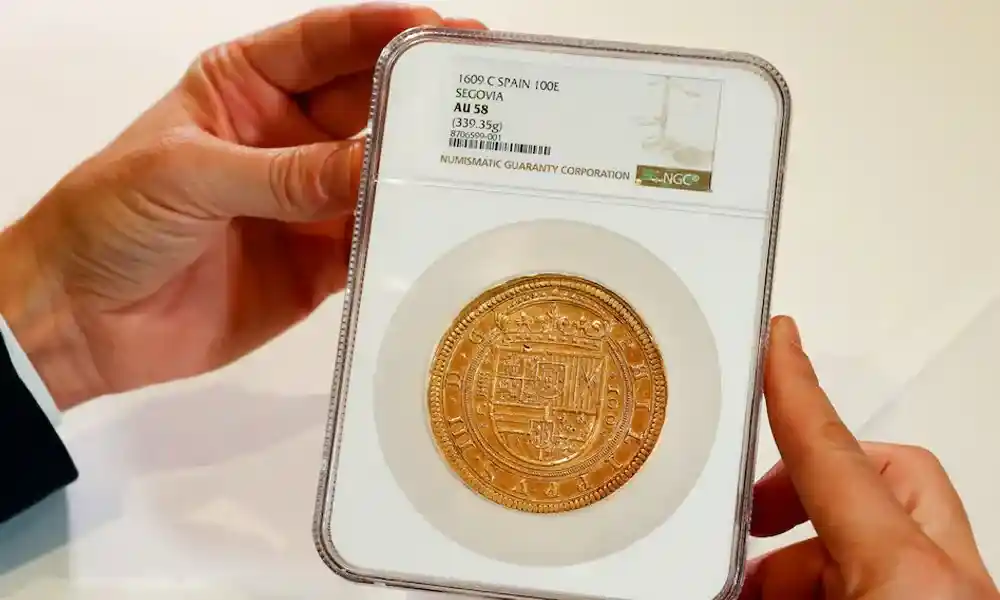
The global coin-collecting community witnessed a major moment in history when a rare 1609 gold coin sold for a record 2,817,500 Swiss francs (nearly $3.49 million) at a Swiss auction. This astonishing sale not only shocked collectors but also set a new European auction record for a historic coin.
This rare masterpiece, minted during the reign of King Philip III of Spain, attracted intense global attention because of its age, purity, weight, and remarkable royal background.
This article explains the complete story of the 1609 gold coin — its origin, rarity, historical importance, journey through different owners, auction details, and why collectors were willing to pay such a massive amount for it.

What Makes the 1609 Gold Coin So Valuable?
Several reasons make this coin extremely rare and historically priceless:
1. Minted in 1609 – Over 400 Years Old
Coins from the early 1600s are already rare, but one preserved in excellent condition is even more extraordinary.
2. Linked to King Philip III of Spain
The coin was created during the era when Spain ruled a massive empire, controlling territories across Europe, the Americas, and Asia.
3. Pure Gold From the Americas
The coin was made from gold brought by Spanish conquerors from regions such as:
- Present-day Mexico
- Peru
- Bolivia
This gold was processed at the Royal Mint of Segovia, one of the most important mints in European history.
4. Extremely Heavy – 339 Grams
This weight is far more than regular gold coins.
Typical gold coins weigh 5–30 grams, but this coin weighs 339 grams — more than half a pound of gold.
5. A Royal Presentation Coin
Experts say this coin was not for public circulation.
It was likely crafted as:
- A royal gift
- A ceremonial coin for high-ranking nobles
- A token of political alliance
This makes it even rarer than ordinary historic coins.
Read Also: Breaking News: DigiSkills Launches 2nd Batch of Free Online Courses 2025 – Apply Before 2 December
Historical Background of the 1609 Gold Coin
The coin, often referred to as the “Sencillín”, reflects Spain’s golden age when huge amounts of gold and silver were transported from South America to Europe.
Spain’s Wealth in the 1600s
During this period, gold symbolized:
- Military power
- Empire strength
- Royal luxury
- Economic supremacy
Spain’s economy depended heavily on gold extracted from mines in the Americas, especially the famous Potosí mines.
The Role of the Segovia Mint
The coin was struck at the Segovia Mint, known for:
- Its advanced coin-press machinery
- Exceptional precision and design
- The minting of limited-edition ceremonial pieces
- Producing coins for the royal family
This mint is considered one of the oldest and most advanced facilities in Europe.
Read Also: Breaking News: DigiSkills Launches 2nd Batch of Free Online Courses 2025 – Apply Before 2 December
Where Was the Coin After 1609?
After its creation, the coin mysteriously disappeared for centuries.
Historians believe it may have been:
- A royal gift to a European ruler
- A piece stored in a private treasury
- Loot taken during wartime
Reappearance in the 1950s
The coin resurfaced around 1950 in the United States.
It was acquired by:
- A well-known New York collector
- Later sold to several private owners
Because of its rarity and value, the identities of past owners were kept secret.
The Record-Breaking Auction in Switzerland
Auction Sale Price
The coin sold for:
➡️ 2,817,500 Swiss francs
➡️ ~$3.49 million USD
This broke the previous European record of 1.95 million Swiss francs, held by the 100-ducat coin of King Ferdinand III.
Why So Expensive?
Buyers at the auction valued the coin because of:
- Its exceptional preservation
- Historical importance
- Its huge gold content
- Extremely limited availability
- Museum-level rarity
Auction houses said the bidding war was intense, with collectors from:
- Europe
- USA
- Middle East
- Asia
- Latin America
All eager to own the masterpiece.
Identity of Buyer Not Revealed
The new owner remains confidential, as is common in high-value purchases.
Description of the 1609 Coin – Weight, Design, and Details
Weight
- 339 grams of gold
- Pure and heavy compared to typical gold coins
Design
The coin features:
- The royal coat of arms of Spain
- Iconic symbols of the Spanish Empire
- High-precision engravings
- A detailed portrait linked to Philip III’s reign
Collectors say the artwork alone makes it a masterpiece.
Why Collectors Pay Millions for Rare Coins
Coin collectors, especially high-net-worth individuals, consider rare coins to be:
- Historical assets
- Safe financial investments
- Prestige collectibles
- Inflation-protected wealth
Rare coins with:
- Limited availability
- Rich history
- Government or royal origin
sell for extremely high prices at global auctions.
Impact on Global Coin Market
After this sale, experts predict:
- New interest in Spanish-era coins
- Higher prices for coins from the 1500s–1700s
- Increased demand for rare gold coins in auctions
- More global collectors entering European auctions
Auctions in New York, London, Dubai, and Hong Kong may now highlight more rare coins to meet rising demand.
What This Sale Means for Historians
Historians say the sale revived interest in:
- The Spanish Empire
- Gold mining history in the Americas
- Early European minting technology
- Royal gifting traditions
For museums, this sale is proof that:
- Many rare historical artifacts may still be hidden in private collections
- More discoveries could be made in coming decades
Why Coins From the 1600s Are Extremely Rare Today
Coins from this era are scarce due to:
- Wars and invasions
- Melting of gold for currency reforms
- Loss of treasures at sea
- Theft and destruction over centuries
That is why the survival of this 1609 gold coin is considered a “miracle.”
Read Also: Breaking News: Punjab Launches CM Meal Program for School Children
Final Thoughts: A Priceless Piece of European Royal History
The sale of the rare 1609 gold coin for $3.5 million highlights the growing interest in rare collectible assets worldwide.
With its royal history, enormous gold weight, and exceptional craftsmanship, the coin stands as a timeless reminder of Spain’s global power in the 1600s.
Collectors call it not just a coin — but a piece of living history.
Frequently Asked Questions (FAQs)
1. Why did the 1609 gold coin sell for such a high price?
Because of its age, rarity, 339-gram weight, royal background, and exceptional condition.
2. Who minted the 1609 gold coin?
It was minted under the rule of Spain’s King Philip III at the Segovia Mint.
3. Who bought the coin at the auction?
The buyer’s identity has not been publicly disclosed.
4. Is this the most expensive coin in Europe?
Yes, it broke the previous European record of 1.95 million Swiss francs.
5. Why is the coin called the “Sencillín”?
It refers to a special ceremonial coin used for royal gifting, not regular circulation.