
Asia Energy Transition Summit 2025 Opens at LUMS with Strong Regional Participation – Full Report
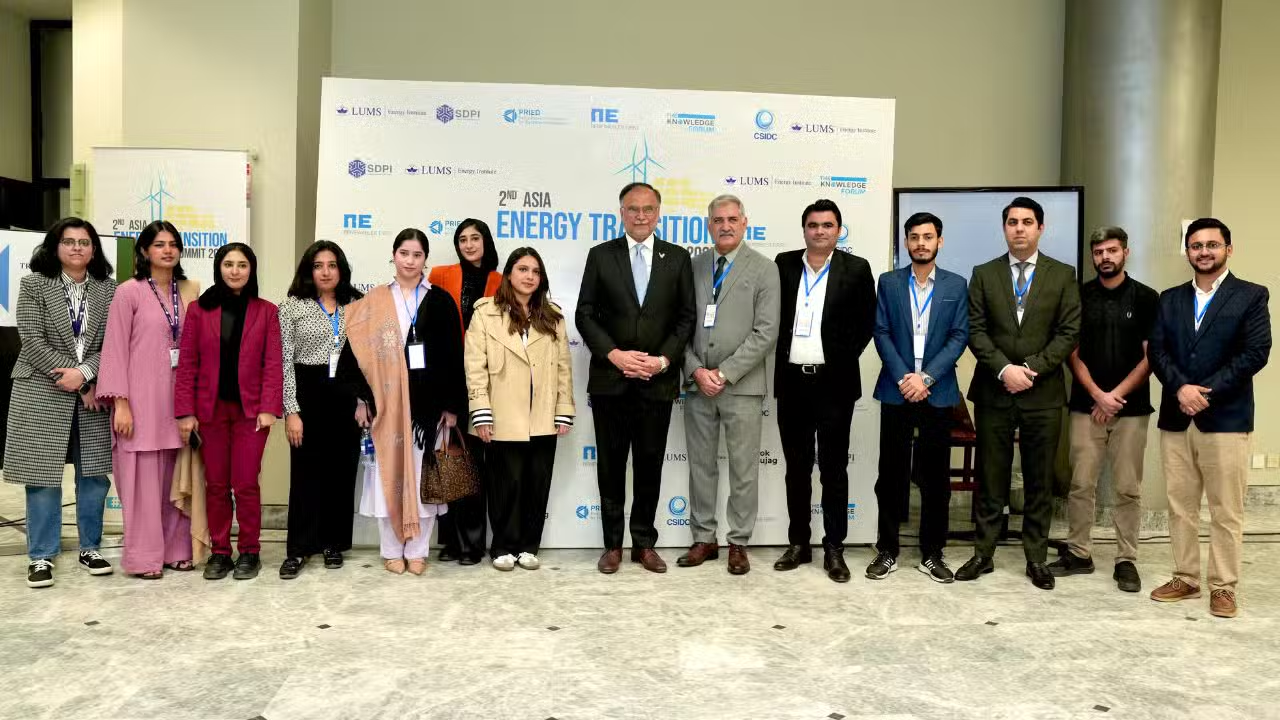
The Asia Energy Transition Summit 2025 has officially begun at Lahore University of Management Sciences (LUMS), bringing together top-level experts, policymakers, diplomats, researchers, and climate leaders from across Asia, Europe, and the Pacific. The second edition of this major regional event focuses on how Asia can lead the global clean-energy shift by adopting modern technology, strengthening energy systems, and promoting financial and political cooperation.
Organised by the LUMS Energy Institute (LEI), the Alliance for Climate Justice and Clean Energy (ACJCE), and the Pakistan Renewable Energy Coalition (PREC), the Summit highlights the growing importance of clean energy in shaping economic growth and climate resilience across the region.
This year’s Summit places a powerful spotlight on topics such as renewable energy expansion, smart grids, climate finance, international cooperation, community resilience, tariff reforms, and the future of Asia’s energy markets.
Pakistan’s Planning Minister Highlights Need for a Resilient & Future-Ready Grid
In the opening address, Federal Minister for Planning, Development & Special Initiatives, Professor Ahsan Iqbal, emphasized that Pakistan must invest in a strong, reliable, and future-ready power grid to support the growing shift toward renewable energy.
He said that a modern grid, capable of integrating large-scale solar and wind energy, is essential for creating a competitive green economy. His message focused on:
- strengthening Pakistan’s aging power infrastructure
- reducing inefficiency and system losses
- adopting new technologies
- prioritizing energy conservation as the first step in clean-energy transition
Ahsan Iqbal reminded the audience that “the most reliable source of clean energy is the energy conserved”, urging industries and households to adopt responsible practices.
He also highlighted that multilateral engagement, regional alliances, and international financing are necessary for Asia to meet its energy transition goals, as no country can achieve this shift alone.
Check Also: Breaking: NADRA Announces Intelligence Officer Jobs 2025 Across Pakistan – City-Wise Vacancies

Energy Minister Awais Leghari Outlines Pakistan’s Modern Grid Vision
Another key voice was Federal Minister for Energy (Power Division) Awais Ahmad Leghari, whose policy vision has shaped much of Pakistan’s recent energy planning. His speech focused on the structural reforms needed to create a flexible, smart, and technologically advanced grid.
He said:
- Pakistan understands the urgency of adopting renewable energy
- The government is committed to modernizing energy infrastructure
- A smart grid will allow better integration of solar, wind, and distributed energy
- Pakistan is “open to partnerships” with governments, investors, and international organizations
- Clean energy is essential for improving quality of life and economic growth
Leghari stressed that the energy transition requires massive investment and that Pakistan welcomes collaborative financing. His remarks signalled Pakistan’s seriousness about becoming a competitive player in the global renewable-energy sector.

Finance Expert Dr. Shamshad Akhtar Calls for Smart, Integrated Policy Planning
Former Federal Finance Minister Dr. Shamshad Akhtar led a key plenary session focusing on Asia’s role in global transition debates. She argued that Asian economies must adopt integrated planning frameworks that balance:
- financial stability
- technological capability
- climate justice
- social equity
Her message was clear: Asia must lead with confidence, shaping global energy pathways instead of merely reacting to them.
She highlighted concerns around global financing gaps, explaining that Asia must engage international donors, green funds, and development partners with coordinated strategies rather than fragmented approaches.
Check Also: Gold Price in Pakistan Today 18 November 2025 – Latest 24K & 22K Prices Updated

Justice Mansoor Ali Shah Highlights Climate Finance as a Fundamental Right
Adding a powerful legal perspective, Justice Syed Mansoor Ali Shah, former judge of the Supreme Court of Pakistan, spoke about the constitutional and institutional foundations of climate governance.
He stressed:
- The energy transition must be rights-based and transparent
- Legal frameworks must adapt to evolving climate risks
- Policymaking must integrate long-term climate justice
One of the strongest statements from his speech was his reminder that the Supreme Court of Pakistan ruled that climate finance is a fundamental right, because without financing, no climate adaptation is possible.
This view positions Pakistan as one of the few countries in the world to recognize climate finance as a legal right.

International Delegates Examine Financing, Market Reforms & Regional Cooperation
Speakers and experts from across the world shared insights on:
- global renewable-energy financing challenges
- debt-free or low-debt climate financing models
- energy market reforms for emerging economies
- community-level resilience strategies
- cross-border cooperation and regional power trade
Their discussions emphasized that Asia is quickly emerging as a leader in shaping global energy diplomacy, largely because the region hosts some of the fastest-growing renewable markets.
Countries from Europe, Southeast Asia, Pacific Islands, and Central Asia expressed strong interest in partnering with Pakistan and other Asian nations on large-scale renewable projects, technology transfer, and research collaborations.
Key Themes of the Summit: Policy, Tariffs & Asia’s Role in Energy Diplomacy
Throughout the day, multiple thematic sessions explored practical and political dimensions of Asia’s energy transition. Key topics included:
1. Tariff and Non-Tariff Barriers
Experts discussed how outdated tariff structures slow down renewable energy adoption. They highlighted:
- the need for transparent, predictable pricing
- the removal of unnecessary bureaucratic hurdles
- designing policies that encourage both local and international investors
2. South–South Cooperation
Speakers noted that Asian and African countries can learn from one another’s experiences, especially in:
- low-cost solar deployment
- grid modernization
- climate adaptation technologies
- community-based renewable energy
3. Asia’s Rising Influence in Global Energy Markets
Analysts explained how Asia’s fast-growing economies are reshaping global demand trends and influencing investment patterns. More countries are now turning toward:
- regional energy corridors
- cross-border electricity trade
- long-term green financing instruments
4. Debt-Free Financing for Developing Nations
Panelists stressed that climate transition must not burden developing countries with additional debt. Instead, financing models should focus on:
- grants
- concessional loans
- climate justice funding
- blended finance mechanisms
LUMS Leadership Reaffirms Commitment to Research-Driven Policy
In his closing remarks for Day 1, Dr. Tariq Jadoon, Provost of LUMS, emphasized the university’s commitment to producing evidence-based energy policy research that supports national and regional decision-making.
Meanwhile, Dr. Fiaz Chaudhry, Chairman of the National Grid Company and Senior Advisor at LEI, stated that discussions at the Summit will help design practical, financially sound, and future-oriented pathways for Asia’s climate and energy transition.
He highlighted that research, collaboration, and innovation are essential to unlock Asia’s potential as a world leader in renewable energy.
Day 2 Agenda – What to Expect Next
The Summit will continue with sessions focusing on:
- global financing landscapes
- identifying false or misleading energy solutions
- accelerating distributed renewable deployment
- shaping Asia’s growing energy diplomacy
These high-level conversations are expected to produce actionable insights and policy recommendations for governments, development partners, and private investors across the region.
Why the Asia Energy Transition Summit Matters
This Summit is becoming one of Asia’s most important platforms for discussing:
- clean energy
- climate justice
- regional economic cooperation
- sustainable development
With Pakistan hosting the event at LUMS, it positions the country as an important regional hub for energy innovation, climate policy, and international cooperation.
FAQs — Asia Energy Transition Summit 2025
1. What is the Asia Energy Transition Summit 2025?
The Asia Energy Transition Summit 2025 is a regional conference held at LUMS that brings together government leaders, climate experts, international organisations, and researchers to discuss Asia’s shift toward renewable and clean energy.
2. What are the main goals of the Summit?
The Summit aims to explore modern energy solutions, promote renewable energy, support climate-friendly financing models, strengthen regional cooperation, and guide countries toward building smart, resilient power systems.
3. Who participated in this year’s Summit?
Participants include Pakistan’s federal ministers, former finance experts, judges, foreign diplomats, international development institutions, energy researchers, climate activists, and civil society groups from Asia, Europe, and the Pacific.
4. Why is Pakistan’s energy transition being highlighted?
Pakistan is modernising its grid, increasing renewable energy integration, and seeking global partnerships. The government aims to build a smart, future-ready energy system that reduces costs, boosts sustainability, and strengthens economic growth.
5. What topics were discussed during the sessions?
Sessions focused on renewable-energy financing, tariff reforms, smart grids, South–South cooperation, climate justice, cross-border energy collaboration, and strategies to help developing countries avoid additional debt during the energy transition.