Breaking News: 2026 World Cup Group Draw Revealed! Full Teams & Reactions
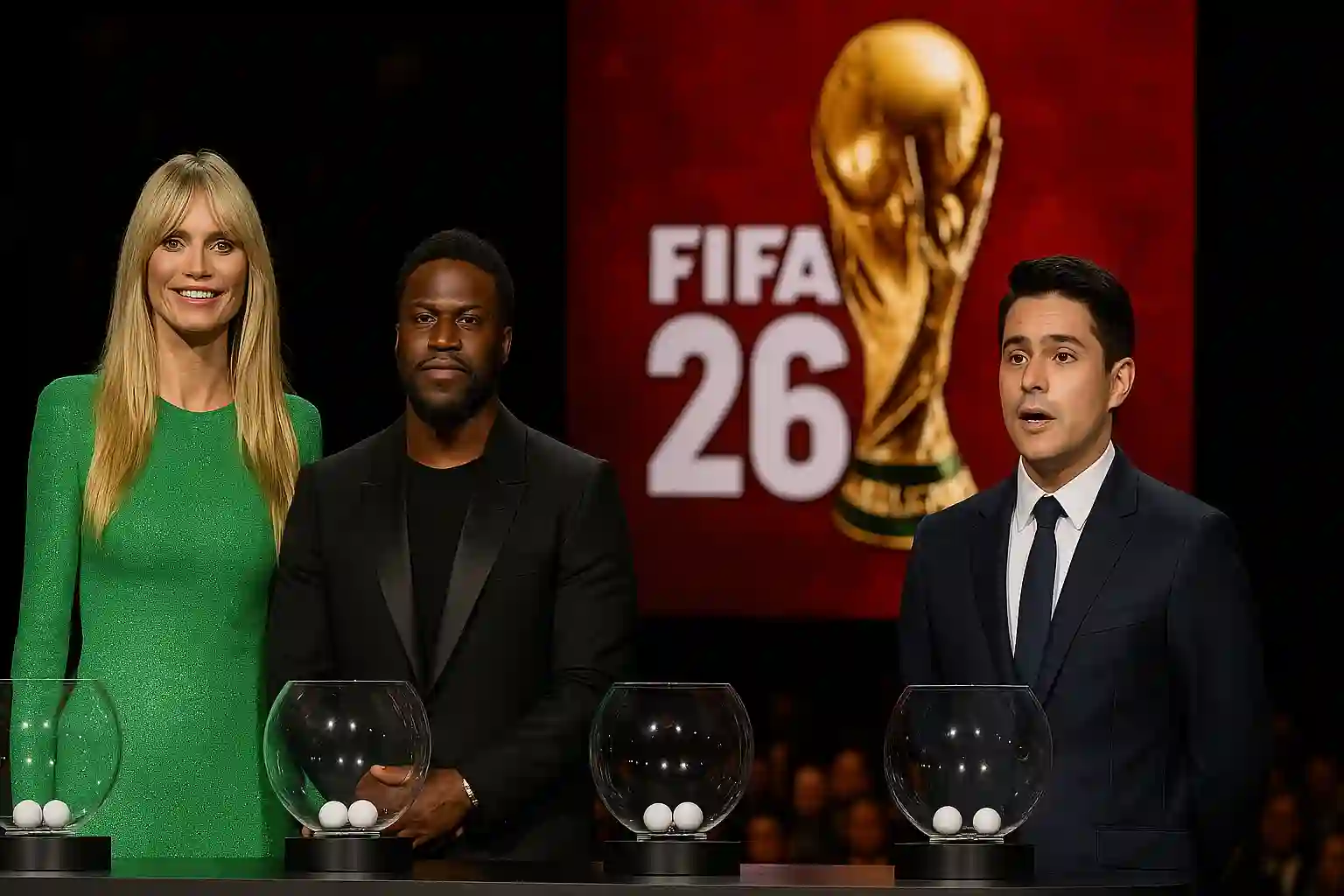
The football world witnessed a major moment as FIFA officially revealed the groups for the 2026 World Cup in a highly anticipated global ceremony. Fans from every continent tuned in to watch the draw unfold, marking the first big step toward what promises to be the largest World Cup in history. With the tournament expanding to forty-eight teams and being co-hosted by the United States, Mexico, and Canada, excitement is already at its peak. The ceremony delivered entertainment, suspense, and plenty of reactions as each team discovered its group-stage opponents for next year’s mega event.
The draw featured a star-studded panel including world-famous athletes, football legends, and global celebrities, creating a sporting event that felt more like a worldwide celebration. As the names were unveiled one by one, fans quickly jumped online to share their thoughts, expectations, and early predictions. Many supporters were shocked by some of the tougher groups, while others felt confident about their team’s chances.
Complete List of 2026 World Cup Groups
Group A features hosts Mexico alongside South Africa and Korea Republic, with the final spot awaiting the winner from Europe’s playoff path among Denmark, North Macedonia, Czechia, or Ireland. Many fans believe this group offers Mexico a strong chance to progress, but Korea Republic’s recent performances show they cannot be underestimated. South Africa returning to the World Cup stage also adds emotional value for African supporters.
Group B includes Canada, Qatar, Switzerland, and one European qualifier from a list that includes Italy, Northern Ireland, Wales, or Bosnia and Herzegovina. This group generated massive attention because Italy’s potential qualification would make this group extremely competitive. Switzerland is known for consistent knockout-stage performances while Canada will try to make a statement as co-hosts.
Group C sees Brazil paired with Morocco, Haiti, and Scotland. This group received some of the biggest reactions online because Brazil versus Morocco is considered one of the standout matches of the group stage. Morocco’s historic run in the previous World Cup has raised expectations, and fans believe they have the ability to challenge Brazil at the highest level. Scotland also brings passionate support and a strong squad.
Group D includes USA, Paraguay, Australia, and a European qualifier from Türkiye, Romania, Slovakia, or Kosovo. The USA, as co-hosts, are expected to perform strongly, but this group will not be easy. Australia’s experience, Paraguay’s physical style, and the unpredictable nature of the European playoff teams make this one of the more balanced groups.
Group E brings together Germany, Curaçao, Côte d’Ivoire, and Ecuador. Fans reacted strongly to this group because Germany is still rebuilding after several difficult tournaments. Côte d’Ivoire and Ecuador are known for tough physical football, and many observers believe this may be a tricky group for Germany despite being a traditional powerhouse.
Group F features Netherlands, Japan, Tunisia, and a European qualifier from Ukraine, Sweden, Poland, or Albania. This group may become one of the toughest depending on who joins from Europe. Japan has shown exceptional progress in recent years, while Netherlands is always considered a strong contender. Tunisia provides the North African challenge that often surprises bigger teams.
Group G includes Belgium, Egypt, Iran, and New Zealand. Observers pointed out that Belgium is transitioning to a new generation of players, and this group may offer them a clear path to the knockout round. Egypt, led by experienced talent, is considered their biggest challenger, while Iran remains a disciplined and organized team.
Group H brings together Spain, Cabo Verde, Saudi Arabia, and Uruguay. Fans highlighted this group because Spain versus Uruguay is a classic battle between two football philosophies. Saudi Arabia’s strong performance in recent tournaments also raised interest, and Cabo Verde arriving on the world stage adds fresh excitement.
Group I features France, Senegal, Norway, and one qualifier from Iraq, Bolivia, or Suriname. This group was widely discussed because of the potential matchup between France and Senegal, two teams known for fast and dynamic football. Norway’s presence adds more star power with their rising global talents.
Group J includes Argentina, Austria, Algeria, and Jordan. This group quickly caught global attention as Argentina begins their title defence. Algeria’s unpredictable form and Austria’s disciplined structure set the stage for very competitive matches, while Jordan’s qualification journey earned them respect.
Group K features Portugal, Uzbekistan, Colombia, and one more team from Congo DR, Jamaica, or New Caledonia. Portugal’s supporters reacted positively to the draw, but many analysts warned that Colombia is a dangerous opponent capable of surprising any top team. Uzbekistan is considered one of Asia’s rising football nations.
Group L includes England, Croatia, Ghana, and Panama. This group was instantly labelled as one of the most balanced and exciting. England and Croatia have a recent history of memorable World Cup matches, while Ghana remains one of Africa’s strongest sides. Panama is expected to bring energy and determination after returning to the world stage.

Global Reactions to the Draw
Football fans, analysts, and former players shared a wave of reactions across social media as soon as the draw concluded. Many pointed out that the expanded format creates a wider opportunity for surprise teams to shine. Others highlighted that several groups appear unpredictable, making early predictions difficult. South American and European football supporters discussed traditional rivalries, while African fans celebrated the strong representation of their continent.
The draw also sparked debate about which teams could face early elimination despite being favorites. Supporters of Brazil, France, and Argentina appeared confident, while fans of Germany and Belgium showed more cautious optimism. Overall, the global reaction was filled with excitement, curiosity, and anticipation for what could become the most competitive World Cup ever.

Final Thoughts – 2026 World Cup group draw Full Teams Reactions
The reveal of the 2026 World Cup groups marks a major milestone on the journey toward next year’s historic tournament. With the world already watching closely, each team now begins its final phase of preparation. Coaches will analyze opponents, fans will plan their travel, and nations will build expectations as the countdown begins. The expanded format, the diverse matchups, and the global reactions all point toward one clear conclusion: the 2026 World Cup is shaping up to be a tournament unlike anything seen before.