20 Major Roads in Lahore to Get Upgraded Traffic Signals and Pelican System
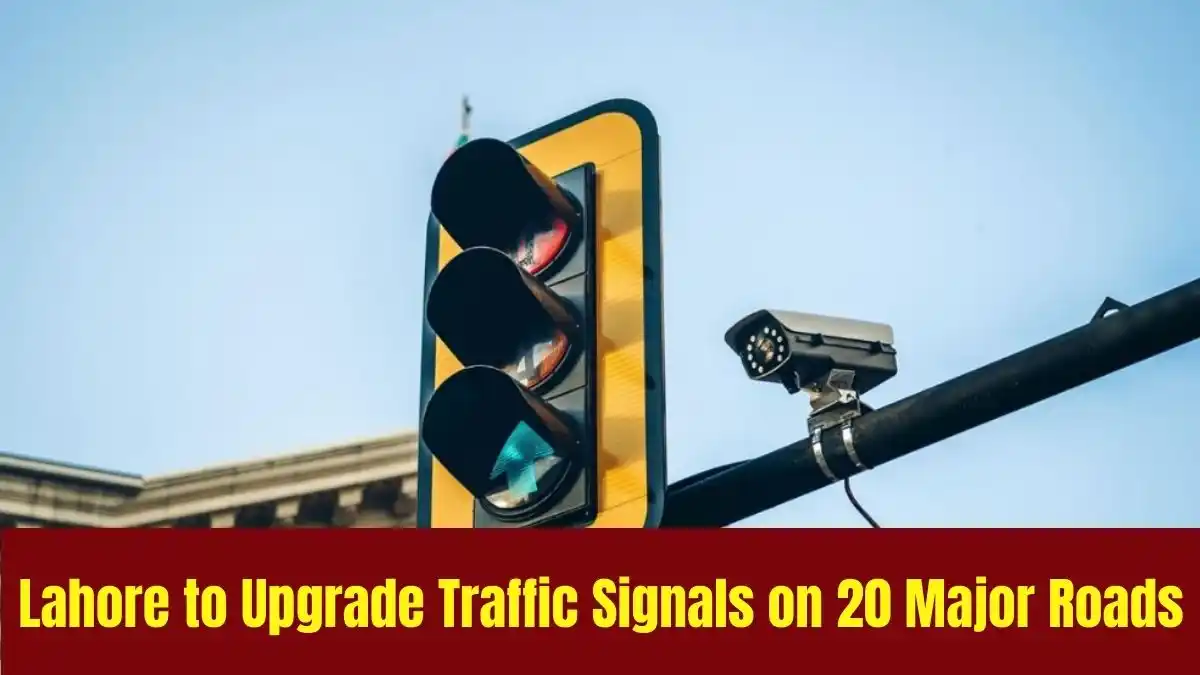
Lahore is preparing for a major improvement in its traffic management system as the Traffic Engineering and Planning Agency (TEPA) has decided to upgrade traffic signals and the pelican crossing system at 20 major roads and junctions across the city. The initiative aims to reduce traffic congestion, improve road discipline, and enhance pedestrian safety in the provincial capital.
The decision was announced during a review meeting held at the TEPA office, which was chaired by Lahore Development Authority (LDA) Director General Tahir Farooq. Senior officials from TEPA and traffic engineering departments were present to assess the progress and future roadmap of the project.
With traffic volume increasing every year in Lahore, authorities believe that modern and technology-based solutions are now essential to manage traffic flow effectively.
Review Meeting Highlights at TEPA Headquarters
During the meeting, officials reviewed the ongoing work related to the installation of modern traffic signals at key city junctions. TEPA Chief Engineer Iqrar Hussain and the Director Traffic Engineering briefed the participants on technical aspects, timelines, and early results from pilot installations.
Officials informed the meeting that the project has entered an important phase, as it is now being expanded after the successful pilot project at Faisal Chowk. The pilot demonstrated improved signal coordination, smoother vehicle movement, and reduced congestion during peak hours.
DG Tahir Farooq expressed satisfaction over the progress and directed teams to ensure that all installations meet international standards of traffic engineering.

Expansion After Successful Faisal Chowk Pilot
According to TEPA officials, the Faisal Chowk pilot project played a key role in shaping the expansion plan. The modern traffic signals installed at the location used advanced technology to monitor traffic density and adjust signal timings automatically.
The pilot project showed that intelligent traffic signals can significantly reduce unnecessary waiting time at intersections. It also helped traffic police manage rush-hour congestion more efficiently.
Encouraged by these results, TEPA has decided to extend the same system to 20 of Lahore’s busiest roads and junctions, where traffic pressure remains high throughout the day.

Introduction of Video Vehicle Detection System
One of the most important features of the upgraded traffic signals is the introduction of a video vehicle detection system. Unlike traditional signals that operate on fixed timers, this system uses cameras to detect the number of vehicles approaching an intersection.
Based on real-time data, the system automatically adjusts signal duration to allow smoother traffic flow. This means that roads with heavier traffic will get longer green signals, while less busy roads will not face unnecessary delays.
Officials said this technology will help reduce congestion, fuel wastage, and frustration among commuters, especially during peak hours.

Pelican System Upgrade for Pedestrian Safety
Along with traffic signals, TEPA will also upgrade the pelican crossing system at selected locations. Pelican crossings are designed to provide safe road-crossing opportunities for pedestrians by temporarily stopping vehicle traffic.
Authorities said the modern pelican system will be more pedestrian-friendly and better synchronized with traffic signals. This is particularly important in areas near markets, offices, courts, and educational institutions where foot traffic is high.
DG Tahir Farooq stated that pedestrian safety is a critical part of urban planning and that the upgraded pelican system will help reduce accidents involving pedestrians.

Integration with Punjab Safe Cities Authority
Another major aspect of the project is its integration with the Punjab Safe Cities Authority (PSCA). Once connected, the upgraded traffic signals will be monitored through PSCA’s central control system.
This integration will allow authorities to observe traffic conditions in real time, respond quickly to congestion or accidents, and coordinate better with traffic police on the ground.
Officials said that linking traffic signals with PSCA will also help in enforcement, data collection, and long-term traffic planning for Lahore.
Coordination with Traffic Police
TEPA confirmed that the modern traffic signals will also be linked with the Lahore traffic police system. This coordination will help traffic wardens manage traffic during emergencies, public events, road closures, and VIP movements.
With centralized control and real-time monitoring, traffic police will be able to make quick adjustments to signal timings when required. This is expected to reduce manual intervention and improve overall efficiency.
Authorities believe that better coordination between engineering agencies and traffic police is essential for a smooth traffic system in a city as large as Lahore.
List of Roads and Junctions Included in the Project
TEPA shared the list of major roads and junctions that will be covered under this phase of the project. These locations were selected due to heavy traffic flow and frequent congestion:
- GPO
- High Court
- Regal
- Governor House
- Davis Road
- Canal Road Junction
- Zafar Ali Road
- Fortress Stadium
- Jinnah Chowk
- Sarfraz Rafiqui Road
- Secretariat
- Ferozepur Road
- Muslim Town Mor
- Bhekewal
- Dubai Chowk
- Barkat Market
- Firdous Market
- Askari 10
- Parvez Aslam Chowk
These areas are considered some of the busiest points in Lahore, making them ideal candidates for modern traffic management solutions.
Expected Benefits for Commuters
Officials are confident that the upgraded traffic signals and pelican system will bring noticeable benefits for daily commuters. Key expected improvements include:
- Reduced traffic congestion at major intersections
- Shorter waiting times at signals
- Improved pedestrian safety
- Better fuel efficiency due to smoother traffic flow
- Enhanced coordination between traffic authorities
With intelligent signal control, motorists are expected to experience a more predictable and organized driving environment.
Part of a Broader Smart City Vision
The traffic signal upgrade project is being seen as part of Punjab’s broader smart city vision. Authorities aim to use technology to improve urban services, including traffic management, surveillance, and public safety.
Officials said that if the project proves successful at these 20 locations, it may be expanded further to other parts of Lahore and eventually to other major cities in Punjab.
Such initiatives reflect the government’s growing focus on data-driven planning and sustainable urban development.
Challenges and Implementation Timeline
While the project has been welcomed by commuters, officials acknowledged that implementation will require careful planning to avoid disruption. Installation work at busy junctions may temporarily affect traffic flow.
TEPA assured that work will be carried out in phases and mostly during off-peak hours to minimize inconvenience. Authorities did not share a final completion date but said progress will be closely monitored.
Conclusion – 20 Major Roads Lahore Upgraded Traffic Signals and Pelican System
The decision to upgrade traffic signals and the pelican system at 20 major roads in Lahore marks a significant step toward smarter and safer traffic management. With the introduction of video-based vehicle detection, improved pedestrian crossings, and integration with PSCA and traffic police, the project promises to bring long-term relief to Lahore’s traffic problems.
As traffic pressure continues to grow, such modern solutions are becoming increasingly important. If implemented effectively, this initiative could set a strong example for urban traffic management across Pakistan.