
PM Shehbaz Forms Committee to Review Passenger Offloading at Airports
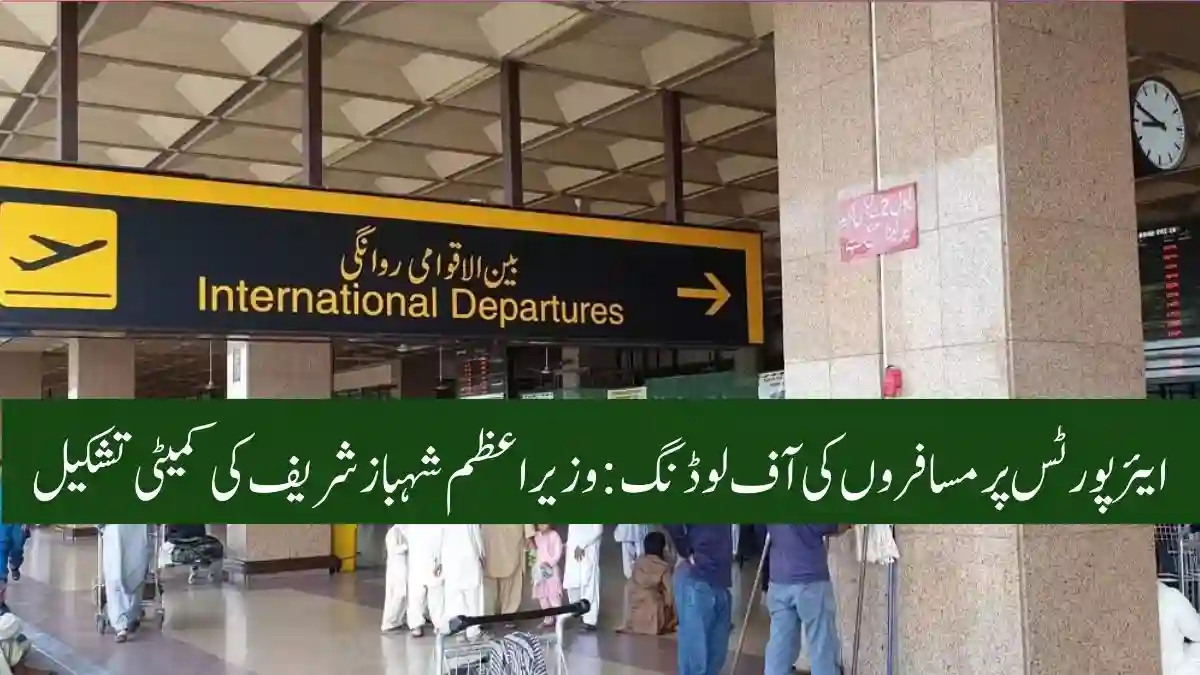
Prime Minister Shehbaz Sharif has formed a high-level committee to review the issue of Pakistani passengers being offloaded at airports despite holding valid travel documents. The decision comes after repeated complaints from travelers and growing criticism on social media over the treatment of passengers during immigration clearance.
According to the Ministry of Overseas Pakistanis, the committee will examine the causes of passenger offloading, assess current immigration procedures, and recommend reforms to ensure that genuine travelers are not unnecessarily stopped or harassed at airports.
The move is being welcomed by overseas Pakistanis, especially workers who travel abroad for employment and often face difficulties during departure.
Rising Complaints From Passengers
In recent weeks, several Pakistani passengers reported that they were offloaded at major airports, including Karachi, Lahore, and Islamabad, despite having complete and valid travel documents.
Many passengers shared their experiences on social media platforms, saying they were stopped without clear explanations and sent back after hours of questioning. These posts quickly went viral and triggered public outrage.
Affected travelers claimed that offloading caused them financial losses, including missed flights, canceled job contracts, and additional expenses for rebooking tickets. Families of overseas workers also expressed frustration, saying the incidents added emotional stress and uncertainty.

Issue Emerged During Immigration Crackdown
The controversy emerged during Pakistan’s ongoing crackdown on illegal immigration and human trafficking.
Over the past few years, immigration authorities have arrested Pakistani and foreign nationals at airports for attempting to travel using forged passports, fake visas, or counterfeit work permits. Officials argue that strict checks are necessary to prevent illegal migration and protect Pakistan’s international standing.
However, critics say that while controlling illegal immigration is important, the current approach has resulted in genuine passengers being caught in the net, leading to unnecessary offloading.

Government Takes Notice of Public Concern
As complaints increased, the federal government took notice of the issue. The Ministry of Overseas Pakistanis received multiple reports highlighting inconsistencies in immigration decisions and the excessive use of human discretion.
Prime Minister Shehbaz Sharif was briefed on the matter, following which he directed the formation of a committee to review the entire process and recommend practical solutions.
Officials say the prime minister wants a balanced system that ensures security while also protecting the dignity and rights of Pakistani citizens.

14-Member Committee Formed
A formal notification issued by the Ministry of Overseas Pakistanis confirmed the formation of a 14-member committee.
Composition of the Committee
The committee includes:
- Federal Minister for Overseas Pakistanis (Chairperson)
- Federal Minister for Information Technology
- State Minister for Overseas Pakistanis
- Secretaries of relevant federal ministries
- Senior officials from immigration, labor, and IT departments
The inclusion of the IT ministry indicates that technology-based reforms will play a key role in the committee’s recommendations.

Review of Protectorate of Emigrants Stamp
One of the committee’s main responsibilities is to review the process related to the Protectorate of Emigrants (PoE) stamp.
The PoE stamp is mandatory for Pakistani citizens traveling abroad for employment. It is intended to ensure that workers are legally registered and protected before leaving the country.
Despite its purpose, many overseas workers have complained that confusion over the stamp often leads to delays and offloading at airports.
Human Discretion Under Scrutiny
The committee will specifically deliberate on ways to eliminate or minimize human discretion in the issuance and renewal of the Protector stamp.
Passengers and labor rights groups have long argued that excessive discretionary powers allow immigration officials to make inconsistent decisions. In some cases, travelers with identical documents receive different treatment.
Reducing human discretion is expected to improve transparency and ensure equal treatment for all passengers.
Push for End-to-End Digitization
A key proposal under review is the introduction of an end-to-end digitized system for the issuance and renewal of the Protectorate of Emigrants stamp.
Proposed Features of the Digital System
- Fully online application and renewal process
- Automated document verification
- Integration with NADRA and immigration databases
- Real-time access for airport immigration officials
- Reduced paperwork and physical visits
Experts believe that a digital system will significantly reduce confusion at airports and prevent last-minute disputes over documentation.
Monitoring Workers’ Satisfaction
Another important task assigned to the committee is to propose a mechanism for monitoring workers’ satisfaction.
The committee will recommend methods to collect feedback from overseas Pakistanis regarding:
- Protector stamp issuance
- Renewal procedures
- Airport immigration clearance
- Overall travel experience
This feedback will help authorities identify weak areas and improve service delivery.
Interior Minister’s Earlier Directive
Interior Minister Mohsin Naqvi had already addressed the issue last month by instructing immigration authorities not to offload passengers who hold valid travel documents.
He emphasized that while security checks are necessary, genuine travelers should not be inconvenienced or humiliated.
Despite the directive, complaints continued, highlighting the need for systemic reforms rather than verbal instructions alone.
Overseas Pakistanis React Positively
The formation of the committee has been largely welcomed by overseas Pakistanis and labor rights advocates.
Many believe that if the recommendations are implemented sincerely, they could resolve long-standing issues faced by workers traveling abroad.
Pakistan has millions of citizens working overseas, particularly in the Middle East, Europe, and Southeast Asia. These workers send billions of dollars in remittances every year, making them a crucial pillar of the national economy.
Economic and Image Concerns
Passenger offloading not only affects individuals but also damages Pakistan’s international image.
Foreign employers often lose confidence when workers fail to arrive on time due to offloading. In some cases, job offers are withdrawn, affecting Pakistan’s labor export potential.
Business groups say smoother travel procedures will enhance Pakistan’s reputation as a reliable source of skilled labor.
Three-Week Deadline for Report
The committee has been directed to submit its report to the prime minister within three weeks.
The report is expected to cover:
- Causes of passenger offloading
- Gaps in current immigration procedures
- Role of human discretion
- Digital reform proposals
- Legal and administrative recommendations
Once submitted, the prime minister will review the findings and decide on their implementation.
Expectations From the Committee
Policy experts say the success of this initiative will depend on how quickly and effectively the recommendations are implemented.
They stress that digitization alone is not enough; training of immigration staff and accountability mechanisms are equally important.
If properly executed, the reforms could bring long-term improvements to Pakistan’s airport immigration system.
Conclusion – PM Shehbaz Forms Committee Review Passenger Offloading Airports
Prime Minister Shehbaz Sharif’s decision to form a committee to review passenger offloading at airports reflects growing concern over immigration practices and the treatment of overseas Pakistanis.
By focusing on digitization, reducing human discretion, and improving accountability, the government aims to ensure that genuine passengers are facilitated rather than penalized.
As the committee prepares its report, overseas Pakistanis and the public will be watching closely to see whether the promised reforms translate into real change at airports across the country.