Karachi Rickshaw Ban Extended on 25 Roads for Two More Months
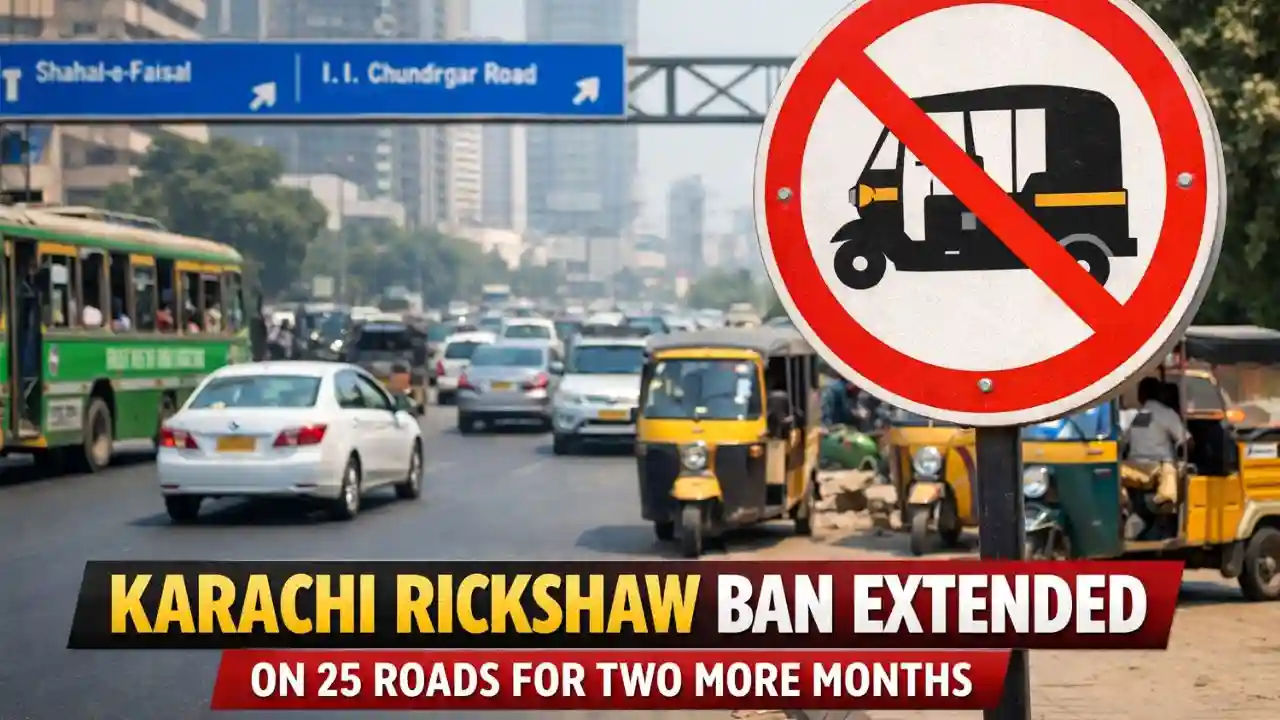
The Karachi Rickshaw Ban Extended on 25 Roads for Two More Months have extended the ban on rickshaws on 25 major roads of Karachi for an additional two months, continuing a policy aimed at improving traffic flow, reducing congestion, and minimizing road accidents in the city. The decision has sparked debate among commuters, transport experts, and rickshaw drivers, as Karachi struggles to balance traffic management with livelihood concerns.
This extension means that three-wheeled rickshaws will remain prohibited from entering key arteries and commercial corridors until further notice, unless an alternative traffic arrangement is introduced.
Why Was the Rickshaw Ban Extended in Karachi?
The Karachi Traffic Police and city administration extended the ban after reviewing traffic data and road safety reports. According to officials, the earlier ban showed positive results, including:
- Smoother traffic flow during peak hours
- Reduced bottlenecks at major intersections
- Fewer minor accidents involving rickshaws
- Better movement of public buses and emergency vehicles
Authorities believe that allowing rickshaws back too early would reverse these gains, especially during the busy winter and early-year months when traffic volume traditionally increases.
Background of the Rickshaw Ban in Karachi
The rickshaw restriction was first imposed as a temporary traffic management measure to control congestion on roads with heavy vehicle movement. Karachi, being Pakistan’s largest city, faces daily traffic pressure due to:
- Rapid population growth
- Limited road expansion
- High number of commercial vehicles
- Weak public transport infrastructure
Rickshaws, while affordable and popular, often stop abruptly, take illegal U-turns, and occupy fast lanes, making them a frequent cause of traffic jams on wide roads.

List of Major Roads Where Rickshaws Remain Banned
Although authorities periodically revise the list, the ban generally applies to 25 key roads, including:
- Shahrah-e-Faisal
- I.I. Chundrigar Road
- MAJ Road
- University Road (selected stretches)
- Korangi Road
- Sharae Quaideen
- Mai Kolachi Bypass
- Rashid Minhas Road
- North Nazimabad main arteries
- Clifton and Defence commercial corridors
These roads carry heavy traffic volumes, including buses, trucks, ambulances, and intercity vehicles.

Duration of the Extended Rickshaw Ban
The latest notification confirms that the ban has been extended for two more months, starting immediately after the previous deadline expired. Officials have clarified that:
- The ban is temporary but extendable
- Performance and traffic data will be reviewed again
- Further extensions or relaxations depend on road conditions
This means rickshaw drivers must avoid restricted roads until the new deadline, or face penalties.

Penalties for Violating the Rickshaw Ban
Rickshaw drivers found violating the ban may face:
- Traffic challans
- Monetary fines
- Possible impoundment of the vehicle
- Repeat violations may lead to stricter action
Traffic Police have increased monitoring through patrol units and checkpoints, especially during peak office hours.
Impact on Rickshaw Drivers and Daily Wage Earners
The extension has caused concern among rickshaw drivers, many of whom rely on these routes for daily income. Drivers argue that:
- Alternative routes are longer and less profitable
- Fuel costs increase due to detours
- Passenger demand drops on inner roads
Rickshaw unions have requested the government to either relax restrictions during non-peak hours or provide dedicated rickshaw lanes on major roads.
Public Reaction to the Rickshaw Ban Extension
Public opinion remains divided:
Supporters Say:
- Traffic congestion has reduced
- Commute times are shorter
- Roads feel safer for cars and bikes
Critics Say:
- Rickshaws are a lifeline for low-income commuters
- Buses are overcrowded and unreliable
- The ban targets poor workers instead of improving infrastructure
Urban planners stress that banning rickshaws alone is not a permanent solution.
Role of Rickshaws in Karachi’s Transport System
Rickshaws remain a critical part of Karachi’s informal transport network. They are widely used because they:
- Provide last-mile connectivity
- Are cheaper than taxis
- Can access narrow streets
- Operate where buses do not
Any long-term policy must consider regulating and modernizing rickshaws, not just restricting them.
Possible Long-Term Solutions Suggested by Experts
Transport experts have suggested several alternatives to repeated bans:
- Dedicated rickshaw lanes on wide roads
- Time-based entry, allowing rickshaws during off-peak hours
- Upgrading to electric rickshaws with speed governors
- Improved public bus services to reduce dependency on rickshaws
- Driver training and licensing reforms
Without such reforms, temporary bans may continue to return every few months.
Will the Rickshaw Ban Be Lifted After Two Months?
Officials have not guaranteed that the ban will end after two months. The final decision depends on:
- Traffic congestion data
- Accident statistics
- Public feedback
- Availability of alternative transport options
If congestion worsens, the ban may be extended again, possibly with stricter enforcement.
What Rickshaw Drivers Should Do During the Ban
Rickshaw drivers are advised to:
- Follow alternative approved routes
- Avoid restricted roads at all times
- Stay updated with traffic police notifications
- Join registered rickshaw unions for collective representation
Compliance can help avoid fines and vehicle seizure.
Conclusion
The extension of the rickshaw ban on 25 major roads in Karachi for two more months highlights the city’s ongoing struggle with traffic management. While authorities see the ban as necessary for smoother traffic, the move continues to affect thousands of rickshaw drivers and low-income commuters.
Experts agree that short-term bans are not a long-term fix. Karachi needs sustainable transport planning, better public transit, and inclusive policies that balance traffic efficiency with economic realities.
Until then, the rickshaw ban remains a controversial but active measure shaping daily travel in Pakistan’s largest city.
FAQs – Karachi Rickshaw Ban Extended
Q1: Why is the rickshaw ban extended in Karachi?
The ban was extended to further reduce traffic congestion and road accidents on major roads.
Q2: For how long has the rickshaw ban been extended?
The ban has been extended for two more months.
Q3: How many roads are affected by the rickshaw ban?
Rickshaws are banned on 25 major roads across Karachi.
Q4: What happens if a rickshaw violates the ban?
Drivers may face fines, challans, or vehicle impoundment.
Q5: Is the rickshaw ban permanent?
No, it is currently temporary but may be extended again based on traffic conditions.