Government to Provide PKR 100 billion Subsidy on Electric Vehicles Under New Energy Vehicle Policy
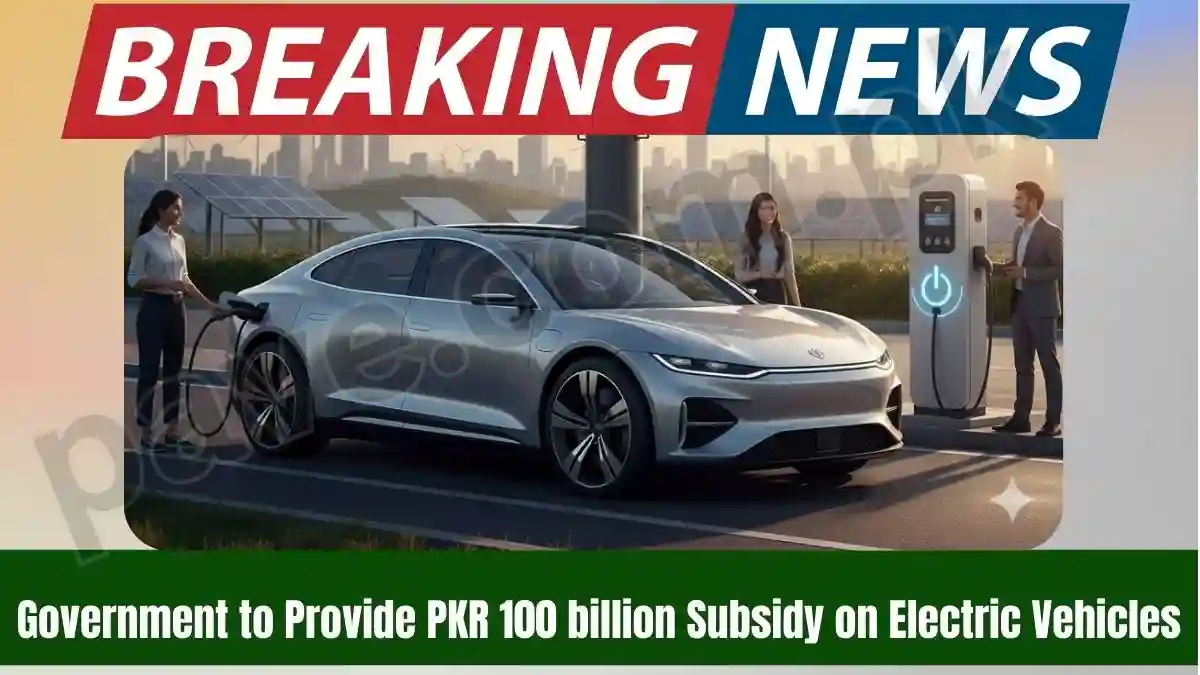
Government to Provide PKR 100 billion Subsidy on Electric Vehicles Under New Energy Vehicle Policy has recently announced an ambitious initiative to promote electric mobility across the country. Under the new Energy Vehicle Policy 2026, a PKR 100 billion subsidy will be provided to manufacturers, importers, and consumers of electric vehicles (EVs). This policy aims to accelerate the adoption of electric vehicles, reduce carbon emissions, and position Pakistan as a regional leader in clean energy transportation.
The move comes as part of Pakistan’s broader strategy to address environmental concerns, reduce dependence on fossil fuels, and encourage sustainable transportation options. Experts believe that this policy could transform the country’s automotive industry and open new opportunities for both local and foreign investors.
Key Features of the Electric Vehicle Subsidy
The PKR 100 billion subsidy under the Energy Vehicle Policy includes incentives for both producers and buyers of electric vehicles. Here’s a detailed breakdown:
- Consumer Incentives:
- Buyers of electric cars, motorcycles, and scooters will receive substantial financial support.
- Subsidies vary based on vehicle type, with higher incentives for fully electric vehicles compared to hybrid models.
- Additional discounts are expected for low-income families and government employees.
- Manufacturer Support:
- Local EV manufacturers will receive tax exemptions, reduced import duties on EV components, and grants for setting up assembly lines.
- Foreign EV manufacturers entering the Pakistani market may benefit from joint ventures and incentives for technology transfer.
- Charging Infrastructure:
- A portion of the subsidy is allocated for the development of EV charging stations across major cities and highways.
- Public-private partnerships will be encouraged to ensure widespread availability of charging points.
- Green Loan Schemes:
- Financial institutions will provide low-interest loans to consumers for purchasing EVs, backed by the government subsidy.
- Loan repayment terms will be designed to make EV ownership more affordable and attractive.
Objectives of the New Energy Vehicle Policy
The Energy Vehicle Policy 2026 is designed to achieve multiple objectives:
- Promote Electric Mobility: Reduce reliance on conventional fuel vehicles and promote a shift towards clean energy transportation.
- Environmental Benefits: Minimize greenhouse gas emissions, contributing to Pakistan’s commitment to the Paris Climate Agreement.
- Economic Growth: Boost local EV manufacturing, create new jobs, and attract foreign investment.
- Energy Security: Reduce import bills by cutting down dependency on oil and fossil fuels.
- Technological Advancement: Encourage research and development in electric mobility and renewable energy solutions.

How to Avail the PKR 100 Billion EV Subsidy
Consumers and businesses interested in benefiting from the subsidy can follow these steps:
- Registration:
- Register your EV purchase with the official government EV portal.
- Submit necessary documents, including CNIC, vehicle purchase invoice, and financing details.
- Eligibility Check:
- Verify that your vehicle qualifies under the subsidy program.
- The policy covers fully electric vehicles, hybrid vehicles, and certain imported EV models.
- Subsidy Application:
- Apply for the subsidy online through the designated portal or at authorized government offices.
- Ensure all documentation is accurate to avoid delays in approval.
- Approval & Payment:
- Once approved, the subsidy amount will either be directly credited to the consumer’s bank account or adjusted in the vehicle’s purchase price.

Expected Impact of the Subsidy on Pakistan’s EV Market
Analysts believe the PKR 100 billion subsidy will have a transformative effect on Pakistan’s automotive sector:
- Increased EV Sales: More consumers are likely to switch to electric vehicles due to affordability.
- Local Manufacturing Boost: Local EV production will receive a major push, creating jobs and strengthening the supply chain.
- Infrastructure Development: The establishment of more charging stations will encourage wider EV adoption.
- Environmental Gains: Reduced emissions will contribute significantly to cleaner air in major cities.
The policy is also expected to encourage innovation in battery technology, renewable energy integration, and EV maintenance services, fostering a robust ecosystem for electric mobility.

Challenges and Considerations
While the policy is promising, there are challenges that need to be addressed:
- Charging Infrastructure: The country needs a network of fast and reliable charging stations to support EV adoption.
- Battery Recycling: Proper disposal and recycling of EV batteries must be ensured to prevent environmental hazards.
- Cost of EVs: Even with subsidies, EVs may remain more expensive than conventional vehicles for some consumers.
- Public Awareness: Extensive campaigns are needed to educate the public about the benefits of electric vehicles.
FAQs About PKR 100 Billion EV Subsidy
Q1: Who is eligible for the electric vehicle subsidy?
A1: The subsidy is available to Pakistani citizens purchasing fully electric vehicles, hybrid vehicles, or qualifying imported EVs.
Q2: How much subsidy will a consumer receive on EV purchase?
A2: The subsidy varies based on vehicle type and price. Detailed amounts are available on the official government portal.
Q3: Are there incentives for local EV manufacturers?
A3: Yes, local manufacturers receive tax exemptions, grants, and reduced import duties on EV components.
Q4: Can I avail the subsidy for EV motorcycles and scooters?
A4: Yes, the policy covers electric two-wheelers as well as cars.
Q5: How long will the subsidy program last?
A5: The government has announced the subsidy for an initial phase of three years, with possible extensions based on adoption rates.
Conclusion
The Government of Pakistan’s decision to allocate PKR 100 billion for the electric vehicle subsidy under the Energy Vehicle Policy 2026 marks a significant step toward a greener, more sustainable future. By supporting consumers, manufacturers, and infrastructure development, this initiative is set to reshape Pakistan’s automotive landscape, reduce emissions, and create economic opportunities.
With proper implementation, public awareness campaigns, and industry cooperation, Pakistan can become a leading player in electric mobility in the South Asian region. The coming years are likely to see a surge in EV adoption, making electric vehicles not just a sustainable choice but an affordable and practical option for Pakistani citizens.