
Big Move to Attract Tourists: Pakistan Launches Visa-on-Arrival for 120 Nations
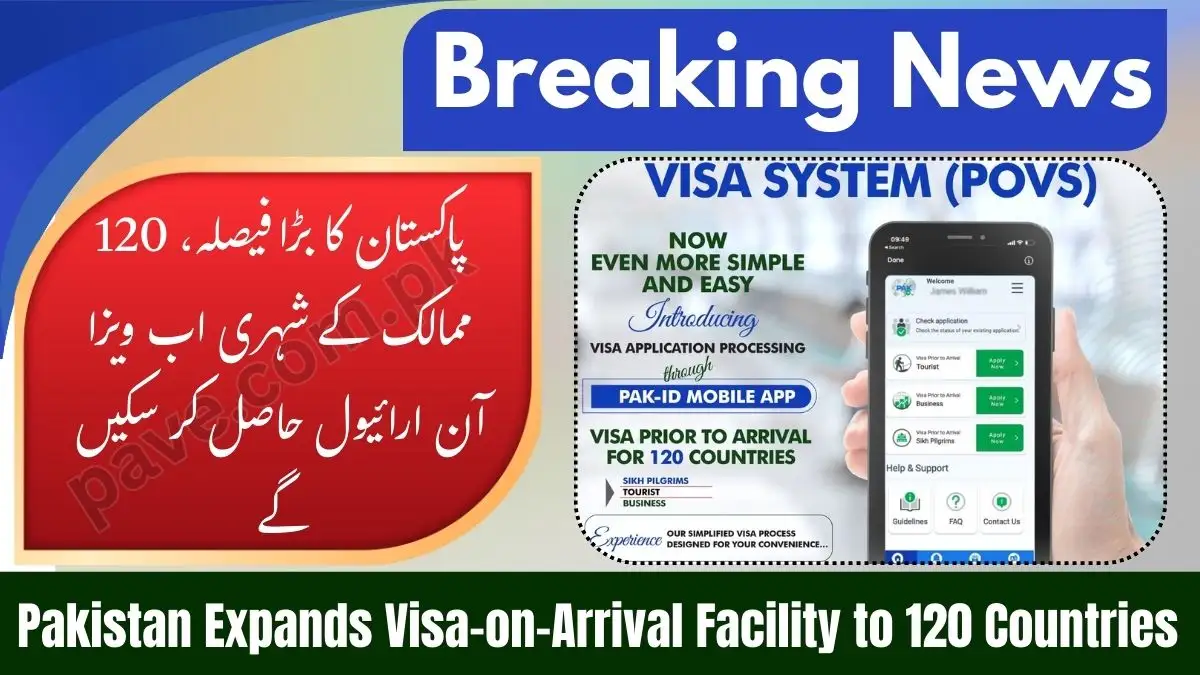
Pakistan has taken one of its boldest tourism and foreign-policy steps in decades, dramatically easing entry rules to reposition itself as a budget-friendly, open, and accessible travel destination. At the heart of this transformation is a landmark visa policy offering free entry facilitation to citizens of 126 countries—a move designed to revive tourism, attract foreign spending, and reshape Pakistan’s global image.
1. The Core Policy: Free Entry for 126 Nationalities
The government’s primary objective is simple but ambitious: remove cost, reduce friction, and speed up access for international travelers.
Key Features of the Policy
- Zero Visa Fees
Citizens of eligible 126 countries no longer pay the traditional visa processing fee, which previously ranged between $60–$100. - 90-Day Stay with Multiple Entry
Most travelers receive permission to stay in Pakistan for up to 90 days, often with multiple-entry validity, making it ideal for tourists, digital nomads, and business visitors. - Fast-Track Approval (24–48 Hours)
Applications under the Visa Prior to Arrival (VPA) framework are designed to be processed within one to two working days, a major upgrade from earlier timelines.
This policy alone places Pakistan among the most cost-accessible destinations in Asia.

2. January 2026 Update: VPA vs Standard E-Visa – What Changed?
While the policy itself remains unchanged, travelers have noticed adjustments in how applications are processed online.
System Transition Explained
- As of January 1, 2026, the dedicated “Visa Prior to Arrival (VPA)” option on the NADRA Visa Portal has intermittently redirected users to the Standard E-Visa category.
- This has caused confusion, but the benefit remains active—only the digital pathway has been streamlined.
Current Requirement (Important)
Even for travelers eligible for Visa on Arrival, it is now mandatory to:
- Submit an Electronic Travel Authorization (ETA)
- Apply through the Pakistan Online Visa System before departure
Airlines may deny boarding without proof of ETA approval.
GCC Countries: Still the Most Relaxed
Citizens of Gulf Cooperation Council (GCC) states continue to enjoy the most liberal access, often traveling with minimal pre-approval requirements:
- Saudi Arabia
- United Arab Emirates
- Qatar
- Bahrain
- Oman
- Kuwait
For GCC nationals, the process remains faster and less documentation-heavy than for most other regions.

3. Eligible Countries: Who Can Benefit? (Quick Look)
The list of 126 eligible countries covers nearly all major tourist source markets.
🌎 Americas
- USA
- Canada
- Brazil
- Argentina
- Mexico
🌍 Europe
- UK
- Germany
- France
- Italy
- Spain
- Russia
- Turkey
🌏 Asia–Pacific
- China
- Japan
- Australia
- Malaysia
- Indonesia
- Thailand
🏜️ Middle East
- All GCC countries
This broad inclusion signals Pakistan’s intent to compete globally, not regionally.

4. How to Apply for Pakistan “Visa on Arrival” (ETA) – Step by Step
To avoid issues at check-in or immigration, travelers are advised to apply 48–72 hours before departure.
Step 1: Register Online
Create an account on the Pakistan Online Visa System operated by NADRA.
Step 2: Submit Travel Intent
Fill out a simplified online form (around 30 questions), covering travel dates, purpose, and accommodation details.
Step 3: Upload Documents
In most cases, only:
- Passport copy
- Passport-size photograph
Some applicants may also be asked for:
- Hotel booking
- Invitation letter
Step 4: Receive ETA
Once approved, an Electronic Travel Authorization (ETA) is emailed to you.
Print it and present it at Pakistani immigration, where your passport will be stamped on arrival.

5. Why This Change? The Bigger Strategy Behind the Policy
This visa liberalization is not isolated—it is part of two broader national initiatives:
- Green Tourism Project
- Pakistan Accelerated Development Plan
By eliminating visa fees and delays, the government aims to:
- Increase foreign tourist arrivals by 100% by the end of 2026
- Channel tourism toward underexplored northern regions such as:
- Hunza
- Skardu
- Swat
The expected result: higher foreign exchange inflows, job creation, and sustainable regional development.
Final Analysis
Pakistan’s free-visa policy for 126 nationalities marks a paradigm shift. Instead of selling itself as a niche or restricted destination, the country is positioning itself as open, affordable, and globally competitive.