No More Land Property Transfer on Oral Transactions in Punjab in 2026
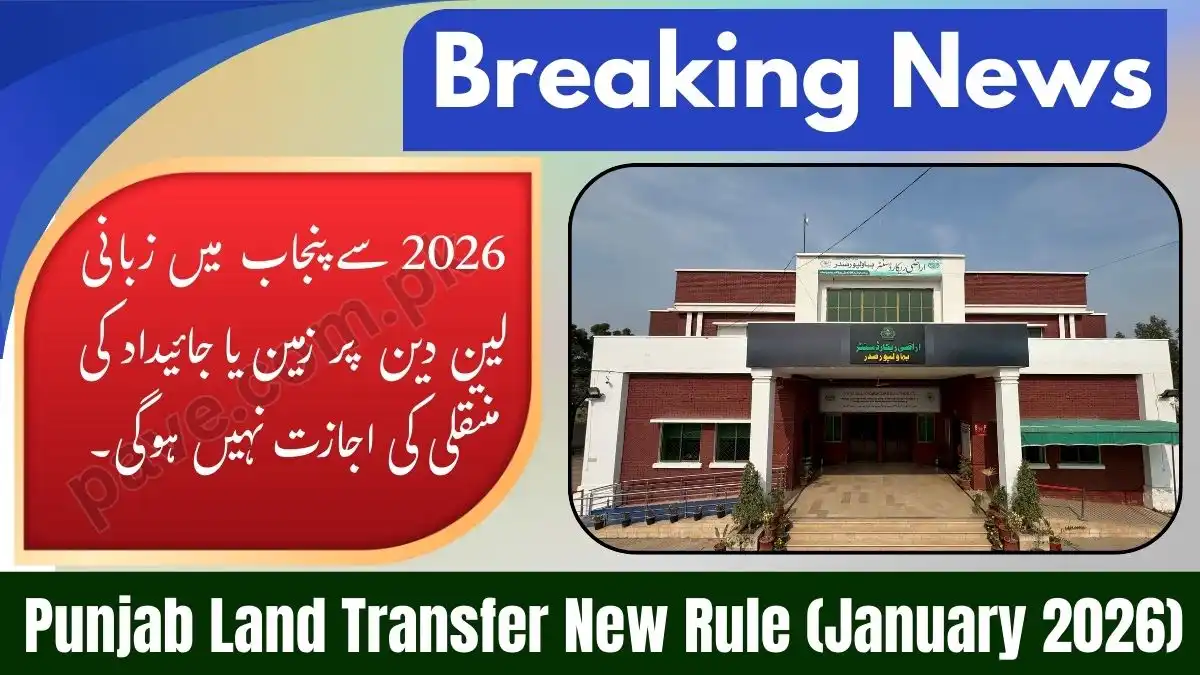
From January 2026, the Punjab government has enforced one of the most significant land reforms in decades, fundamentally changing how property ownership is transferred. Under the new policy, no land mutation (Inteqal) will be recognized without a registered deed (Registry)—effectively ending the decades-old practice of oral or informal land transfers.
This reform has been implemented through the Punjab Land Records Authority (PLRA) to improve transparency, curb fraud, and reduce property disputes across Punjab.
Below is a clear, ultra-premium, and legally accurate breakdown of what the new rule means, the only exception, and the updated 2026 procedure.
1. What the New Rule Means (Effective January 2026)
Registry Is Now Mandatory
Under the new policy:
- No land transfer—whether through Sale, Gift (Hiba), Mortgage, or Exchange—will be accepted unless backed by a registered deed.
- Mutation (Inteqal) cannot be entered in official land records without prior registry under the Registration Act, 1908.
End of “Zubani Inteqal”
- Verbal transfers, handwritten agreements, or simple stamp papers are no longer legally valid for ownership transfer.
- Revenue staff are barred from approving oral claims.
📌 In simple terms:
Ownership now changes only after registry — not before.

2. The One Legal Exception — Inheritance (Virasat)
The government has allowed only one exception to this strict rule:
Inheritance Transfers Are Exempt
- If land is transferred to legal heirs after the death of the owner, the traditional inheritance process will continue.
- Mutation can still be carried out based on:
- Shajra-e-Nasab (Family Tree)
- Verbal verification
- Death certificate and heir confirmation
⚠️ Important Clarification
- This exemption applies only to Virasat
- Sale, Gift, or Exchange among heirs still requires registry

3. How to Transfer Land in Punjab (Updated 2026 Procedure)
Since oral mutations are banned, buyers and sellers must follow a fully documented and biometric process.
Step 1: Obtain Fard-e-Malkiat
- Apply for “Fard Baraye Farokht” (Sale Fard) from:
- Arazi Record Center (ARC), or
- PLRA online portal
- This document confirms:
- Ownership
- Area
- Khasra & Khatooni details
Step 2: E-Stamp Paper & Sale Deed
- Generate E-Stamp Paper based on:
- Official property valuation
- Prepare a formal Sale Deed with:
- Buyer & Seller details
- Property description
- Transaction value
Step 3: Sub-Registrar Office (Biometric Registry)
- Buyer, Seller, and two witnesses must appear in person
- Mandatory:
- Biometric verification
- CNIC verification
- Sale Deed is officially registered
📌 Without biometric registry, no mutation will proceed.
Step 4: Automatic Digital Mutation
- Once registry is completed:
- Data is automatically transferred to the PLRA system
- Inteqal (Mutation) is processed digitally
- No separate manual application is required

4. Why the Government Introduced This Change
A. Eliminating Land Fraud
- Oral mutations were frequently misused by:
- Land grabbers
- Fake sellers
- Unauthorized relatives
B. Transparency & Legal Certainty
- Registered deeds create a permanent, verifiable paper trail
- Ownership history becomes tamper-proof
C. Reducing Court Litigation
- Property disputes make up a major portion of civil cases
- This reform is expected to significantly reduce lawsuits
📌 In short: Less fraud, fewer disputes, stronger ownership rights.

5. Summary of Rules & Official Fees (2026)
| Category | Rule in 2026 |
|---|---|
| Sale / Gift / Exchange | Registered Deed Mandatory |
| Inheritance (Virasat) | Exempt — Oral process allowed |
| Mutation Fee | 0.1% of property value (Minimum Rs. 3,300) |
| Express Service | Available — Rs. 9,700 |
| Officer Penalty | Disciplinary action for approving oral sales |
Final Impact: What This Means for Buyers & Sellers
- Buyers are safer — no hidden claims
- Sellers are protected — clear exit from ownership
- Revenue records become reliable
- Illegal land transfers become nearly impossible
In 2026 and beyond, registry is the foundation of ownership in Punjab.