What will be the scope BYD Vehicles in Pakistan in 2026
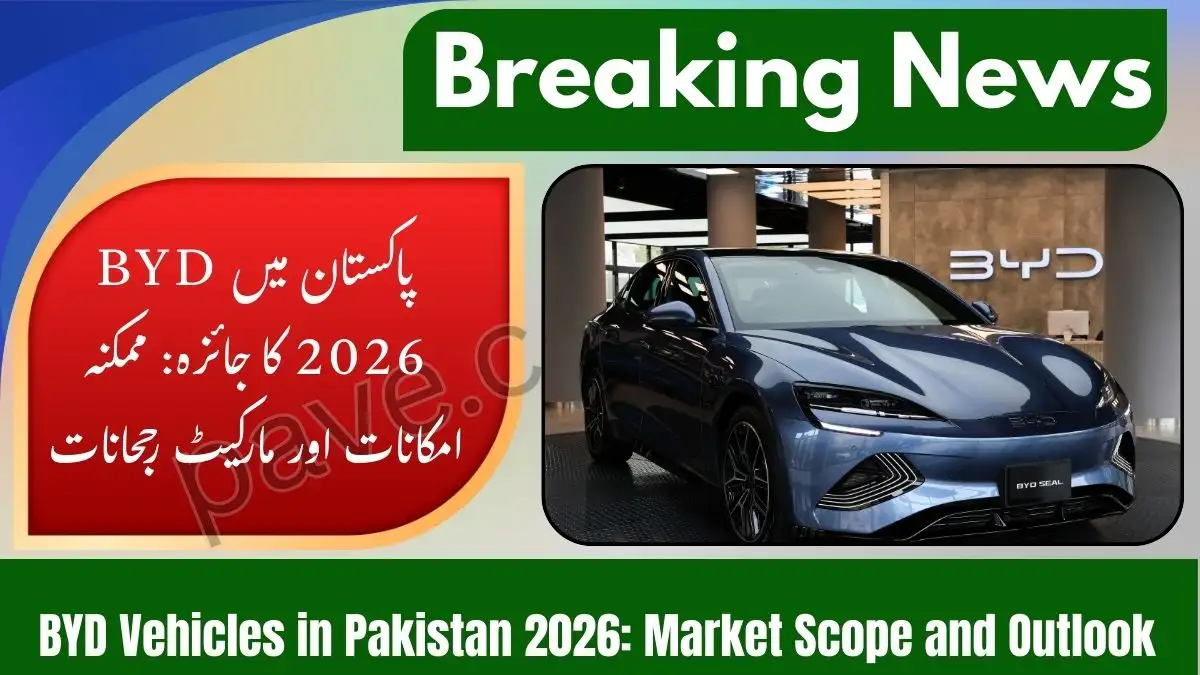
By 2026, BYD has crossed a decisive threshold in Pakistan. What began as a premium EV import experiment is rapidly turning into a full-scale automotive ecosystem, combining local manufacturing, national charging infrastructure, and a diversified product lineup. The scope of BYD in 2026 is not incremental; it is transformational.
Below is a structured, in-depth look at how and why BYD is reshaping Pakistan’s auto industry.
🏗️ 1. Local Assembly (CKD) Operations: The 2026 Turning Point
The single most important development of 2026 is the launch of BYD’s local assembly plant.
Key CKD Details
- Production Start: July–August 2026
- Location: Near Karachi
- Joint Venture: Mega Motor Company (MMC / Hubco Group)
- Initial Capacity: ~25,000 units per year
Why This Changes Everything
- Avoids high CBU import duties
- Stabilizes prices in a volatile exchange-rate environment
- Improves spare parts availability and after-sales confidence
- Positions BYD as a local manufacturer, not a temporary importer
This move places BYD ahead of most EV competitors, many of whom still rely entirely on imported units.

🛣️ 2. National Charging Corridor: Solving Range Anxiety at Scale
Infrastructure has historically been the weakest link in EV adoption. BYD’s 2026 strategy directly addresses this through a nationwide rollout with HubcoGreen.
Charging Corridor Overview
- Length: ~1,300 km
- Route: Karachi → Peshawar
- Charger Density: Every 150–200 km on major motorways
- Technology:
- Level 3 DC Fast Chargers (50 kW+)
- Level 4 DC Fast Chargers (150 kW+)
Government Policy Support
- 45% reduction in electricity tariffs for EV charging stations (Policy 2025–26)
- Encourages private and commercial investment in fast charging
This corridor fundamentally changes EV usability, enabling intercity travel without compromise.

🚗 3. BYD Vehicle Portfolio in Pakistan (2026)
By mid-2026, BYD’s showroom lineup covers nearly every major passenger vehicle category.
| Segment | Model | 2026 Status |
|---|---|---|
| Urban SUV | Atto 2 | Launched Jan 2026, Rs. 7.29M, mass-market entry |
| Performance SUV | Sealion 7 | Launched Jan 2026, Rs. 15.49M, flagship EV SUV |
| Luxury Sedan | Seal | Market-leading premium EV sedan |
| Utility / Pickup | Shark 6 | Pakistan’s first PHEV pickup, Hilux/Revo disruptor |
This breadth allows BYD to compete simultaneously with:
- Corolla / Civic buyers (Atto 2)
- Fortuner / Santa Fe buyers (Sealion 7)
- Camry / luxury sedan buyers (Seal)
- Hilux / Revo buyers (Shark 6)
No other EV brand in Pakistan offers this level of segmentation in 2026.

📉 4. Market Share Ambitions & Consumer Shift
BYD’s goals are not modest.
2026 Market Projections
- Target: 30–35% of Pakistan’s NEV (New Energy Vehicle) market
- EV market expected to grow 3–4× vs 2024
- Key demand drivers:
- Persistently high petrol prices
- Stabilizing auto financing rates
- Claimed 70–75% lower running costs vs ICE vehicles
- Rising trust due to local assembly
This represents a direct erosion of Japanese dominance in sedans and SUVs.
⚠️ 5. Challenges That Will Define Late-2026 Success
Despite strong momentum, two factors will determine how deep BYD’s impact goes.
The “Used Car” Test
- First 2024–25 imported BYDs will enter the resale market
- Resale values will shape middle-class confidence
- Early adopters will set benchmarks for depreciation
Grid Reliability
- Public fast-charging is expanding rapidly
- Home-charging remains vulnerable to:
- Load-shedding
- Voltage fluctuations in smaller cities
- Backup power solutions may remain necessary for some users
These are transitional issues, but they will influence adoption speed.
🧠 The Verdict: BYD’s Scope in 2026
BYD in Pakistan is no longer just selling cars.
It is:
- Manufacturing locally
- Building national infrastructure
- Reshaping consumer expectations
- Forcing incumbents like Toyota and Honda to accelerate hybrid and EV plans
Bottom Line
In 2026, BYD evolves from a vehicle brand into a mobility platform. If execution stays on track, it will not only dominate Pakistan’s EV segment but permanently alter how the country thinks about personal transportation.