Govt To Surge Affidavit Fees in Pakistan From February 2026
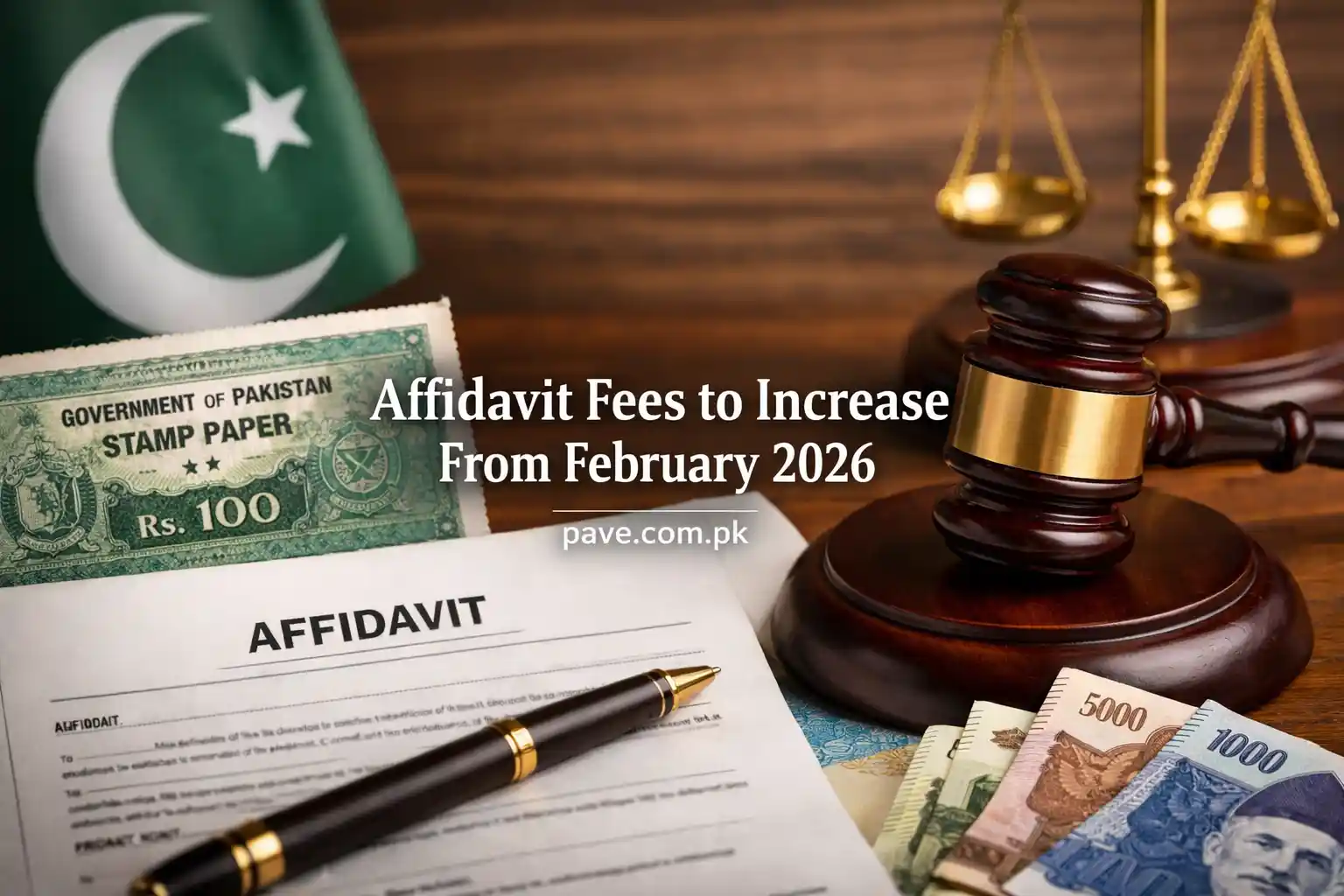
In February 2026, the Punjab government implemented a major revision in e-stamp paper and documentation fees, directly affecting routine legal and administrative work. From affidavits and domicile papers to property agreements and utility connections, the changes mark one of the steepest fee hikes in recent years.
Below is a clear, ultra-premium explainer covering the new rates, temporary relief measures, and why the increase has sparked public backlash.
Revised Fee Structure (Effective 2026)
The most noticeable increases apply to everyday documents used by ordinary citizens.
📄 Updated E-Stamp & Document Fees
| Document Type | Old Fee (Rs.) | New Fee (Rs.) |
|---|---|---|
| Minimum E-Stamp Paper | 100 | 300 |
| Affidavit (General) | 100 | 300 |
| Divorce-Related Papers | 100 | 1,000 |
| Domicile Certificate Papers | 100 | 500 |
| Utility Connections (Electricity / Gas) | 100 | 1,000 |
| Property Sale Agreements | 1,200 | 3,000 |
| Non-Property Agreements | 100 | 500 |
| Power of Attorney | 1,500 | 1,800 |
🔴 Biggest shock: Utility connections and divorce documentation jumped by up to 1,000%, drawing widespread criticism.

February 2026 Property Relief Window (Limited Time)
Despite the overall surge, the government introduced a temporary concession to boost registrations:
🏠 Stamp Duty Relief for Cooperative Societies
- February 2026: 2% stamp duty (down from standard 8%)
- March 2026: 3%
- April 2026 onward: Full rates restored
👉 This relief is time-bound and applies only to cooperative society registrations, not all property types.

New Rules You Must Know (2026)
📱 Mandatory SIM Verification
- To obtain any e-stamp paper, the applicant must:
- Have a SIM registered in their own name
- Complete digital verification at issuance
This aims to curb fraud but has created hurdles for:
- Elderly citizens
- Women using family SIMs
- Rural applicants
💰 Agreement Value–Based Charges
- Rs. 500,000 – Rs. 1 million: Rs. 6,000 fee
- Above Rs. 15 million: Additional Rs. 20,000 (on top of base charges)
These slabs significantly increase costs for mid-to-high value transactions.
Why Did the Government Increase Fees?
According to the Punjab Finance Department:
- Fees had not been revised for years
- Administrative costs rose due to:
- Inflation
- Digitization infrastructure
- Verification and compliance systems
- The new rates are described as “inflation-adjusted”

Public Reaction & Criticism
Despite official justification, the response has been overwhelmingly negative:
- Middle- and low-income households hit hardest
- Legal documentation now costs 3–10× more
- Civil society groups argue:
- Revenue collection is being prioritized over access to justice
- Essential documents (divorce, utilities) should not be treated as luxury services
Common Questions (Answered Clearly)
What is stamp paper used for in Pakistan?
Stamp paper gives legal validity to documents such as affidavits, agreements, power of attorney, divorce deeds, and property transactions.
What is the stamp paper fee for an affidavit in 2026?
- Rs. 300 (previously Rs. 100)
Why is stamp paper important?
Without valid stamp paper:
- Courts may reject documents
- Agreements may become legally unenforceable
Is this linked to NADRA fees?
No.
NADRA fees (CNIC, FRC, executive cards) are separate and governed by a different authority, though both saw upward revisions in 2025–2026.
Practical Advice for Citizens
- ✅ Complete property registrations in February 2026 if eligible
- ✅ Ensure your SIM is registered on your own CNIC
- ❌ Avoid middlemen claiming “special rates” — most are scams
- 📄 Always check the official e-stamp portal or DC office notice before paying
Final Verdict
The 2026 revision of stamp paper and documentation fees represents a structural shift in Punjab’s revenue policy. While the government frames it as overdue adjustment, for citizens it translates into higher costs for basic legal rights and services.
Bottom line:
If you need affidavits, agreements, or property paperwork in 2026, budget carefully and time your transactions wisely—especially during the February relief window.