Big Update: Electricity Tariff Increase Likely Ahead of Ramadan
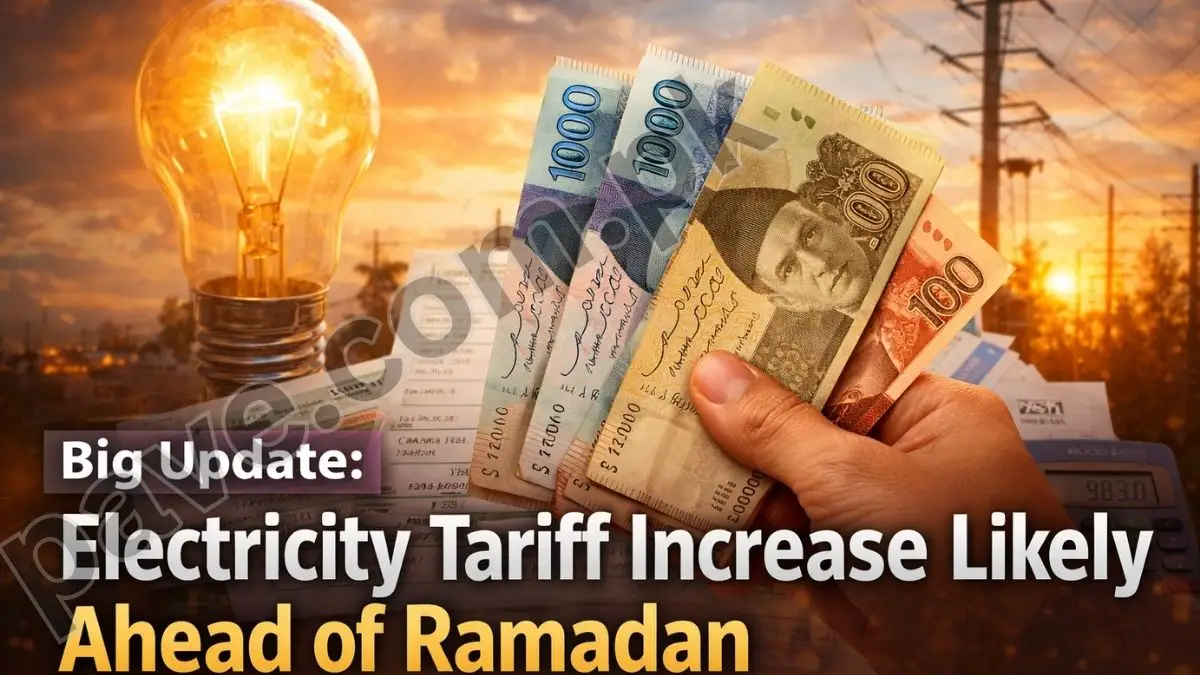
As Pakistan heads toward Ramadan 2026, a period traditionally associated with relief measures and consumer ease, electricity users are bracing for the opposite. Fresh regulatory filings and power sector data indicate that monthly electricity bills are likely to rise just weeks before the holy month begins. For households already managing inflation and higher food costs, this potential hike could feel like a sudden power shock.
At the center of this development is a proposed Fuel Cost Adjustment that reflects deeper structural pressures within Pakistan’s energy system rather than a one-off policy decision.
Fuel Cost Adjustment: The Immediate Trigger
The most direct reason behind the expected increase is a request submitted by the Central Power Purchasing Agency to the National Electric Power Regulatory Authority.
The proposal under review seeks an increase of Rs. 0.48 per unit for electricity consumed in December 2025. While the figure may appear modest at first glance, it becomes significant when applied across millions of residential bills nationwide.
The justification lies in a sharp rise in electricity demand. December 2025 consumption jumped by nearly 22 percent, reaching around 2.4 billion units. This surge occurred during winter, a period when Pakistan’s electricity generation mix becomes more expensive due to seasonal constraints.

Winter Generation Mix: Why Costs Rise
Pakistan relies heavily on hydropower during the summer months, but winter brings a natural decline in hydel output due to lower water flows. To compensate, the system shifts toward costlier alternatives such as imported LNG, coal, and thermal fuels.
Even though nuclear power continues to contribute a significant share, its stable output is not enough to offset the higher marginal cost of fossil-based generation. As a result, the overall cost of producing electricity increases, and these additional expenses are passed on to consumers through Fuel Cost Adjustments.
This seasonal pattern repeats every year, but the impact in 2026 is amplified by higher demand and long-standing inefficiencies in the power sector.
Industrial Relief Versus Household Reality
Adding to public frustration is the contrast between industrial and domestic tariffs. Prime Minister Shehbaz Sharif recently announced a Rs. 4.04 per unit reduction in electricity prices for industrial consumers.
The move is aimed at reviving manufacturing activity, boosting exports, and improving Pakistan’s competitiveness in regional and global markets. Lower wheeling charges and cheaper power are expected to ease production costs for factories.
However, residential users do not benefit from this relief. Domestic consumers remain fully exposed to Fuel Cost Adjustments and Quarterly Tariff Adjustments, which often raise bills without any visible change in the advertised base tariff. For households, this creates the perception of silent increases that are difficult to anticipate or plan for.

Structural Pressures Shaping the 2026 Outlook
Several long-term factors are shaping electricity prices as Pakistan enters 2026.
One major issue is the fuel mix itself. While nuclear energy accounts for roughly a quarter of total generation, LNG and imported fuels still make up a significant share, particularly in winter. These sources are sensitive to global price fluctuations and currency movements.
Another key development is the rapid growth of rooftop solar. An estimated 10,000 megawatts of electricity is now being generated daily through net metering. While this reduces daytime demand on the grid, it also shrinks the number of consumers paying for fixed capacity costs. Those costs do not disappear and are instead redistributed among remaining grid-dependent users.
Government subsidies also play a role. Islamabad is providing around Rs. 629 billion in support to prevent an even sharper rise in tariffs. While this cushions the blow, it does not eliminate underlying inefficiencies or capacity payments owed to power producers.
Notably, authorities have decided to keep the base tariff unchanged for 2026. This means there is no structural reduction in electricity prices, and consumers should not expect long-term relief from current levels.

Ramadan Timing: Why It Matters
Ramadan is expected to begin in early March 2026, a period when household electricity usage naturally rises. Pre-dawn meals and evening gatherings increase consumption, particularly for lighting, refrigeration, and cooking appliances.
If NEPRA approves the proposed Fuel Cost Adjustment, the revised bills are likely to arrive just as Ramadan spending peaks. For many families, this overlap could strain monthly budgets already stretched by food inflation and school expenses.
Power sector officials have suggested that upcoming Quarterly Adjustments may show a slight decline, potentially offsetting some of the monthly increase. However, for most consumers, any relief is expected to be limited and uneven.
The Solar Effect and Capacity Payments
One of the most complex challenges facing Pakistan’s power sector in 2026 is the so-called solar effect. As more households and businesses generate their own electricity, the national grid loses high-paying consumers. Yet the system remains locked into long-term contracts with Independent Power Producers that guarantee fixed capacity payments regardless of actual usage.
This imbalance means fewer consumers are left to cover the same financial obligations, pushing per-unit costs higher for those still dependent on grid electricity. Until capacity contracts are renegotiated or demand patterns fundamentally change, this pressure is likely to persist.
Bottom Line
The expected electricity tariff increase ahead of Ramadan 2026 is not an isolated event. It reflects seasonal fuel dynamics, structural inefficiencies, and policy choices that prioritize industrial recovery over household relief. While subsidies and possible quarterly adjustments may soften the impact slightly, the broader trend points toward persistently high electricity costs.