
Punjab Enforces Biometric Verification for Matriculation & Intermediate Examination 2026
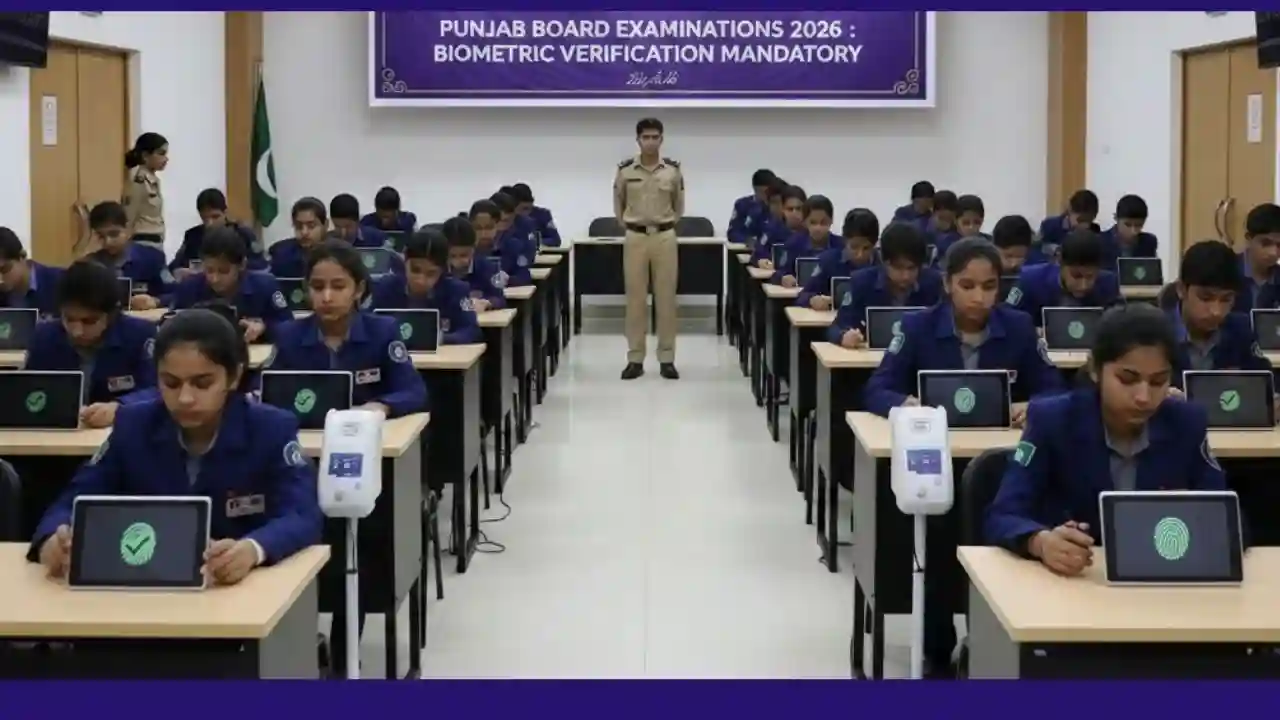
The Punjab Enforces Biometric Verification for Matriculation & Intermediate Examination 2026 decision marks a major reform in Pakistan’s education system. The Punjab government has introduced biometric verification to ensure transparency, eliminate fake candidates, and strengthen the credibility of Matric and Intermediate examinations across the province.
This step will affect thousands of students appearing in SSC (Matric) and HSSC (Intermediate) exams in 2026. Biometric verification will now be a mandatory requirement before students are allowed to sit in board examinations.
What Is Biometric Verification in Exams?
Biometric verification is a digital identity confirmation process that uses a student’s fingerprints to verify their identity. This system ensures that the student appearing in the exam is the same person who registered for it.
Under this policy, fingerprints will be matched with records available in NADRA’s national database before issuing roll number slips or allowing entry into examination halls.

Why Punjab Introduced Biometric Verification for Exams 2026
The Punjab government introduced biometric verification to address long-standing issues in the examination system. Over the years, complaints related to impersonation, fake candidates, and unfair practices increased.
Key reasons behind this decision include:
- Eliminating cheating and impersonation
- Ensuring fair examination practices
- Increasing trust in board exam results
- Digitizing the education system
- Aligning exams with international standards
This initiative is part of broader education reforms aimed at improving merit and accountability.

Boards Implementing Biometric Verification in Punjab
The biometric verification policy will be enforced by all Boards of Intermediate and Secondary Education operating in Punjab under the supervision of the Punjab Boards of Intermediate and Secondary Education.
Major boards include Lahore Board, Faisalabad Board, Rawalpindi Board, Multan Board, Gujranwala Board, Sargodha Board, Bahawalpur Board, and DG Khan Board.
All public and private candidates appearing in Matric and Intermediate exams 2026 will be covered.

Who Must Complete Biometric Verification?
Biometric verification is mandatory for:
- Regular Matric (SSC) students
- Private Matric candidates
- Regular Intermediate (HSSC) students
- Private Intermediate candidates
- Improvement and supplementary exam candidates
Failure to complete biometric verification may result in cancellation of exam registration.

Biometric Verification Process for Matric & Intermediate Students
The biometric verification process has been designed to be simple and accessible.
Step-by-Step Process
- Students will receive instructions from their respective boards or institutions
- Biometric verification centers will be announced
- Students must bring original CNIC or B-Form
- Fingerprints will be scanned and verified
- Verification data will be linked with exam registration
- Roll number slips will be issued after successful verification
For under-18 students, NADRA-issued B-Form will be used.
Role of NADRA in Biometric Verification
The biometric system is integrated with NADRA, ensuring accuracy and authenticity.
NADRA’s database helps in:
- Verifying student identity
- Preventing duplicate registrations
- Detecting fake candidates
- Ensuring one student, one record
This collaboration significantly reduces chances of fraud.
Benefits of Biometric Verification for Students
Although some students may initially find the process challenging, biometric verification offers long-term benefits.
Key Benefits
- Fair competition for all students
- No impersonation or proxy candidates
- Increased value of board certificates
- Transparent exam process
- Improved trust by universities and employers
Students who genuinely work hard will benefit the most from this system.
Challenges Students May Face
Despite its benefits, biometric verification also brings some challenges.
Common Issues
- Fingerprint mismatch due to technical reasons
- Students without CNIC or B-Form
- Long queues at verification centers
- Technical system downtime
To address these concerns, boards have been instructed to set up help desks and alternative verification options where required.
Government’s Response to Concerns
The Government of Punjab has assured students and parents that no eligible candidate will be deprived of exams due to technical issues.
Special measures include:
- Extended verification deadlines
- Additional biometric centers
- Manual verification in exceptional cases
- Coordination with educational institutions
Authorities have emphasized cooperation from students and parents.
Impact on Private Candidates
Private candidates will need to be extra careful, as they do not have institutional support like regular students.
They must:
- Complete biometric verification independently
- Follow board announcements closely
- Ensure accurate personal data
- Verify fingerprints before deadlines
Failure to comply may lead to disqualification from exams.
How This Policy Will Improve Exam Credibility
Biometric verification will significantly enhance the credibility of Punjab board examinations.
Universities, scholarship programs, and employers will have greater confidence in results. It will also discourage illegal exam mafias and paper solvers.
This reform brings Punjab’s examination system closer to international best practices.
Digital Transformation of Punjab’s Education System
The biometric exam verification policy is part of a larger digital transformation agenda in Punjab’s education sector.
Other initiatives include:
- Online registrations
- Digital result systems
- E-roll number slips
- Centralized student databases
Together, these steps aim to modernize education governance.
Important Instructions for Students Appearing in Exams 2026
Students should follow these guidelines carefully:
- Complete biometric verification as early as possible
- Bring original identity documents
- Check board websites regularly
- Keep verification slips safe
- Contact board offices in case of issues
Early compliance will help avoid last-minute stress.
Conclusion
The decision that Punjab Enforces Biometric Verification for Matriculation & Intermediate Examination 2026 is a landmark reform aimed at ensuring fairness, transparency, and credibility in board exams.
While the transition may pose temporary challenges, the long-term benefits far outweigh the difficulties. Students, parents, and institutions must cooperate to make this initiative successful.
This step will strengthen Pakistan’s education system and promote true merit in examinations.
Frequently Asked Questions (FAQs)
1. Is biometric verification mandatory for all Matric and Intermediate students in 2026?
Yes, biometric verification is compulsory for all regular and private candidates.
2. What documents are required for biometric verification?
Original CNIC or NADRA B-Form is required.
3. What happens if biometric verification fails?
Students can reattempt verification or contact their board for assistance.
4. Will exams be cancelled if biometric verification is not completed?
Yes, incomplete verification may lead to cancellation of registration.
5. Is biometric verification required for supplementary exams?
Yes, it applies to supplementary and improvement candidates as well.