Govt Moves to End Unit-to-Unit Adjustment for Solar Consumers in Pakistan
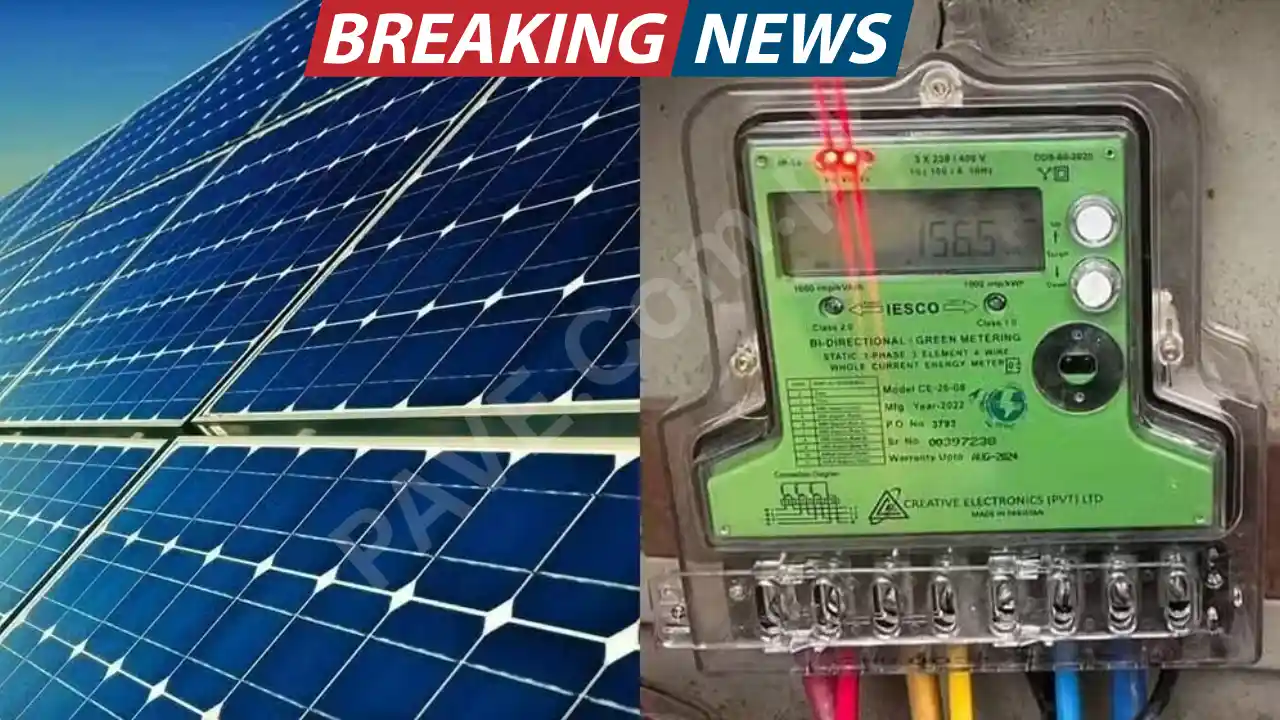
The federal government of Pakistan has moved one step closer to making major changes in the country’s net metering policy, a decision that could significantly impact thousands of rooftop solar users. The National Electric Power Regulatory Authority (NEPRA) has scheduled a public hearing on February 6, 2026, to review objections raised by consumers, solar companies, and other stakeholders regarding the proposed amendments.
If approved, these changes would end the unit-to-unit adjustment facility for solar consumers and introduce a fixed buyback rate of Rs. 11 per unit for electricity exported to the national grid. This marks a major shift from the existing net metering system that allowed solar users to offset their electricity consumption directly with the units they generated.
What Is Net Metering and Why It Matters?
Net metering has played a key role in Pakistan’s rooftop solar boom over the past decade. Under the current system:
- Solar consumers export excess electricity to the grid
- Exported units are adjusted against imported units
- Consumers pay only for the net difference at the applicable tariff
This unit-to-unit adjustment has made rooftop solar financially attractive for homes, businesses, and industries facing high electricity tariffs.
With rising grid costs and increasing solar adoption, the government believes the existing system is putting financial pressure on the power sector.

Proposed Changes in the Net Metering Policy
According to officials, NEPRA issued a draft of the proposed amendments on December 16, 2025, inviting objections within 30 days. After reviewing these submissions, a final decision is expected following the February 6 hearing.
Key Proposed Amendments
- End of Unit-to-Unit Adjustment
Solar consumers will no longer be able to offset imported units with exported units on a one-to-one basis. - Fixed Export Rate of Rs. 11 per Unit
All electricity exported to the grid will be purchased at a flat rate of Rs. 11 per unit. - Separate Billing System
- Electricity consumed from the grid will be billed at the national tariff
- Exported electricity will be paid separately at the fixed rate
This effectively shifts Pakistan from net metering to net billing.

Why the Government Wants to Change the System
The proposed amendments are part of a broader energy sector reform strategy aimed at improving sustainability and controlling rising costs.
Government’s Main Arguments
- Revenue imbalance: High-tariff consumers moving to solar reduce cross-subsidies
- Grid maintenance costs: Solar users still rely on the grid but contribute less
- Tariff pressure: Non-solar consumers bear higher costs
- System sustainability: A fixed export rate offers predictability
Officials argue that without reforms, the power sector’s circular debt problem could worsen.

Impact on Existing and New Solar Consumers
The proposed changes could have different effects depending on when a consumer installed solar panels.
Existing Solar Users
- May face longer payback periods
- Monthly savings could decrease
- Financial projections may change
New Solar Installations
- Rooftop solar may still be viable
- Return on investment could extend from 4–5 years to 7–9 years
- System sizing strategies may change
Industry experts warn that uncertainty could slow down new solar adoption.

Concerns Raised by Solar Industry and Consumers
The draft amendments have sparked strong reactions from stakeholders.
Major Concerns
- Reduced incentives for clean energy
- Lower returns for residential users
- Impact on small businesses
- Risk to Pakistan’s renewable energy targets
- Potential job losses in the solar sector
Solar associations argue that the changes could discourage investment at a time when Pakistan needs affordable and sustainable energy solutions.
NEPRA’s Role and the Public Hearing
NEPRA has stated that all objections submitted by stakeholders will be examined carefully during the public hearing. Only after this process will a final notification be issued.
What the Public Hearing Means
- Consumers can voice concerns
- Industry experts can present data
- Policymakers can revise proposals
- Transparency in decision-making
The outcome of this hearing will determine whether Pakistan officially transitions to a net billing framework.
How Net Billing Differs from Net Metering
| Feature | Net Metering | Net Billing |
|---|---|---|
| Adjustment | Unit-to-unit | Monetary |
| Export Rate | Same as import | Fixed (Rs. 11) |
| Billing | Single bill | Separate bills |
| Savings | Higher | Lower |
| Grid Impact | Higher strain | More balanced |
Net billing is already used in several countries, but its success depends heavily on export pricing and policy stability.
Broader Energy Sector Context
These proposed changes align with other government initiatives to:
- Reduce electricity subsidies
- Improve tariff efficiency
- Encourage responsible energy usage
- Stabilize the national grid
Officials insist the reforms are not anti-solar, but rather aimed at creating a fair system for all consumers.
What Happens Next?
After the February 6 public hearing:
- NEPRA will analyze objections
- Possible revisions may be made
- A final decision will be announced
- Implementation timeline will be shared
Until then, no immediate changes apply to existing net metering customers.
Conclusion
The government’s move to end unit-to-unit adjustment for solar consumers represents a turning point in Pakistan’s renewable energy policy. While authorities emphasize sustainability and fairness, consumers and industry players fear reduced incentives and slower solar growth.
The final outcome will depend on NEPRA’s public hearing and its willingness to balance financial stability with clean energy goals. For now, solar users and investors are watching closely, as the decision could reshape Pakistan’s energy future for years to come.
Frequently Asked Questions (FAQs)
1. Is net metering being completely abolished in Pakistan?
No, it is being shifted from net metering to a net billing system.
2. What is the proposed solar export rate?
The government has proposed a fixed rate of Rs. 11 per unit.
3. Will existing solar consumers be affected immediately?
No, changes will only apply after official approval and notification.
4. Why is the government ending unit-to-unit adjustment?
To reduce power sector losses and improve tariff sustainability.
5. When will the final decision be announced?
After NEPRA’s public hearing scheduled for February 6, 2026.