Supreme Court clarifies back wages are not an automatic right after reinstatement
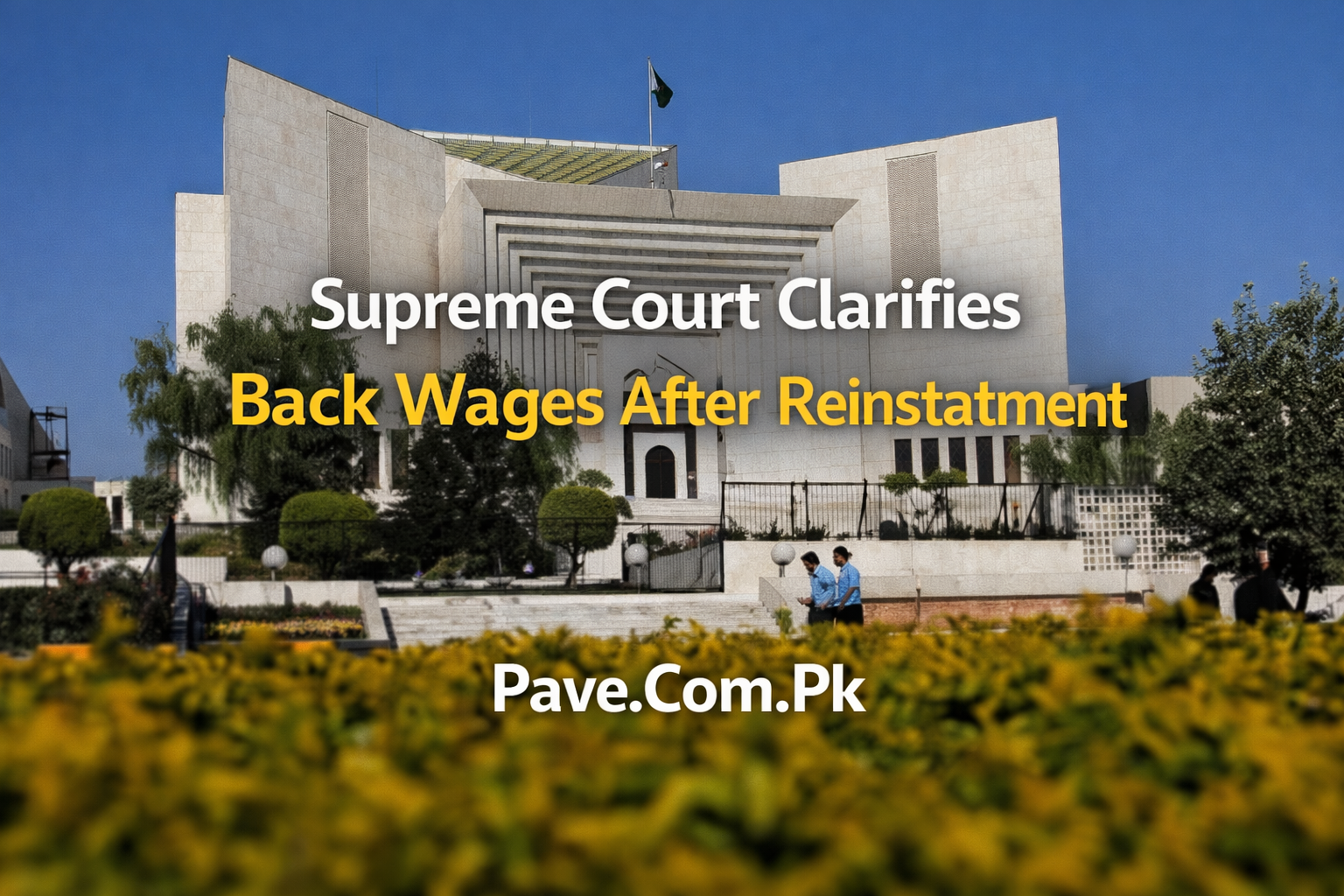
The Supreme Court of Pakistan has issued an important clarification, ruling that back wages are not an automatic right after reinstatement. The decision has wide implications for employees, employers, labor courts, and ongoing service disputes across Pakistan.
The ruling has become a major topic of discussion, with people searching on Google:
- Supreme Court back wages ruling
- back wages after reinstatement Pakistan
- SC says back wages not automatic
- employee reinstatement back pay law
This article explains what the Supreme Court ruled, why the decision matters, how it affects workers and employers, and what factors courts will now consider.
What Does the Supreme Court Ruling Say?
The Supreme Court clearly stated that:
Reinstatement of an employee does not automatically entitle them to back wages.
This means that even if an employee is:
- Dismissed unlawfully
- Later reinstated by a court or tribunal
They are not guaranteed full salary for the period they were out of service unless specific conditions are met.

Understanding “Back Wages” in Simple Terms
What Are Back Wages?
Back wages refer to:
- Salary and benefits for the period
- When an employee was dismissed, terminated, or removed
- Before being reinstated by a court decision
Many employees assume reinstatement automatically means full back pay, but the Supreme Court has clarified this is not legally automatic.
Why Did the Supreme Court Issue This Clarification?
The court issued this ruling to:
- Correct a common legal misunderstanding
- Ensure fairness between employers and employees
- Prevent automatic financial burdens on institutions
- Promote balanced and case-by-case justice
The Supreme Court emphasized that each case must be judged on its own facts.

Key Observations Made by the Supreme Court
The court highlighted several important principles:
- Reinstatement restores employment status, not guaranteed compensation
- Back wages depend on conduct, circumstances, and equity
- Courts must avoid mechanical or blanket orders
- Financial impact on public institutions must be considered
This ruling aims to bring consistency and fairness in labor-related judgments.

Factors Courts Will Now Consider Before Granting Back Wages
According to the Supreme Court, courts and tribunals must examine:
1. Nature of Termination
- Was the termination illegal or procedurally flawed?
- Was it malicious or based on misconduct?
2. Employee’s Conduct
- Did the employee contribute to the dispute?
- Was there negligence, misconduct, or indiscipline?
3. Period of Unemployment
- Was the employee completely unemployed?
- Did they earn income elsewhere during this period?
4. Employer’s Financial Condition
- Is the employer a public institution?
- Would back wages burden taxpayers or public funds?
5. Delay in Legal Proceedings
- Who caused the delay in litigation?
- Was the case prolonged unnecessarily?
Impact on Employees
What This Means for Workers
Employees should now understand that:
- Reinstatement does not guarantee back wages
- They must prove entitlement separately
- Courts will look at fairness and facts
This ruling encourages employees to present strong evidence rather than relying on assumptions.
Is This Unfair to Employees?
The court clarified that:
- Back wages are not denied automatically
- They are not guaranteed automatically either
Employees can still receive back wages if:
- Circumstances justify it
- They were unfairly targeted
- They remained unemployed and acted in good faith
Impact on Employers
Relief for Public and Private Employers
For employers, especially government bodies:
- Automatic financial liability is reduced
- Each case will be assessed carefully
- Frivolous claims may decrease
This helps protect:
- Public funds
- Institutional stability
- Administrative efficiency
Impact on Labor Courts and Tribunals
Labor courts must now:
- Provide clear reasoning when awarding back wages
- Avoid routine or blanket orders
- Analyze evidence in detail
The ruling sets a legal standard that lower courts are expected to follow.
How This Changes Past Practice
Previously, many courts:
- Ordered reinstatement with full back wages as a routine
- Treated back wages as a natural consequence
The Supreme Court has now:
- Ended this automatic approach
- Required judicial discretion and balance
Legal Experts’ Views on the Decision
Supporters Say:
- The ruling promotes fairness
- Prevents misuse of labor laws
- Protects institutions from financial strain
Critics Say:
- Employees may feel discouraged
- Burden of proof shifts heavily onto workers
Overall, experts agree the ruling brings clarity and structure.
What Employees Should Do Going Forward
Employees seeking back wages should:
- Maintain records of unemployment
- Show good conduct and compliance
- Provide evidence of financial hardship
- Avoid unnecessary delays in litigation
Legal preparation now matters more than ever.
What Employers Should Do
Employers should:
- Follow due process in disciplinary actions
- Maintain proper documentation
- Act fairly and transparently
Proper procedure can prevent long legal disputes.
Broader Implications for Labor Law in Pakistan
This ruling may:
- Reduce litigation overload
- Encourage settlements
- Promote responsible employment practices
It also aligns Pakistan’s labor jurisprudence with international legal principles.
Key Takeaways
- Supreme Court ruled back wages are not automatic
- Reinstatement does not guarantee past salary
- Courts must decide based on facts and fairness
- Employees can still receive back wages if justified
- Decision impacts labor law nationwide
Final Words
The Supreme Court’s ruling that back wages are not guaranteed after reinstatement marks a significant development in Pakistan’s labor law. It strikes a balance between protecting employee rights and preventing unfair financial burdens on employers.
The message is clear: justice must be based on facts, fairness, and reason — not automatic assumptions.
FAQs – Supreme Court Back Wages Ruling
Q1: Does reinstatement guarantee back wages?
No, the Supreme Court says back wages are not automatic.
Q2: Can an employee still get back wages?
Yes, if the court finds the circumstances justify it.
Q3: Who decides whether back wages are paid?
Labor courts and tribunals decide on a case-by-case basis.
Q4: Does this apply to government employees?
Yes, the ruling applies to both public and private sector employees.
Q5: Why did the Supreme Court clarify this issue?
To ensure fairness and prevent automatic financial liability.