IOJK Status Update 2026: How Kashmir Solidarity Day is Reshaping the Digital Narrative Globally
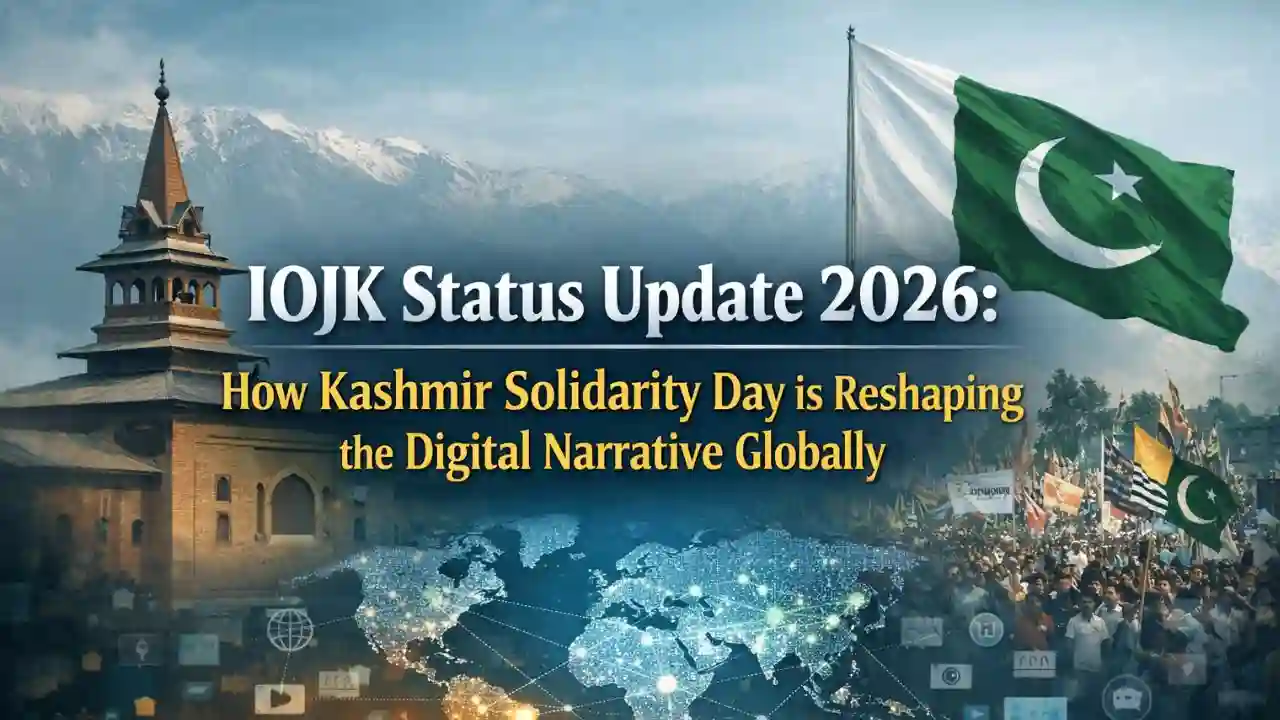
The issue of Indian Occupied Jammu and Kashmir IOJK Status Update 2026 has long remained at the center of South Asian geopolitics. In 2026, however, the conversation around Kashmir is no longer limited to traditional diplomacy, newspaper editorials, or street protests. The rise of social media platforms, digital journalism, and online activism has reshaped how the world discusses Kashmir. Kashmir Solidarity Day 2026 has become a major turning point, redefining how the Kashmiri narrative is presented, shared, and understood globally.
This article explores the IOJK status update 2026, focusing on how Kashmir Solidarity Day is transforming the global digital narrative, influencing international opinion, and amplifying Kashmiri voices through technology.
Understanding IOJK: A Brief Context
Indian Occupied Jammu and Kashmir refers to the region administered by India and disputed internationally. Since the revocation of Article 370 in 2019, the region has faced prolonged communication restrictions, security lockdowns, and human rights concerns. Despite these challenges, digital platforms have emerged as powerful tools for awareness, advocacy, and resistance.
By 2026, IOJK remains under heavy surveillance, but the global conversation around it has expanded significantly—largely due to online activism and coordinated digital campaigns.

What Is Kashmir Solidarity Day and Why It Matters in 2026
Kashmir Solidarity Day, observed every year on 5 February, is traditionally marked by rallies, seminars, and public gatherings—especially in Pakistan and among the Kashmiri diaspora. In 2026, however, the day has evolved into a global digital movement.
Instead of being limited to physical demonstrations, Kashmir Solidarity Day 2026 witnessed:
- Trending hashtags across multiple platforms
- Live-streamed conferences and panel discussions
- Short documentary releases on video platforms
- Global participation from activists, journalists, and influencers
This shift from streets to screens has expanded the reach of the Kashmir issue far beyond regional borders.
Digital Activism and the Kashmir Narrative
The Rise of Hashtag Diplomacy
In 2026, hashtags related to Kashmir Solidarity Day trended in multiple countries simultaneously. Campaigns such as #KashmirSolidarityDay, #StandWithKashmir, and #IOJK2026 helped unify millions of posts into a single, searchable narrative.
This form of hashtag diplomacy allowed ordinary users to participate in global advocacy, bypassing traditional media filters and state-controlled narratives.
Social Media as an Alternative Media Space
Platforms like X (formerly Twitter), Instagram, YouTube, and TikTok played a crucial role in reshaping perceptions. Short videos, infographics, survivor testimonies, and expert explainers made complex political realities easier to understand for international audiences.
Unlike earlier years, 2026 saw:
- Higher-quality visual storytelling
- Fact-based threads referencing international law
- Collaboration between journalists and digital creators

Role of the Kashmiri Diaspora
The Kashmiri diaspora in Europe, North America, and the Middle East has become a driving force behind the digital Kashmir narrative. On Kashmir Solidarity Day 2026, diaspora communities organized coordinated online events, including:
- Twitter/X Spaces and live discussions
- Webinars with legal and human rights experts
- Online petitions targeting international institutions
These efforts ensured that the Kashmir issue reached policymakers, think tanks, and human rights organizations worldwide.

International Attention and Human Rights Discourse
Digital Pressure on Global Institutions
One of the most notable impacts of Kashmir Solidarity Day 2026 was the renewed focus on human rights. Digital campaigns repeatedly referenced reports, resolutions, and statements linked to the United Nations and other global watchdogs.
Online advocacy helped:
- Revive stalled discussions on IOJK at international forums
- Encourage global media outlets to revisit Kashmir-related stories
- Push for transparency and accountability through digital scrutiny
Challenges to the Digital Kashmir Movement
Despite its growing influence, the digital Kashmir narrative faces several challenges:
Content Moderation and Shadow Bans
Activists in 2026 reported issues such as reduced reach, content removals, and account suspensions. These limitations raised concerns about freedom of expression and algorithmic bias.
Disinformation and Narrative Wars
Opposing digital campaigns also intensified. Misinformation, manipulated visuals, and coordinated counter-narratives made it harder for neutral audiences to distinguish facts from propaganda.
To counter this, Kashmiri activists increasingly relied on:
- Verified sources
- Data-driven content
- Cross-platform consistency
How Kashmir Solidarity Day 2026 Changed Global Perception
Compared to previous years, Kashmir Solidarity Day 2026 achieved a noticeable shift in tone. International audiences who previously viewed Kashmir as a “regional dispute” began to see it through the lens of:
- Human rights
- Digital freedoms
- Self-determination
The digital-first approach helped humanize the issue by focusing on personal stories rather than abstract geopolitics.
The Future of IOJK’s Digital Narrative
Looking ahead, the Kashmir digital movement is expected to grow even stronger. Emerging technologies such as AI-powered translations, decentralized platforms, and immersive storytelling may further amplify Kashmiri voices.
Key trends likely to shape the future include:
- Increased collaboration between journalists and digital activists
- More multilingual content for global outreach
- Stronger emphasis on legal and human rights frameworks
Kashmir Solidarity Day will likely remain a cornerstone of this evolving digital strategy.
Conclusion
The IOJK status update 2026 shows that Kashmir Solidarity Day has become far more than a symbolic observance. It is now a global digital phenomenon reshaping how the world understands Kashmir. Through social media, online activism, and diaspora engagement, the Kashmiri narrative has broken geographical barriers and entered mainstream global discourse.
In an era where digital voices can challenge powerful narratives, Kashmir Solidarity Day 2026 stands as a clear example of how technology can redefine advocacy, awareness, and resistance on a global scale.
Frequently Asked Questions (FAQs)
Q1: What does IOJK stand for?
IOJK stands for Indian Occupied Jammu and Kashmir, referring to the region administered by India and disputed internationally.
Q2: Why is Kashmir Solidarity Day important in 2026?
In 2026, Kashmir Solidarity Day gained global attention through digital activism, making it a major platform for international awareness and advocacy.
Q3: How has social media changed the Kashmir narrative?
Social media has allowed direct storytelling, global participation, and real-time advocacy, reducing reliance on traditional media channels.
Q4: Who participates in digital Kashmir campaigns?
Participants include Kashmiris, the diaspora, human rights activists, journalists, and supporters from around the world.
Q5: What challenges does the digital Kashmir movement face?
Major challenges include content moderation, misinformation, and algorithmic limitations on social media platforms.