Pakistan Currency Notes 10000 – Is Rs 10,000 Note Really Coming? SBP Clarifies
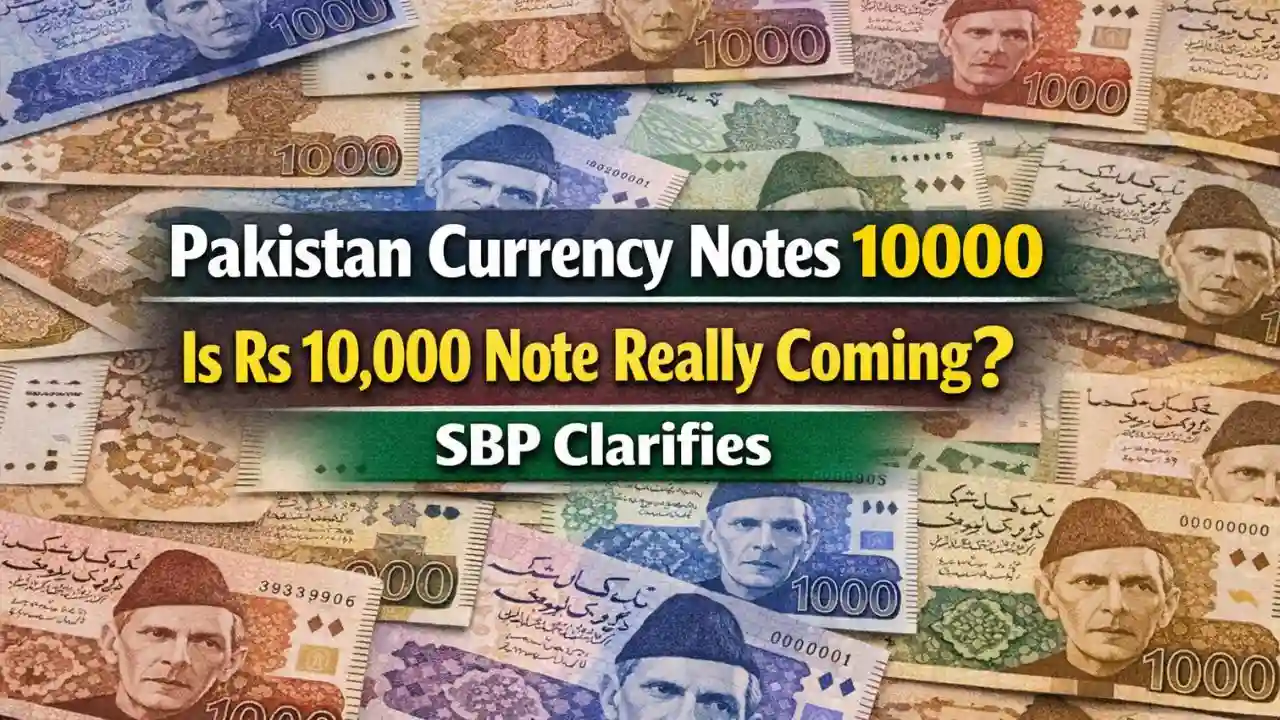
Pakistan Currency Notes 10000 have been circulating widely on social media, WhatsApp groups, and YouTube. Many people believe that due to rising inflation and increasing prices, Pakistan is preparing to introduce a new high-denomination banknote. However, confusion and misinformation have made it difficult for the public to know what is true.
This article explains the reality behind the Rs 10,000 note, the official clarification by the State Bank of Pakistan, and whether such a note is actually needed in Pakistan’s current economic situation.
Why Are People Talking About a Rs 10,000 Note in Pakistan?
The discussion around a Pakistan 10000 currency note mainly started because of:
- High inflation over the past few years
- Increasing prices of basic goods
- Rising cash transaction values
- Comparisons with other countries issuing higher denomination notes
As the purchasing power of the Pakistani rupee has declined, many people assume that introducing a higher-value banknote is the next logical step.

Current Currency Notes in Pakistan
At present, Pakistan has the following banknote denominations in circulation:
- Rs 10
- Rs 20
- Rs 50
- Rs 100
- Rs 500
- Rs 1,000
- Rs 5,000
The Rs 5,000 note is currently the highest denomination available to the public.

Official Position of the State Bank of Pakistan
The State Bank of Pakistan, which is the sole authority responsible for issuing currency notes, has clearly denied rumors about launching a Rs 10,000 banknote.
According to SBP officials:
- There is no proposal under consideration for a Rs 10,000 note
- No design, printing, or approval process has started
- Viral messages and videos claiming otherwise are false and misleading
The central bank has urged the public to rely only on official SBP announcements.
Why SBP Is Against Introducing a Rs 10,000 Note
1. Risk of Black Money and Corruption
Higher denomination notes make it easier to:
- Hoard illegal cash
- Conduct undocumented transactions
- Promote tax evasion
SBP believes that introducing a Rs 10,000 note could encourage the informal economy, which Pakistan is actively trying to control.
2. Focus on Digital Payments
Pakistan is moving toward a cash-lite economy. The government and SBP are promoting:
- Digital wallets
- Mobile banking apps
- Instant payment systems
- Branchless banking
A higher denomination note would go against this policy direction.
3. International Experience with High-Value Notes
Many countries have removed or restricted high-value banknotes instead of introducing new ones. The aim is to:
- Reduce money laundering
- Improve financial transparency
- Strengthen documentation
SBP follows global best practices rather than short-term inflation-based decisions.

Does Inflation Automatically Mean a New Currency Note?
This is a common misconception.
Inflation does not automatically require the introduction of a higher denomination note. Instead, governments can:
- Improve monetary policy
- Control money supply
- Strengthen taxation
- Encourage electronic transactions
SBP has repeatedly stated that inflation management is not solved by printing higher notes.
Comparison with Other Countries
Some countries have very high-value notes, but their situations are different:
- They have stronger documentation systems
- Cash usage is already limited
- High-value notes are rarely used in daily life
Pakistan, on the other hand, still faces challenges with:
- Cash-based economy
- Low tax compliance
- Informal trade
This makes a Rs 10,000 note risky rather than helpful.
Can Pakistan Introduce Rs 10,000 Note in the Future?
Technically, yes — but practically, it is very unlikely in the near future.
For SBP to introduce a new denomination, several conditions must be met:
- Parliamentary and policy approval
- Economic stability
- Strong anti-money-laundering controls
- Reduced reliance on cash
None of these conditions currently support the introduction of a Rs 10,000 note.
Social Media Rumors vs Official Reality
Many fake posts claim:
- “Rs 10,000 note approved”
- “SBP printing new note”
- “New design leaked”
These claims are not backed by any official notification. SBP does not announce currency changes through unofficial channels.
Always verify information through:
- SBP press releases
- Government statements
- Reliable news sources
Impact of Fake Currency News on the Public
False information about new currency notes can:
- Create panic
- Encourage hoarding
- Confuse businesses
- Damage trust in financial institutions
That is why SBP frequently warns people against believing unverified currency news.
What Should Citizens Do?
- Ignore WhatsApp forwards about new notes
- Do not share unverified information
- Follow SBP’s official communication
- Adopt digital payment methods where possible
Financial awareness is crucial in today’s economy.
Key Takeaways
- There is no Rs 10,000 note approved in Pakistan
- SBP has officially denied all rumors
- High-value notes can increase black money
- Pakistan is focusing on digital finance, not bigger notes
- Always trust official sources, not social media
FAQs – Pakistan Currency Notes 10000
Is Pakistan launching a Rs 10,000 currency note?
No. The State Bank of Pakistan has officially denied this claim.
Why do people think a Rs 10,000 note is coming?
Due to inflation, rising prices, and viral misinformation on social media.
What is the highest currency note in Pakistan right now?
Rs 5,000 is the highest denomination currently in circulation.
Has SBP ever announced a new currency note recently?
No official announcement has been made regarding any new denomination.
Can inflation force SBP to introduce a higher note?
No. Inflation is managed through monetary policy, not by issuing bigger notes.
Is it illegal to share fake currency news?
Sharing misinformation can create panic and may lead to legal consequences in serious cases.
Final Verdict
The idea of a Pakistan Rs 10,000 note is pure rumor, not reality. The State Bank of Pakistan has made it clear that there are no plans to introduce such a denomination. Until an official announcement is made, all such claims should be considered false.