
CDA Approves Five New Vehicle Testing Units in Islamabad
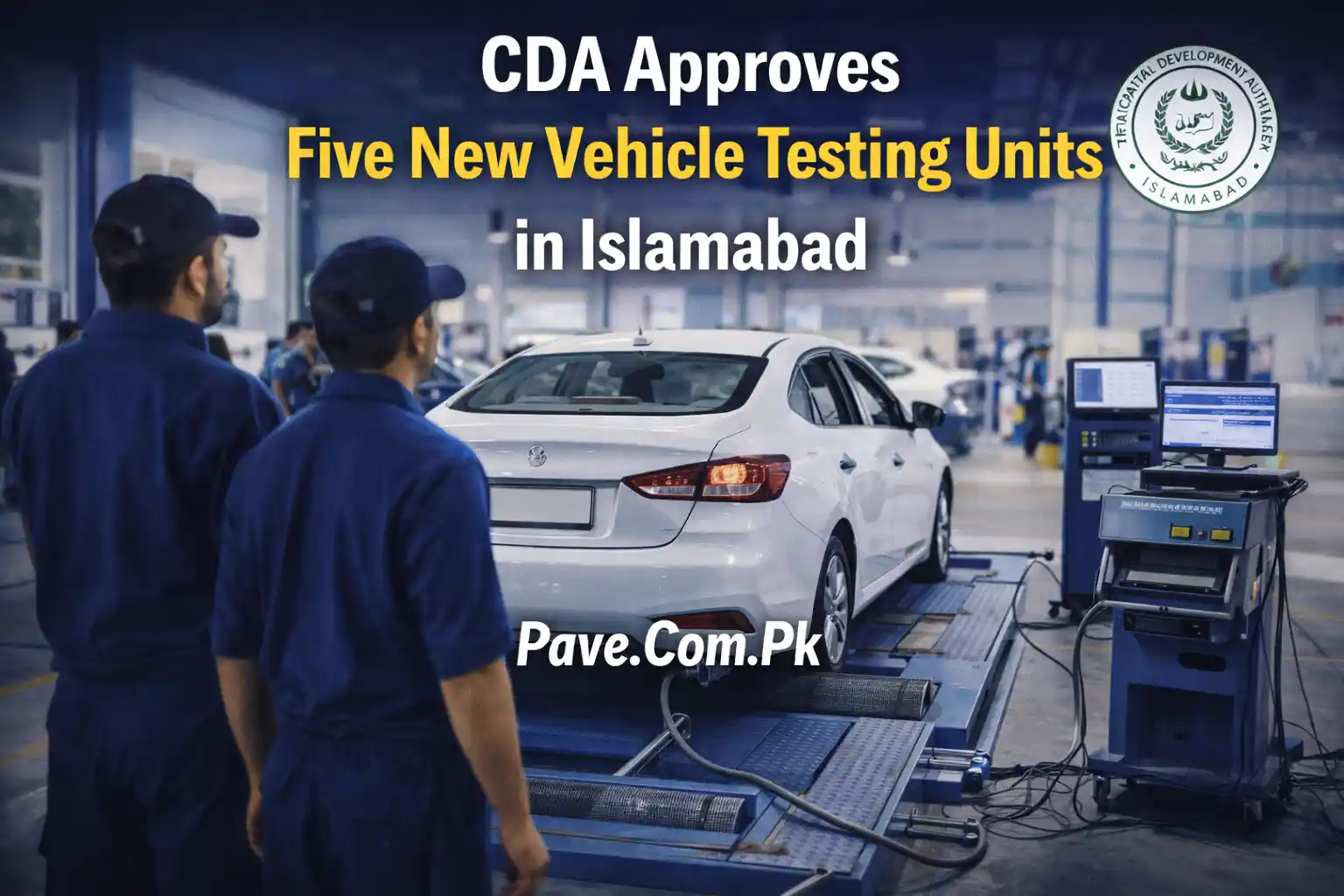
The Capital Development Authority (CDA) has approved funding to procure five new modern vehicle testing units in Islamabad, a move aimed at significantly improving vehicle inspection services in the federal capital. The decision comes at a time when rapid growth in vehicle numbers has placed heavy pressure on existing testing facilities, leading to long queues, delays, and inconvenience for vehicle owners.
According to officials, the new testing units will use advanced inspection technology to ensure faster, more accurate, and more reliable vehicle checks, helping Islamabad meet road safety and environmental standards more effectively.
This detailed article explains why CDA approved the new vehicle testing units, how they will work, their impact on traffic management, road safety, and the environment, and what this means for vehicle owners in Islamabad — all written in easy English with SEO-friendly headings.
What Is CDA and Why This Decision Matters
Capital Development Authority is the main civic body responsible for planning, development, and regulation in Islamabad. It oversees:
- Urban planning
- Road infrastructure
- Traffic management
- Environmental protection
- Public facilities
With Islamabad’s population and vehicle ownership increasing every year, CDA faces growing challenges in maintaining safe and sustainable urban transport systems.

Overview: Five New Vehicle Testing Units Approved
CDA has formally approved funding to procure five state-of-the-art vehicle testing units. These units are designed to:
- Increase inspection capacity
- Reduce waiting times
- Improve accuracy of vehicle checks
- Enforce safety and emission standards
Officials say the move is part of a broader transport reform plan for the capital.

Why Islamabad Needs More Vehicle Testing Units
Rising Number of Vehicles
Islamabad has seen a sharp rise in:
- Private cars
- Motorcycles
- Ride-hailing vehicles
- Commercial transport
This increase has overloaded existing inspection facilities, making it difficult for authorities to test vehicles on time.
Pressure on Existing Facilities
Currently, limited testing units mean:
- Long queues for inspection
- Delays in vehicle fitness certification
- Frustration among citizens
The new units aim to ease this pressure and streamline the process.

What Are Vehicle Testing Units?
Vehicle testing units are specialized facilities equipped with machines and software to inspect vehicles for:
- Mechanical safety
- Brake performance
- Suspension and alignment
- Emission levels
- Roadworthiness
These inspections ensure that vehicles are safe for drivers, passengers, and pedestrians.

Advanced Technology to Be Used
According to official documents, the new CDA testing units will use modern inspection technology.
Key Features Expected
- Automated testing lanes
- Digital inspection reports
- Accurate emission measurement
- Faster processing time
- Reduced human error
This technology will help improve compliance and transparency.
Faster and More Reliable Inspections
One of the main goals of the new units is to speed up inspections.
How This Helps
- Less waiting time for vehicle owners
- Quicker certification
- Reduced congestion around testing centers
A smoother process improves overall public satisfaction.
Improving Road Safety in Islamabad
Unsafe vehicles are a major cause of road accidents.
Role of Vehicle Testing
- Identifies faulty brakes and tires
- Detects steering and suspension issues
- Ensures lights and indicators work properly
By removing unsafe vehicles from the roads, CDA aims to reduce accident risks.
Strengthening Emission Control and Environmental Protection
Vehicle emissions are a key contributor to air pollution in Islamabad.
How New Units Help the Environment
- Accurate emission testing
- Identification of high-polluting vehicles
- Enforcement of emission standards
This supports CDA’s plan to reduce transport-related environmental impact.
Reducing Traffic-Related Pollution
With better testing:
- Poorly maintained vehicles can be repaired or restricted
- Emission compliance improves
- Overall air quality benefits
This is especially important for Islamabad, which often faces smog and pollution concerns.
Benefits for Vehicle Owners
The new testing units will directly benefit citizens.
Key Benefits
- Shorter queues
- Faster service
- Clear digital reports
- Less hassle and time wastage
A more user-friendly system improves trust in public services.
Impact on Commercial and Ride-Hailing Vehicles
Commercial and ride-hailing vehicles operate for long hours and require regular checks.
Expected Improvements
- Faster inspections for fleet vehicles
- Better compliance with safety laws
- Improved passenger safety
This move supports safer public and shared transport.
Supporting Law Enforcement and Traffic Regulation
Vehicle testing is closely linked to traffic law enforcement.
How Testing Units Help Authorities
- Identify non-compliant vehicles
- Support traffic police actions
- Enforce road safety regulations
This creates a stronger regulatory framework.
Part of CDA’s Broader Transport Reform Plan
The new testing units are not a standalone step.
CDA’s Wider Goals
- Safer roads
- Reduced traffic congestion
- Cleaner environment
- Modern urban transport management
Vehicle testing plays a key role in achieving these goals.
Comparison: Old vs New Testing System
| Feature | Existing System | New Testing Units |
|---|---|---|
| Capacity | Limited | Higher |
| Speed | Slow | Faster |
| Accuracy | Basic | Advanced |
| Transparency | Manual | Digital |
| User experience | Poor | Improved |
This upgrade represents a major improvement.
Expected Reduction in Waiting Times
Officials expect that once all five units become operational:
- Daily inspection capacity will increase significantly
- Waiting times will drop sharply
- Backlogs will be cleared faster
This is one of the most immediate benefits.
Challenges That May Remain
Despite the upgrade, some challenges may continue.
Possible Issues
- Initial adjustment period
- Staff training requirements
- Managing high demand during peak periods
CDA says it is preparing to handle these challenges.
Training and Staffing Requirements
Advanced equipment requires skilled operators.
CDA’s Focus Areas
- Training technical staff
- Ensuring proper calibration of machines
- Maintaining high inspection standards
Well-trained staff are essential for success.
Public Reaction and Expectations
The announcement has been largely welcomed by the public.
Common Public Responses
- Hope for faster inspections
- Expectation of fair testing
- Demand for transparent procedures
Citizens are now watching closely for implementation.
When Will the New Units Become Operational?
While an exact timeline has not been announced, officials indicate that:
- Procurement process has been approved
- Installation will follow after acquisition
- Operations will begin in phases
CDA aims to launch the units as soon as possible.
Long-Term Benefits for Islamabad
In the long run, the new testing units can:
- Improve road safety records
- Reduce pollution levels
- Modernize transport regulation
- Enhance Islamabad’s image as a planned city
These benefits extend beyond individual vehicle owners.
Conclusion
The approval of five new vehicle testing units by CDA is a significant step toward improving road safety, environmental protection, and service efficiency in Islamabad. As vehicle numbers continue to rise, modern inspection infrastructure is essential to keep the city safe, clean, and well-regulated.
If implemented effectively, the new testing units will reduce waiting times, improve compliance with safety and emission standards, and deliver a better experience for vehicle owners — marking a positive upgrade in Islamabad’s urban transport management.