Dual Citizenship With Canada: 10 Countries Whose Citizens Are Eligible (2026)
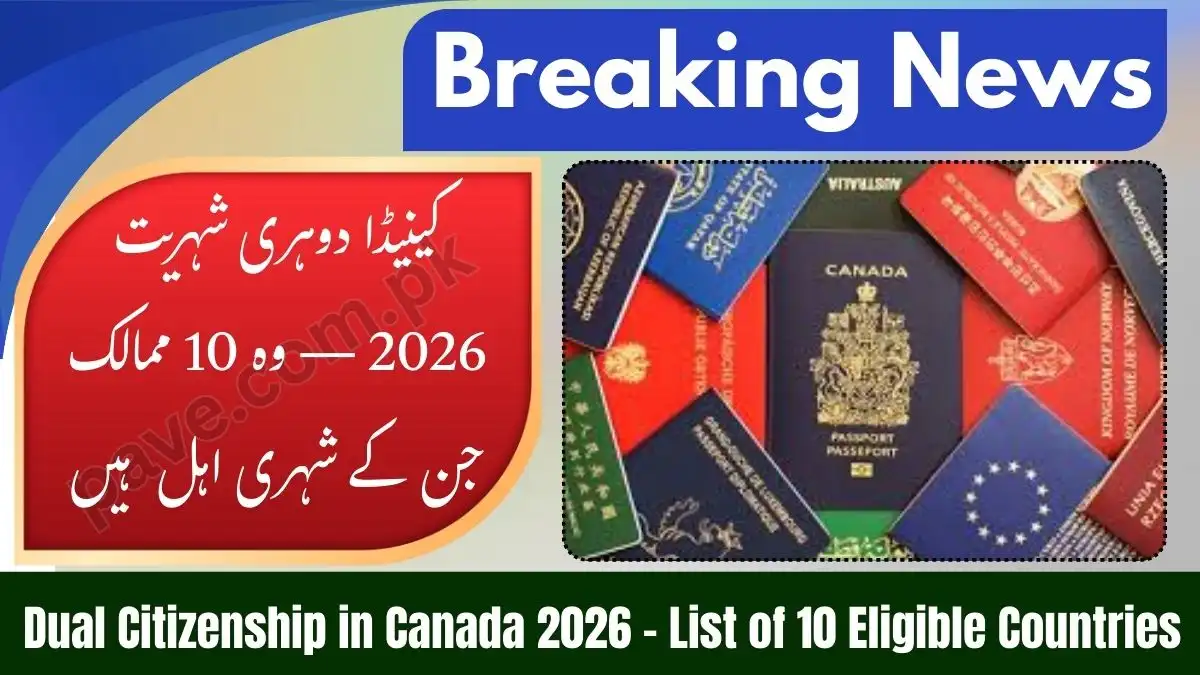
Canada remains one of the most dual-citizenship-friendly countries in the world. As of February 2026, Canadian law fully recognizes dual and multiple nationalities, which means you do not need to renounce your original citizenship to become Canadian—provided your other country also allows it.
The “10 countries” often mentioned in recent reports are not a legal limit. They are simply the top source countries whose laws align smoothly with Canada, resulting in the highest volumes of successful dual citizens.
🌍 Top 10 Countries Allowing Dual Status with Canada (2026)
Canada places no cap on how many citizenships you can hold. The only constraints come from the other country’s laws.
| Country | 2026 Rule (Summary) |
|---|---|
| United Kingdom | Fully recognized; no restrictions |
| United States | Permitted; must enter/exit the U.S. on a U.S. passport |
| Pakistan | Permitted; Canada is one of Pakistan’s designated dual partners |
| Philippines | Allowed for natural-born citizens; oath required |
| France | Fully permitted since 1973 |
| Germany | New (2024/25): Dual citizenship now allowed without renunciation |
| Nigeria | Allowed for citizens by birth/descent |
| Mexico | Fully permitted; no renunciation |
| Brazil | Allowed; consular limits may apply abroad |
| Syria | Allowed; Syria treats dual citizens as Syrian first inside Syria |
Key takeaway: If your home country allows dual status, Canada will not stop you.

🇵🇰 Which Countries Allow Dual Citizenship with Pakistan?
Pakistan allows dual nationality with 22 designated countries, including Canada, the UK, the U.S., France, Germany, and Australia. This framework sits under the Pakistan Citizenship Act and subsequent rules.
What this means for Pakistanis
- You do not have to renounce Pakistani citizenship to become Canadian.
- You can legally hold both passports.
⚠️ Countries That Do Not Allow Dual Status (Important)
Even if Canada says yes, your home country might say no:
- India: Dual citizenship not allowed; most become Canadian and apply for OCI (not citizenship).
- China: Chinese citizenship is automatically lost upon acquiring another nationality.
- Japan: Citizens must choose one nationality by age 22.

🚀 Major 2026 Update: Bill C-3 (Citizenship by Descent)
A landmark reform took effect December 15, 2025, and it’s reshaping eligibility in 2026.
What changed?
- First-generation limit removed for many born abroad.
- Fixes the long-standing “Lost Canadians” issue.
Who benefits now?
- If you were born abroad before Dec 15, 2025 and have a Canadian parent or grandparent, you may be eligible for citizenship—even if your parent was also born abroad.
New rule for children born after Dec 15, 2025
- The Canadian parent must prove a substantial connection: 1,095 days (3 years) of physical presence in Canada before the child’s birth.
Administration and guidance are handled by Immigration, Refugees and Citizenship Canada (IRCC).

📝 Who Is Eligible for Dual Canadian Citizenship?
Eligibility has two layers:
1) Canada’s side (you must meet citizenship rules)
- Permanent resident status
- 1,095 days physical presence in Canada (within last 5 years)
- Tax filing for at least 3 years
- Language and citizenship test (ages 18–54)
2) Your other country’s side
- Your original country must permit dual citizenship (see lists above)
If both say yes, you can hold two (or more) passports.
📋 Practical Checklist for Dual Citizens
- Travel: Fly into Canada using your Canadian passport. Use your other passport to enter that country.
- Consular help: In your other country, Canada may have limited ability to assist you.
- Taxes: Canada taxes by residency, not citizenship. Living abroad usually means no Canadian income tax (unlike the U.S.).
❓ Quick Answers
Which countries allow dual citizenship with Canada?
Many do. The most common in 2026 include the UK, U.S., Pakistan, Philippines, France, Germany, Nigeria, Mexico, Brazil, and Syria.
Who is eligible for dual Canadian citizenship?
Anyone who meets Canada’s citizenship requirements and whose other country allows dual status.
Which countries allow dual citizenship with Pakistan?
Pakistan recognizes 22 designated countries, including Canada, UK, U.S., France, Germany, and others.
Who is eligible for dual citizenship (generally)?
Those whose two (or more) countries’ laws permit it and who satisfy each country’s legal requirements.
Final Word
Canada’s approach in 2026 is clear: Canada will not make you choose. Your ability to hold dual or multiple citizenships depends almost entirely on the laws of your other country. With Bill C-3 now in force, thousands more people are discovering they’re eligible—especially through descent.