
What is Pulmonary Embolism – Causes, Symptoms, Treatment, and Prevention Explained
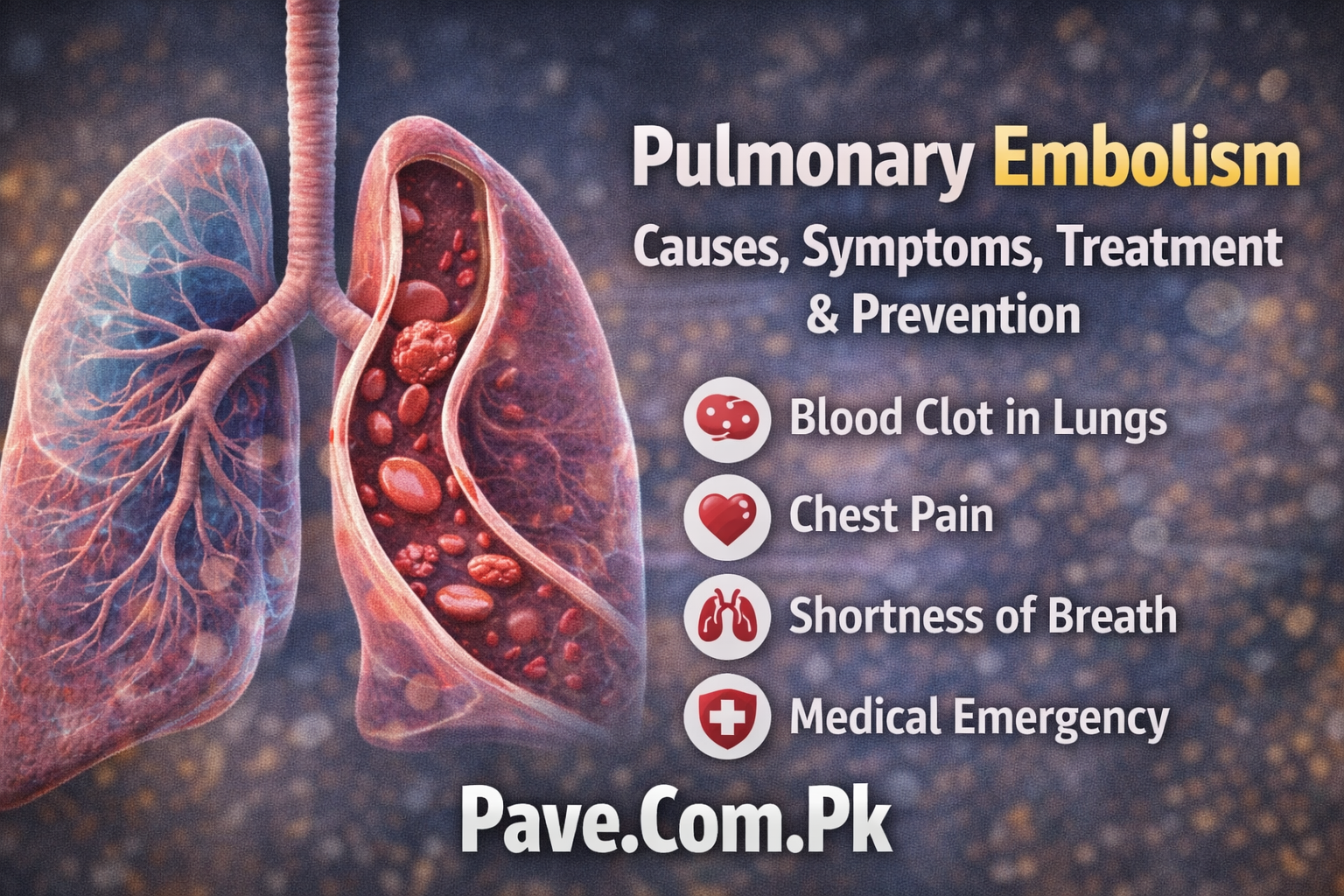
Pulmonary embolism (PE) is a serious and sometimes life-threatening medical condition. It happens when a blood clot blocks one of the blood vessels in the lungs. This blockage can reduce oxygen levels in the body and put dangerous pressure on the heart.
Many people search on Google for what is pulmonary embolism, pulmonary embolism symptoms, PE causes, and pulmonary embolism treatment, because early awareness can save lives.
This article explains pulmonary embolism in simple English, covering causes, warning signs, diagnosis, treatment options, and ways to prevent it.
What Is Pulmonary Embolism?
Pulmonary embolism is a condition where a blood clot travels to the lungs and blocks blood flow. Most of the time, the clot starts in the deep veins of the legs, a condition called deep vein thrombosis (DVT).
When part of that clot breaks free, it can move through the bloodstream and lodge in the lungs, causing a pulmonary embolism.

Why Pulmonary Embolism Is Dangerous
Pulmonary embolism is dangerous because it can:
- Reduce oxygen supply to the body
- Damage lung tissue
- Put strain on the heart
- Cause sudden death if untreated
The severity depends on the size of the clot and how much of the lung is blocked.

How Common Is Pulmonary Embolism?
Pulmonary embolism affects hundreds of thousands of people worldwide each year. Many cases go undiagnosed because symptoms can look like other illnesses such as heart attack or pneumonia.
Quick diagnosis and treatment greatly improve survival.

Main Causes of Pulmonary Embolism
Pulmonary embolism usually occurs due to blood clots forming in the body. Common causes include:
1. Deep Vein Thrombosis (DVT)
This is the most common cause. Blood clots form in the deep veins of the legs or pelvis.
2. Long Periods of Inactivity
- Long flights or road trips
- Bed rest after surgery or illness
- Sitting for many hours
Lack of movement slows blood flow, increasing clot risk.
3. Surgery and Trauma
- Major surgery (especially hip or knee surgery)
- Broken bones
- Severe injuries
These can trigger clot formation.
4. Medical Conditions
- Cancer
- Heart disease
- Lung disease
- Blood clotting disorders
These conditions increase clot risk.
5. Hormonal Factors
- Birth control pills
- Hormone replacement therapy
- Pregnancy
Hormones can make blood more likely to clot.

Risk Factors for Pulmonary Embolism
People at higher risk include those who:
- Are over 60 years old
- Smoke
- Are overweight or obese
- Have a family history of blood clots
- Have had previous DVT or PE
Understanding risk factors helps in prevention.
Common Symptoms of Pulmonary Embolism
Pulmonary embolism symptoms can vary from mild to severe.
Most Common Symptoms
- Sudden shortness of breath
- Chest pain (often sharp, worse with deep breathing)
- Rapid heartbeat
- Cough
Other Possible Symptoms
- Coughing up blood
- Dizziness or fainting
- Sweating
- Anxiety or restlessness
- Leg pain or swelling (sign of DVT)
⚠️ Pulmonary embolism is a medical emergency. Sudden symptoms require immediate medical care.
Pulmonary Embolism vs Heart Attack
Many people confuse PE with a heart attack.
Pulmonary embolism
- Pain worsens with breathing
- Often linked to leg clots
- Lung blood vessels blocked
Heart attack
- Pressure-like chest pain
- Pain spreads to arm or jaw
- Heart arteries blocked
Both are emergencies, but treatments differ.
How Pulmonary Embolism Is Diagnosed
Doctors use several tests to diagnose PE:
1. Blood Tests
- D-dimer test checks for clot breakdown products
2. Imaging Tests
- CT pulmonary angiography
- Chest X-ray
- Ultrasound of legs
3. Heart and Oxygen Tests
- ECG
- Oxygen level monitoring
Diagnosis depends on symptoms, history, and test results.
Types of Pulmonary Embolism
Pulmonary embolism can be classified by severity:
Massive PE
- Causes low blood pressure
- Life-threatening
- Requires urgent treatment
Submassive PE
- Affects heart function
- Serious but stable blood pressure
Small or Low-Risk PE
- Limited blockage
- Symptoms may be mild
Pulmonary Embolism Treatment Options
Treatment aims to stop the clot from growing, prevent new clots, and restore blood flow.
1. Blood Thinners (Anticoagulants)
- Heparin
- Warfarin
- Direct oral anticoagulants
These are the most common treatments.
2. Clot-Busting Medicines
Used in severe cases to dissolve clots quickly.
3. Oxygen Therapy
Helps improve oxygen levels.
4. Surgery or Procedures
- Catheter-directed clot removal
- Rare but used in life-threatening cases
How Long Does Pulmonary Embolism Treatment Last?
Treatment duration depends on:
- Cause of PE
- Risk of recurrence
- Overall health
Some people need blood thinners for 3–6 months, while others need long-term treatment.
Recovery After Pulmonary Embolism
Recovery varies from person to person.
Most people:
- Improve within weeks
- Return to normal activities gradually
- Need follow-up care
Some may develop long-term breathing issues, called chronic thromboembolic pulmonary hypertension (CTEPH).
Can Pulmonary Embolism Come Back?
Yes. Without proper treatment, pulmonary embolism can recur.
Risk of recurrence is higher in people who:
- Stop medication early
- Have inherited clotting disorders
- Have cancer
That’s why follow-up care is important.
How to Prevent Pulmonary Embolism
Prevention focuses on reducing clot formation.
Simple Prevention Tips
- Move regularly during long trips
- Stay hydrated
- Avoid smoking
- Maintain healthy weight
Medical Prevention
- Blood thinners after surgery
- Compression stockings
- Early movement after hospitalization
Prevention is especially important for high-risk individuals.
Pulmonary Embolism and Lifestyle Changes
Lifestyle changes that help include:
- Regular physical activity
- Healthy diet
- Managing chronic illnesses
- Following medication instructions
These steps reduce future clot risk.
When to See a Doctor
Seek immediate medical help if you have:
- Sudden shortness of breath
- Chest pain
- Unexplained leg swelling
- Fainting
Early treatment can be lifesaving.
Final Thoughts
Pulmonary embolism is a serious but treatable condition. Understanding the causes, symptoms, treatment options, and prevention methods can help reduce risk and improve outcomes.
If diagnosed early and treated properly, many people recover fully and live normal lives. Awareness is the key to saving lives.
Frequently Asked Questions (FAQs)
Q1: Is pulmonary embolism life-threatening?
Yes, especially if untreated. Early treatment greatly reduces risk.
Q2: What is the most common cause of pulmonary embolism?
Deep vein thrombosis (DVT) in the legs.
Q3: Can pulmonary embolism be prevented?
Yes, with movement, medication, and lifestyle changes.
Q4: How long does recovery take?
Most people recover within weeks to months.
Q5: Can young people get pulmonary embolism?
Yes, especially with risk factors like surgery, pregnancy, or genetic conditions.