Breaking: Iran’s New Supreme Leader Mojtaba Khamenei After US-Israel Strikes
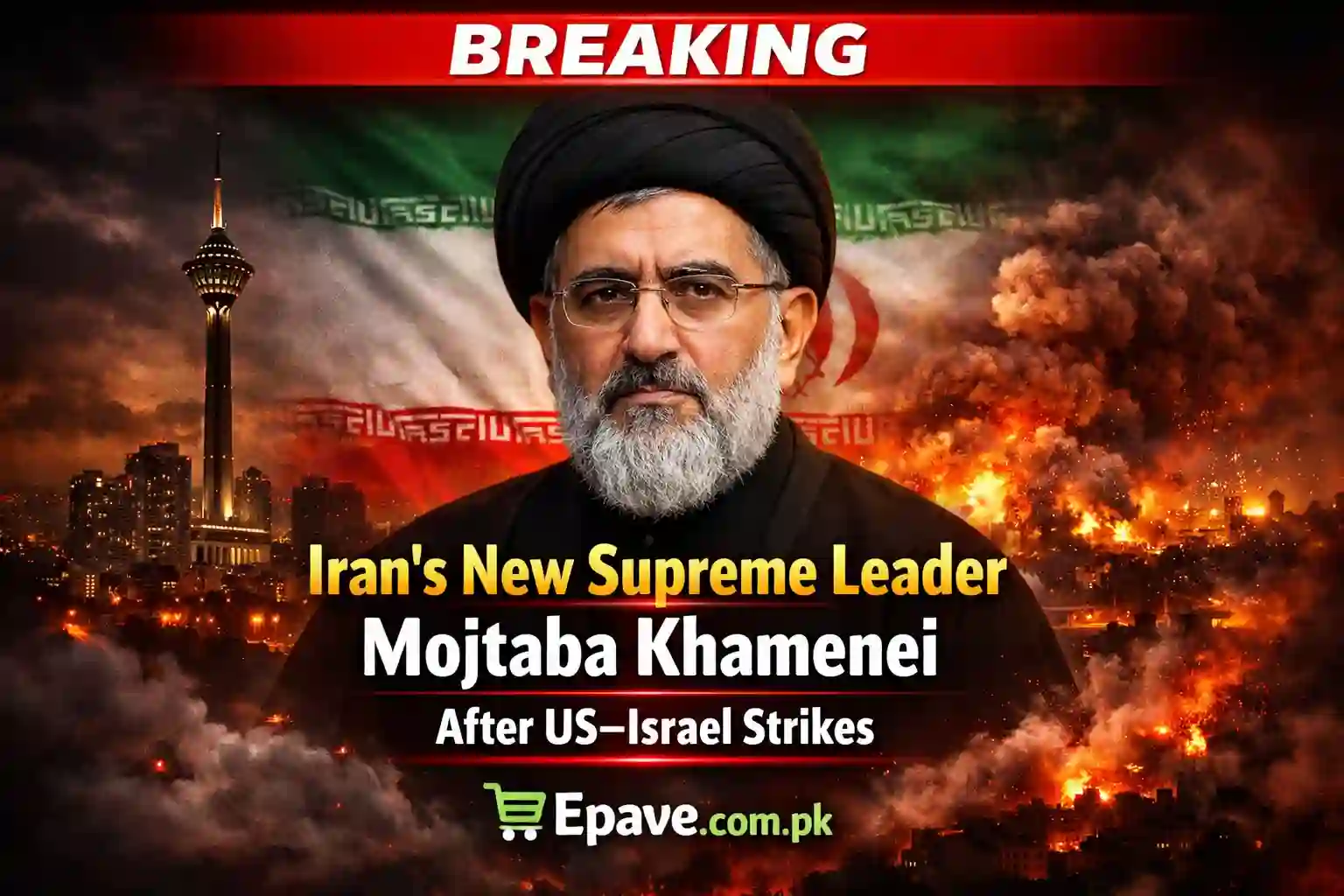
A dramatic shift has unfolded in Iran’s political leadership after reports that Ayatollah Seyyed Mojtaba Hosseini Khamenei has been elevated as the new Supreme Leader following escalating regional tensions and the reported death of his father, Ayatollah Ali Khamenei. The leadership transition comes during one of the most volatile periods in the Middle East, after coordinated military strikes attributed to the United States and Israel targeted strategic Iranian facilities.
The appointment of Mojtaba Khamenei as the new Supreme Leader of Iran marks a major political moment for the Islamic Republic. For the first time since the 1979 Iranian Revolution, leadership of Iran’s highest religious and political office has effectively moved from father to son, following the era of Ayatollah Ali Khamenei. Analysts believe the rise of Mojtaba Khamenei reflects the Iranian establishment’s effort to maintain ideological continuity, strengthen internal stability, and protect national leadership during growing pressure linked to the Iran US Israel conflict and wider regional uncertainty
Leadership Transition After the Death of Ali Khamenei
The appointment of Mojtaba Khamenei reportedly followed an emergency session of the Assembly of Experts, the clerical body responsible for selecting Iran’s Supreme Leader. The meeting was reportedly convened in the city of Qom shortly after reports emerged of a major security crisis in Tehran linked to recent military strikes.
Ayatollah Ali Khamenei had led Iran since 1989 and was the second Supreme Leader after the founder of the Islamic Republic, Ayatollah Ruhollah Khomeini. His leadership shaped Iran’s domestic and foreign policy for more than three decades.
The reported succession of Mojtaba Khamenei represents a significant moment in Iranian political history. While Iran’s constitution does not formally designate hereditary leadership, Mojtaba had long been considered an influential figure within the country’s political and security circles.
Observers note that his elevation reflects the ruling establishment’s attempt to preserve the ideological legacy associated with the Khamenei leadership while maintaining stability during a time of external threats and geopolitical tension.
US and Israel Military Strikes and Regional Escalation
The leadership transition occurred against the backdrop of heightened tensions between Iran and its regional rivals. Reports indicate that coordinated strikes attributed to the United States and Israel targeted key Iranian military and security infrastructure.
According to regional reports, several strategic facilities connected to the Islamic Revolutionary Guard Corps (IRGC) were targeted. These included missile development facilities, command centers, and sites linked to Iran’s broader military network.
Officials in Washington and Tel Aviv reportedly described the strikes as preventive actions aimed at limiting Iran’s strategic capabilities. Iranian officials, however, condemned the attacks as violations of national sovereignty and warned of possible retaliation.
The strikes have intensified concerns about a wider regional conflict, particularly as Iran maintains alliances with several armed groups across the Middle East.
Who Is Mojtaba Khamenei
Mojtaba Khamenei is the second son of Ali Khamenei and has long been viewed as a powerful figure operating behind the scenes within Iran’s political structure.
Born in Tehran in 1969, Mojtaba studied religious sciences in Qom and gradually built influence through close ties with clerical networks and security institutions. Over the years he developed strong relationships with elements of the IRGC, including the Basij militia and other strategic branches of Iran’s security apparatus.
Although he rarely appeared in public political roles, Mojtaba was widely believed to have played an important role within the Beit-e-Rahbari, the office responsible for managing the Supreme Leader’s political, economic, and administrative affairs.
Supporters view him as a loyal defender of the Islamic Republic’s revolutionary ideology. Critics inside and outside Iran have sometimes questioned the concentration of power within a single political family.
Regardless of those debates, his rise places him at the center of one of the most powerful political systems in the Middle East.
Military and Political Influence
One of Mojtaba Khamenei’s most notable strengths is his relationship with Iran’s security institutions. Analysts often describe him as a figure who understands both the clerical establishment and the country’s military power structures.
His connections with the IRGC, particularly the Basij and the Quds Force, could help consolidate his authority in the early phase of his leadership. In Iran’s political system, cooperation between religious leadership and security institutions plays a crucial role in maintaining stability.
Because of these ties, many observers expect Mojtaba Khamenei to continue a policy line similar to his father’s approach, emphasizing resistance to external pressure and maintaining Iran’s regional alliances.

International Reactions to the Leadership Change
Global reactions to the reported leadership transition have been swift and varied. Major powers and regional actors are closely monitoring the situation because Iran plays a central role in Middle Eastern geopolitics.
| Entity | Reaction |
|---|---|
| United States | Former President Donald Trump criticized the leadership transition and indicated that pressure on Iran would continue. |
| Israel | Prime Minister Benjamin Netanyahu stated that Israel will continue acting to protect regional security interests. |
| Russia | Moscow called for stability in the region and emphasized respect for Iranian sovereignty. |
| China | Beijing urged restraint and highlighted the importance of diplomatic solutions. |
| Regional Allies | Groups aligned with Iran such as Hezbollah and the Houthis expressed support for the new leadership. |
These reactions demonstrate how closely the international community watches developments inside Iran.
Economic and Political Challenges Ahead
Mojtaba Khamenei assumes leadership at a time when Iran faces serious internal and external challenges.
The country continues to struggle with international sanctions that have affected economic growth, currency stability, and inflation. Many Iranians face rising living costs and limited employment opportunities.
At the same time, Iran remains involved in a complex regional power struggle involving multiple actors across the Middle East.
Key challenges likely facing the new leadership include:
- Stabilizing the Iranian economy amid sanctions
- Managing relations with global powers
- Maintaining domestic political stability
- Rebuilding infrastructure damaged by recent strikes
- Preserving influence among regional allies
How Mojtaba Khamenei addresses these issues will shape Iran’s political direction in the coming years.
Debate Over Hereditary Leadership
One of the most discussed aspects of the transition is the perception of hereditary succession. Since the Islamic Republic was founded in 1979, leadership has been presented as based on religious authority rather than family lineage.
The rise of Mojtaba Khamenei has therefore sparked debate among political observers and some reformist voices inside Iran.
Supporters argue that his religious education, administrative experience, and understanding of the system make him qualified for leadership. Critics argue that the concentration of authority within one family could undermine the revolutionary ideals originally promoted by the Islamic Republic.
This debate may continue as the new leadership consolidates its position.
Regional Security and Future Outlook
The Middle East remains one of the world’s most geopolitically complex regions. Iran plays a central role in several ongoing conflicts and strategic rivalries.
The future direction of Iranian foreign policy under Mojtaba Khamenei will likely influence relations with neighboring states, global powers, and international organizations.
Many analysts believe the leadership transition signals continuity rather than change. Iran’s core foreign policy priorities, including regional influence and strategic deterrence, are expected to remain central.
However, economic pressures and diplomatic negotiations could also shape how Iran engages with the global community in the coming years.
Conclusion
The reported appointment of Mojtaba Khamenei as Iran’s new Supreme Leader marks a historic and highly sensitive moment for the Islamic Republic. Occurring amid regional tensions and international scrutiny, the leadership transition places Iran at a critical crossroads.
While Mojtaba Khamenei inherits the legacy of one of the longest-serving leaders in the region, he also faces significant economic, political, and geopolitical challenges. How he navigates these issues will influence Iran’s internal stability and its role in global politics for years to come.
FAQ
Who is Mojtaba Khamenei?
Mojtaba Khamenei is the son of former Iranian Supreme Leader Ali Khamenei and a cleric who has held influence within Iran’s political and security networks.
Who is the new Supreme Leader of Iran?
Reports indicate that Mojtaba Khamenei has been appointed as the third Supreme Leader of the Islamic Republic after the death of his father.
What happened between Iran, the United States, and Israel?
Recent military tensions escalated after strikes reportedly targeted Iranian strategic facilities, increasing fears of wider regional conflict.
What challenges does the new Iranian leader face?
Major challenges include economic sanctions, regional tensions, domestic political debates, and rebuilding damaged infrastructure.