White House Iran Video Goes Viral, Sparks Controversy Over ‘Call of Duty’ Footage
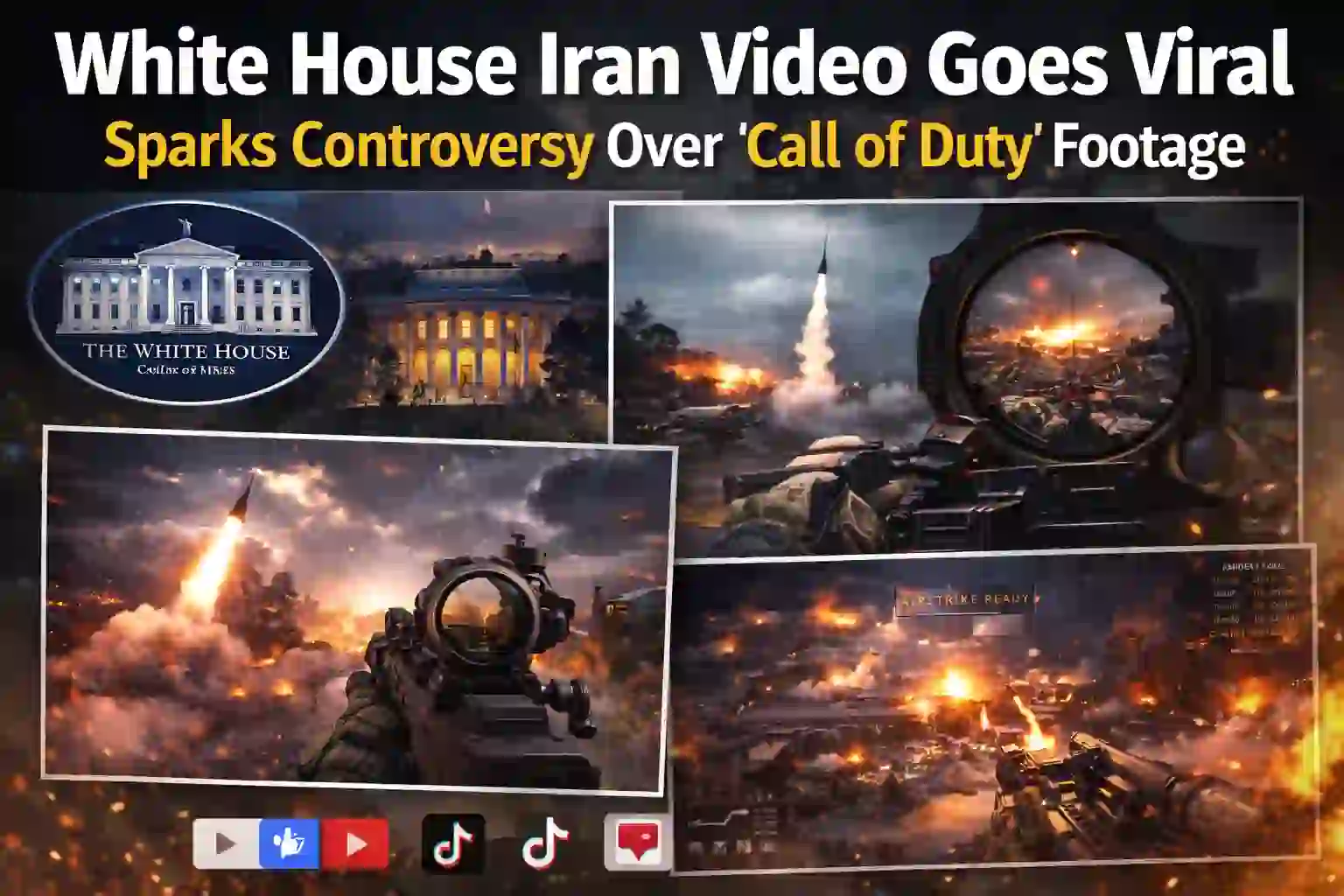
A viral video released by the White House has sparked global controversy after it appeared to mix real footage of military strikes in Iran with scenes resembling gameplay from the popular video game Call of Duty. The clip quickly spread across social media platforms, generating millions of views and triggering intense debate among journalists, political analysts, and the public.
The video montage used dramatic editing, music, and cinematic visuals that looked similar to action movies and video games. Critics argued that combining real military footage with gaming style visuals created the impression that war was being portrayed as entertainment. Supporters, however, claimed the video was simply a modern communication strategy designed to capture attention on social media.
The controversy highlights how political messaging is evolving in the digital age. Governments increasingly use social media videos and viral content to communicate with the public, but this approach also raises important ethical and political questions about how war and conflict should be presented.
According to news reports, the White House posted videos online that combined real footage from military operations in Iran with clips and visual styles taken from movies and video games. These posts quickly drew criticism from politicians and media experts who said the presentation made war appear similar to a video game experience.
White House Iran Video Goes Viral Across Social Media Platforms
The viral White House Iran video spread rapidly across platforms such as X, TikTok, and Instagram. Within hours of its release, users began sharing the clip widely, while journalists and commentators analyzed the content.
Many viewers were surprised by the editing style of the video. Instead of traditional government messaging or press briefings, the clip looked more like a promotional trailer for an action movie or a gaming highlight montage.
Reports indicate that the video included real footage of missile strikes alongside dramatic visual transitions and gaming style graphics. This combination made the video visually striking but also raised questions about the tone of official government communication.
The viral nature of the clip demonstrates how quickly political content can spread online when it contains dramatic imagery or controversial elements. In the modern digital environment, even a short video can trigger global discussions within hours.

Why Call of Duty Footage in the White House Iran Video Caused Controversy
One of the main reasons the video became controversial was the apparent inclusion of footage resembling the Call of Duty video game series. Call of Duty is one of the most popular military themed games in the world and is known for its realistic combat simulations.
Critics argued that placing video game imagery next to real war footage created a disturbing contrast. War involves real lives, destruction, and human consequences, while video games are designed purely for entertainment.
Some observers said the editing style resembled a gaming “killstreak” sequence where explosions and strikes are presented as part of a score or victory system.
This perception led many viewers to accuse the White House of turning serious military action into something that looked like a video game highlight reel.

Critics Accuse the White House of “Gamifying” War
Media analysts and political commentators quickly responded to the video. Many critics used the term “gamification” to describe the way the video presented warfare.
Gamification refers to the process of presenting real world activities in a style similar to video games. Critics argued that the video risked making conflict appear exciting or entertaining instead of tragic and complex.
Several political figures also criticized the messaging. Some said that military conflicts should be communicated with seriousness and respect for the people affected by the violence.
Others raised concerns about whether clips from movies or video games were used without proper permission from creators or companies.
The criticism sparked a broader discussion about how governments should communicate military actions in the age of social media.

Supporters Say the Video Represents Modern Digital Communication
While many people criticized the video, some analysts defended the strategy behind it. They argued that the goal of the video was likely to reach younger audiences who consume news and information primarily through social media platforms.
Traditional press conferences and official statements often receive limited attention online. In contrast, short dramatic videos can attract millions of views and generate widespread discussion.
Supporters suggested that the video was designed to increase engagement and ensure that the government’s message reached a broader audience.
However, even some supporters acknowledged that blending entertainment style visuals with real war footage can be controversial and potentially risky.

Social Media’s Role in Amplifying the White House Iran Video
The rapid spread of the video demonstrates the powerful role social media plays in modern political communication. Platforms allow government messages to reach global audiences instantly, but they also make it easier for criticism and debate to spread just as quickly.
Within hours of the video appearing online, thousands of users began commenting on its tone and style. Some people treated it as a meme, while others viewed it as political propaganda.
Experts say this type of viral political content reflects a larger trend in which governments use digital storytelling techniques similar to those used in entertainment media.
The result is a new form of communication where politics, media, and internet culture overlap.
Entertainment Culture and the Changing Nature of War Messaging
The controversy surrounding the White House Iran video also highlights how entertainment culture increasingly influences political communication.
In recent years, social media campaigns have often borrowed elements from movies, television, and video games to capture audience attention. Dramatic music, fast editing, and cinematic visuals are now common in political messaging.
However, critics argue that using these techniques during discussions about war can be problematic. Military conflicts involve real human suffering and complex geopolitical consequences.
When war is presented with the same style used for entertainment media, some people worry that the seriousness of the situation may be overshadowed by spectacle.
Global Reaction to the Viral White House Iran Video
International reactions to the video have been mixed. Some observers saw it as an example of aggressive propaganda designed to justify military action.
Others viewed it as a reflection of how communication styles are changing in the digital age. Governments are increasingly experimenting with new formats to reach audiences online.
Regardless of political perspective, the video sparked widespread debate across media outlets, social networks, and policy discussions.
The controversy also demonstrates how quickly digital content can influence public perception during international conflicts.
What the White House Iran Video Controversy Means for Future Political Messaging
The debate surrounding the viral video may influence how governments use social media in the future. Communication experts say that while digital storytelling can be effective, it must be used carefully when dealing with sensitive topics such as war.
Official government messaging traditionally aims to provide clear information about policy decisions and military actions. However, the rise of social media has introduced new pressures to create content that attracts attention and engagement.
The challenge for governments will be balancing these two goals. They must communicate effectively in a fast moving digital environment while also maintaining credibility and respect for the seriousness of global conflicts.
The White House Iran video controversy will likely be remembered as an example of how modern political communication is evolving and how quickly public reactions can shape the narrative.
FAQs White House Iran Video Goes Viral
Why did the White House Iran video go viral?
The video went viral because it used dramatic visuals, cinematic editing, and gaming style imagery that quickly attracted attention on social media platforms.
What made the Call of Duty footage controversial?
Critics argued that mixing video game style visuals with real war footage made military action appear similar to entertainment or gaming.
Did the White House confirm using video game clips?
Reports suggest the video included visuals similar to popular video games and movies, which sparked criticism and debate online.
Why do governments post videos about military operations on social media?
Governments often use social media to quickly communicate messages to large audiences and shape public narratives during political or military events.
What lessons can be learned from the White House Iran video controversy?
The controversy shows that while digital media can increase engagement, governments must carefully consider how sensitive topics like war are presented to the public.