
Federal Government Announces 4-Day Work Week in Pakistan – New Austerity Measures 2026
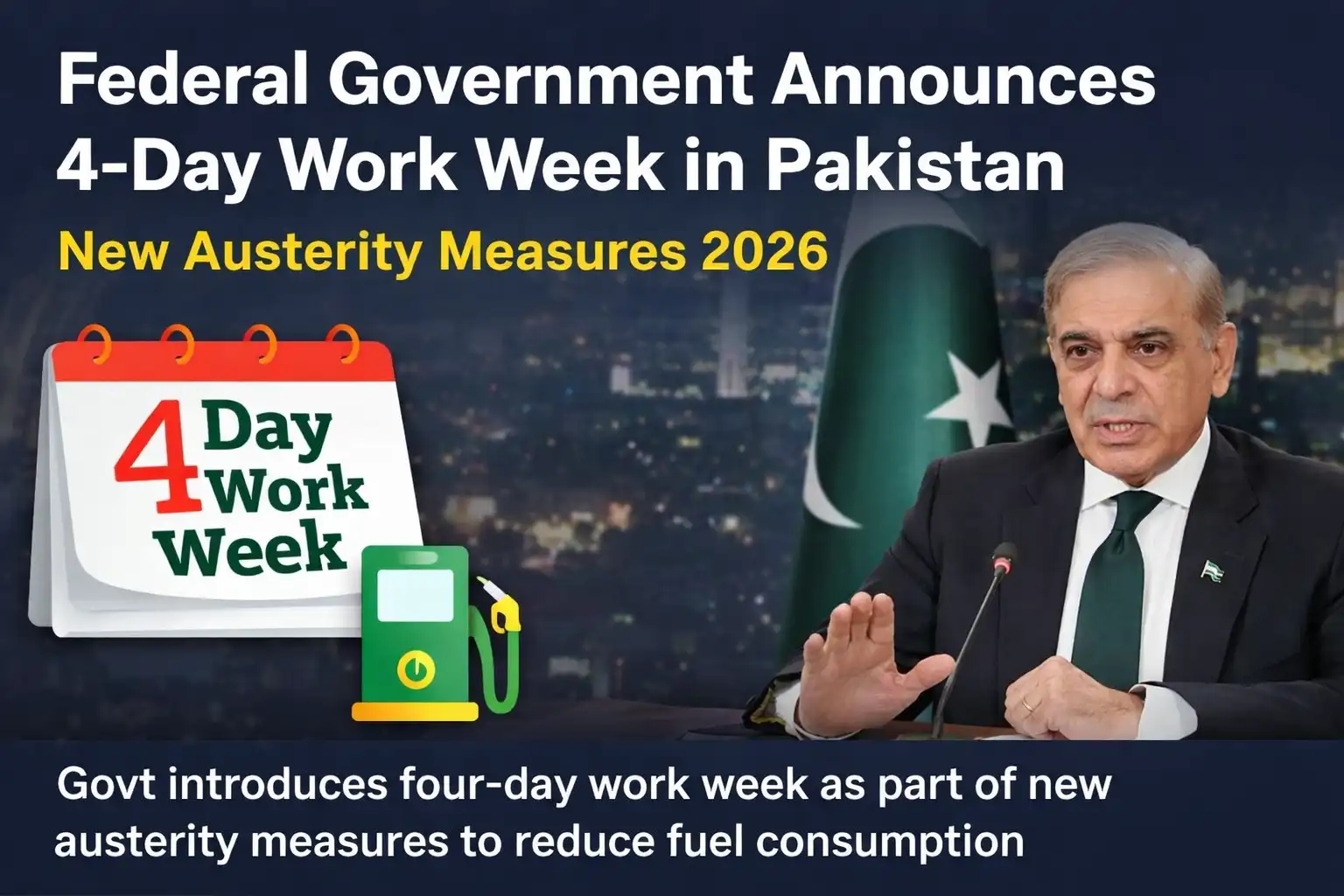
The Federal Government of Pakistan has announced a major policy change by introducing a four-day work week as part of a nationwide austerity plan. The decision was announced by Shehbaz Sharif during a televised address to the nation after chairing an important meeting on economic and fuel-saving measures.
The new policy aims to reduce fuel consumption, government expenses, and operational costs during a period of global economic pressure caused by the Middle East war and rising energy prices.
Many people searching online for Pakistan four-day work week, government austerity measures Pakistan, work from home policy Pakistan, and new government working hours Pakistan want to understand how these changes will affect daily work routines, businesses, and public sector institutions.
This article explains the government’s new four-day work week policy, the reasons behind it, and its possible impact on Pakistan’s economy and workforce.
Why the Government Introduced a Four-Day Work Week
The federal government introduced the four-day work week policy mainly to deal with economic challenges and reduce fuel consumption.
Pakistan has been facing high fuel prices, rising inflation, and global economic uncertainty. The ongoing conflict in the Middle East has also affected international oil prices, which directly impacts Pakistan’s energy costs.
To address these issues, the government has introduced austerity measures, which are policies designed to reduce public spending and save resources.
Main Reasons for the Decision
The government highlighted several reasons for adopting this policy:
- Reduce fuel consumption
- Lower government operational costs
- Improve energy efficiency
- Manage the economic impact of global conflicts
- Reduce unnecessary government spending
By reducing the number of working days, the government hopes to significantly decrease fuel use, electricity consumption, and transportation expenses.

How the Four-Day Work Week Will Work
Under the new policy, government offices will operate four days per week instead of the traditional five-day schedule.
The policy will apply mainly to public sector offices, while some important sectors will continue operating under their existing schedules.
Sectors Included in the Four-Day Work Week
The following sectors will follow the new schedule:
- Federal government offices
- Administrative departments
- Government ministries
- Public sector institutions
This means employees in these sectors will work fewer days but maintain productivity through efficient working hours.

Sectors Exempted from the New Policy
Certain sectors are essential for the country’s economy and daily operations. These sectors will continue their regular work schedules.
Exempted Sectors
The following sectors will not follow the four-day work week:
- Banks and financial institutions
- Industrial sector
- Agriculture sector
- Essential services
These sectors require continuous operations to maintain economic stability and public services.

Work From Home Policy for Employees
Another important part of the government’s austerity plan is the introduction of work-from-home arrangements.
According to the new policy, 50% of staff in both public and private sector institutions will be allowed to work remotely.
Objectives of Work From Home Policy
The work-from-home initiative aims to:
- Reduce daily commuting
- Save fuel and transportation costs
- Decrease traffic congestion
- Improve employee flexibility
- Encourage digital communication
This policy will also promote the use of online meetings and digital collaboration tools.

Ban on Official Iftar Parties and Dinners
As part of the austerity measures, the government has announced a complete ban on official iftar parties and government dinners.
These events usually involve significant expenses for food, hospitality, and venue arrangements.
Purpose of the Ban
The government aims to:
- Reduce unnecessary government spending
- Promote financial discipline
- Set an example for responsible public spending
This step reflects the government’s commitment to cutting non-essential expenditures during economic challenges.
Online Meetings and Digital Communication
The government has also directed departments to rely more on online meetings and video conferencing.
This means that many official meetings will now be conducted through digital platforms instead of physical gatherings.
Benefits of Online Meetings
- Reduced travel expenses
- Faster communication between departments
- Lower fuel consumption
- Increased efficiency in decision-making
Digital meetings also allow government officials to coordinate more easily with departments located in different cities.
Reduction in Fuel Usage for Government Offices
Another major part of the austerity plan involves reducing fuel consumption in government institutions.
Key Measures
The government announced the following measures:
- 50% reduction in fuel quotas for public sector institutions
- 60% of government office transport vehicles removed from service for two months
These measures will significantly decrease fuel usage and help reduce the financial burden on the government.
Government Spending Cuts
The austerity plan also includes a 20% reduction in government spending.
However, this reduction will not affect employee salaries.
Areas Where Spending Will Be Reduced
- Government procurement purchases
- Administrative expenses
- Official travel costs
- Conference and seminar expenses
These steps aim to improve financial discipline and budget management in government departments.
Restrictions on Foreign Travel
The government has also announced restrictions on non-essential foreign travel for officials.
Only important official visits will be approved, while unnecessary travel will be postponed or canceled.
Benefits of Travel Restrictions
- Reduce foreign exchange spending
- Lower government expenses
- Encourage digital communication with international partners
This measure is expected to save a significant amount of government funds.
Moving Seminars and Conferences to Government Buildings
Another cost-saving measure involves moving seminars and conferences from hotels to government buildings.
Previously, many government events were held in expensive hotels and conference centers.
By shifting these events to government facilities, the government hopes to:
- Reduce venue rental costs
- Save public funds
- Promote responsible spending
Impact of the Four-Day Work Week on Employees
The new work schedule may have several positive effects on employees.
Potential Benefits
- Better work-life balance
- Reduced commuting stress
- Lower transportation costs
- Increased productivity
- More family time
Employees may also benefit from the work-from-home option, which allows them to work remotely on certain days.
Possible Challenges of the New Policy
Although the four-day work week has many benefits, it may also create some challenges.
Potential Issues
- Adjusting office schedules
- Maintaining productivity with fewer working days
- Coordinating between departments
- Managing workload effectively
Government departments will need to develop efficient systems to ensure that public services continue without delays.
Global Trend of Four-Day Work Week
The concept of a four-day work week is becoming increasingly popular around the world.
Several countries and companies have experimented with shorter work weeks to improve productivity and employee well-being.
Countries Experimenting with Four-Day Work Weeks
- United Kingdom
- Japan
- Iceland
- New Zealand
Many studies show that shorter work weeks can improve employee satisfaction, productivity, and efficiency.
Economic Impact on Pakistan
The government hopes that these austerity measures will help reduce national expenses and fuel consumption.
Expected Economic Benefits
- Reduced energy demand
- Lower fuel imports
- Improved budget management
- Increased financial stability
If implemented successfully, the policy could help Pakistan manage its economic challenges more effectively.
Public Reaction to the Announcement
The announcement of a four-day work week has generated mixed reactions among the public.
Positive Reactions
Some people support the policy because it:
- Saves fuel
- Reduces expenses
- Improves work-life balance
Concerns Raised
Others are concerned about:
- Reduced working hours
- Possible delays in government services
- Implementation challenges
The government will need to monitor the policy closely to ensure that it works effectively.
Final Words
The four-day work week announced by Prime Minister Shehbaz Sharif represents a significant step toward reducing government expenses and addressing Pakistan’s economic challenges.
Combined with fuel reduction measures, work-from-home policies, and spending cuts, this plan aims to promote financial discipline and improve resource management.
While the policy may bring some challenges, it also offers opportunities to improve work efficiency, reduce fuel consumption, and modernize government operations.
The success of this initiative will depend on how effectively government institutions implement the new policies and maintain productivity while adapting to the new working schedule.