
Federal Govt Announces Work From Home Policy for Employees – New Austerity Measures 2026
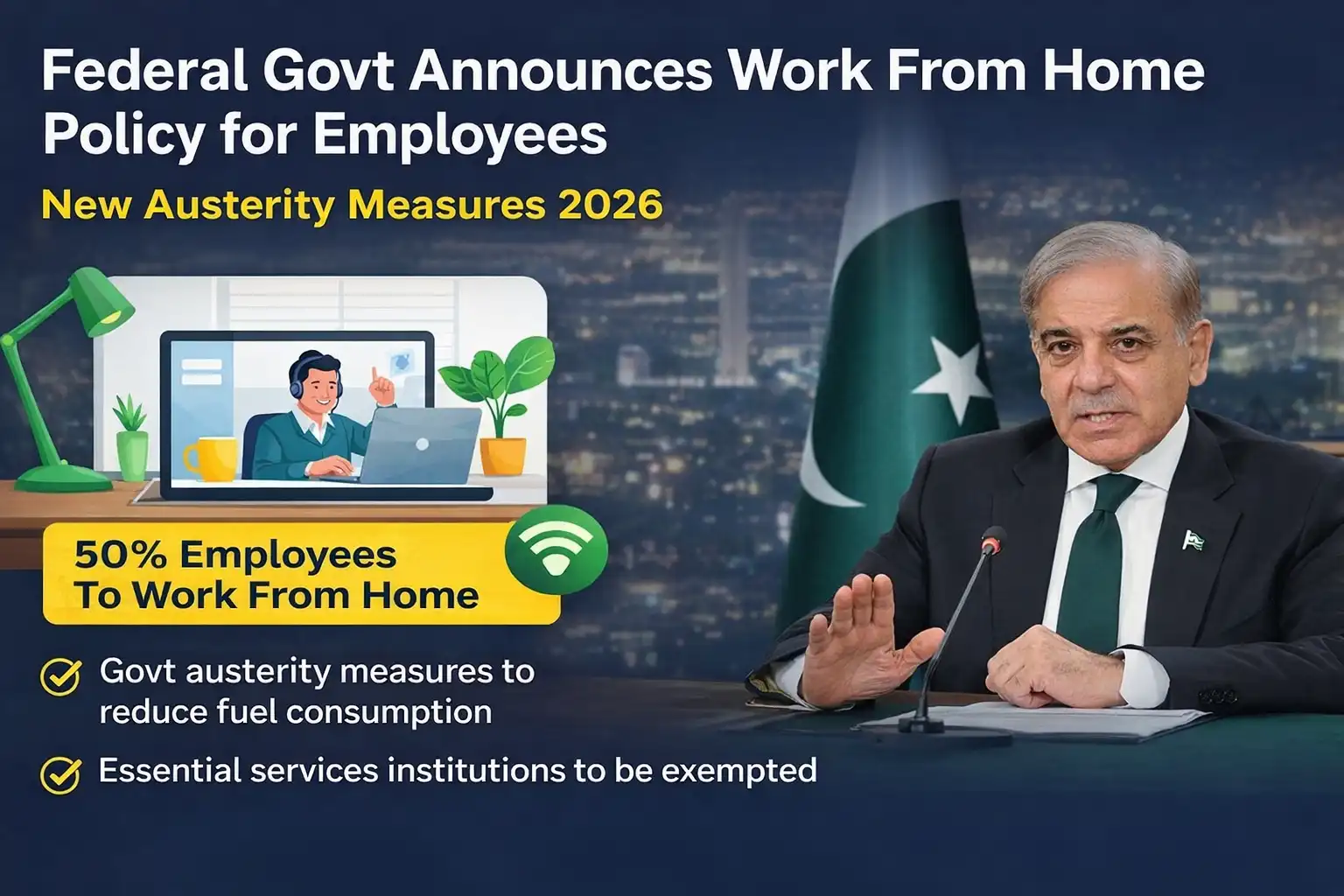
The Federal Government of Pakistan has announced a new work-from-home policy for employees as part of a major austerity plan aimed at reducing fuel consumption and managing the country’s economic challenges. The announcement was made by Prime Minister Shehbaz Sharif during a televised address to the nation after a meeting focused on economic reforms and austerity measures.
The decision comes at a time when global economic pressures are increasing due to the ongoing conflict in the Middle East, which has affected international fuel prices and created financial challenges for many countries, including Pakistan. To address these issues, the government has introduced several measures including remote work, reduced working days, spending cuts, and limits on government transport.
Many people are searching online for work from home policy Pakistan 2026, government employees work from home news, Pakistan austerity measures, four day work week Pakistan, and government fuel saving policies. This article explains everything you need to know about the new government work-from-home policy, its objectives, and its impact on employees and the economy.
Introduction to the Work From Home Policy in Pakistan
The work-from-home policy announced by the government allows a large number of employees to perform their duties remotely instead of traveling to offices daily. According to the Prime Minister, 50% of employees in public and private sector institutions will work from home, while the remaining staff will continue working in offices.
However, the policy does not apply to essential services, which must continue operating normally to maintain public services and economic stability.
Key Features of the Work From Home Policy
- 50% employees will work remotely from home
- Applies to both public and private sector institutions
- Essential services will continue normal operations
- Online meetings and video communication will be encouraged
This initiative is expected to significantly reduce fuel consumption, traffic congestion, and government operational expenses.

Reasons Behind the Government’s Decision
The government introduced the work-from-home policy primarily to deal with economic pressures and rising energy costs.
Rising Fuel Prices
The global oil market has been affected by geopolitical conflicts, especially the war in the Middle East, which has pushed fuel prices higher. Pakistan imports a large portion of its fuel, so higher oil prices create serious economic challenges.
Economic Pressure
Pakistan has been facing economic pressure due to inflation, budget deficits, and rising import costs. By reducing commuting and government transport usage, the government hopes to decrease fuel consumption and save national resources.
Energy Conservation
The government also aims to reduce electricity consumption and operational costs in public offices by limiting the number of employees working on-site.

Four-Day Work Week Announcement
Along with the work-from-home policy, the government has also announced a four-day work week for many government institutions.
Under this policy, offices will operate four days per week instead of five, helping reduce transportation costs and fuel consumption.
Sectors Exempted from the Four-Day Work Week
Certain sectors will continue their regular schedules because they are essential to the economy. These include:
- Banks and financial institutions
- Industrial sector
- Agriculture sector
- Essential public services
These sectors require continuous operations to support economic activity and public services.

Ban on Iftar Parties and Official Dinners
As part of the austerity drive, the government has imposed a complete ban on official iftar parties and government dinners.
These events often involve large expenditures on hospitality and venue arrangements. By banning such events, the government aims to promote financial discipline and responsible public spending.
This decision also sends a message that government institutions must reduce unnecessary expenses during challenging economic times.

Online Meetings and Digital Communication
The government has directed all institutions to prioritize online meetings and video conferencing instead of physical gatherings.
Benefits of Digital Meetings
- Reduced travel expenses
- Lower fuel consumption
- Faster decision-making
- Improved communication across departments
With advancements in technology, online meetings allow officials to collaborate efficiently without needing to travel.
Reduction in Government Fuel Usage
Fuel consumption is one of the largest expenses for government institutions. To address this issue, the government has introduced several fuel-saving measures.
Fuel Reduction Measures
- 50% reduction in fuel quotas for public sector institutions for two months
- 60% of government office transport vehicles will be taken off the road
These steps will significantly decrease fuel usage and reduce government spending on transportation.
However, ambulances and public service buses are exempted from these restrictions because they are essential for public welfare.
Government Spending Cuts
Another major component of the austerity plan is a 20% reduction in government spending, excluding employee salaries.
Areas Where Spending Will Be Reduced
- Administrative expenses
- Official travel costs
- Procurement of new equipment
- Office operational expenses
The government has also banned the purchase of new vehicles, air conditioners, and other non-essential items for public institutions.
Restrictions on Foreign Travel for Officials
The government has also imposed restrictions on unnecessary official foreign tours.
Who Is Affected by the Travel Restrictions
- Federal cabinet members
- Provincial chief ministers
- Governors
- Senior government officials
Only official visits that are considered essential for national interest will be approved.
This policy is expected to reduce foreign exchange spending and government travel expenses.
Impact on Government Employees
The work-from-home policy may bring several positive changes for employees.
Benefits for Employees
- Reduced commuting time
- Lower transportation expenses
- Better work-life balance
- Increased productivity in some cases
- Reduced stress from daily travel
Employees may also benefit from having more flexibility in managing their work schedules.
Impact on the Economy
The government hopes that these austerity measures will help stabilize the economy.
Expected Economic Benefits
- Reduced fuel imports
- Lower transportation expenses
- Improved budget management
- Reduced pressure on foreign exchange reserves
If implemented effectively, these measures could help Pakistan manage its economic challenges more efficiently.
Challenges in Implementing Work From Home
Although the policy has several benefits, it may also create challenges for institutions.
Possible Challenges
- Monitoring employee productivity
- Maintaining communication between departments
- Ensuring secure digital systems
- Managing workloads remotely
Government departments will need to improve their digital infrastructure and management systems to successfully implement remote work.
Global Trend of Remote Work
The concept of working from home became very popular worldwide during the COVID-19 pandemic. Many countries and companies realized that remote work can improve productivity and reduce operational costs.
Countries Using Remote Work Policies
- United States
- United Kingdom
- Canada
- Germany
- Australia
Pakistan’s new policy shows that the country is also adopting modern workplace practices to improve efficiency and reduce expenses.
Public Reaction to the Announcement
The announcement of the work-from-home policy has received mixed reactions from the public.
Positive Feedback
Many people support the decision because it can:
- Reduce fuel consumption
- Decrease traffic congestion
- Improve work-life balance
Concerns Raised
Some people are concerned about:
- Reduced productivity in some sectors
- Difficulties in monitoring employees
- Possible delays in government services
The government will need to monitor the policy closely to ensure it works effectively.
Final Words
The Federal Government’s work-from-home policy is part of a broader austerity plan aimed at reducing fuel consumption and managing Pakistan’s economic challenges.
Combined with four-day work weeks, spending cuts, fuel reductions, and restrictions on official travel, the government hopes to reduce expenses and improve financial discipline.
While the policy may bring some challenges, it also offers opportunities to modernize government operations and promote efficient resource management.
If implemented successfully, the work-from-home initiative could become an important step toward creating a more flexible and efficient work environment in Pakistan.