Higher Petrol Levy Adding Millions to Govt Revenue Each Day in Pakistan
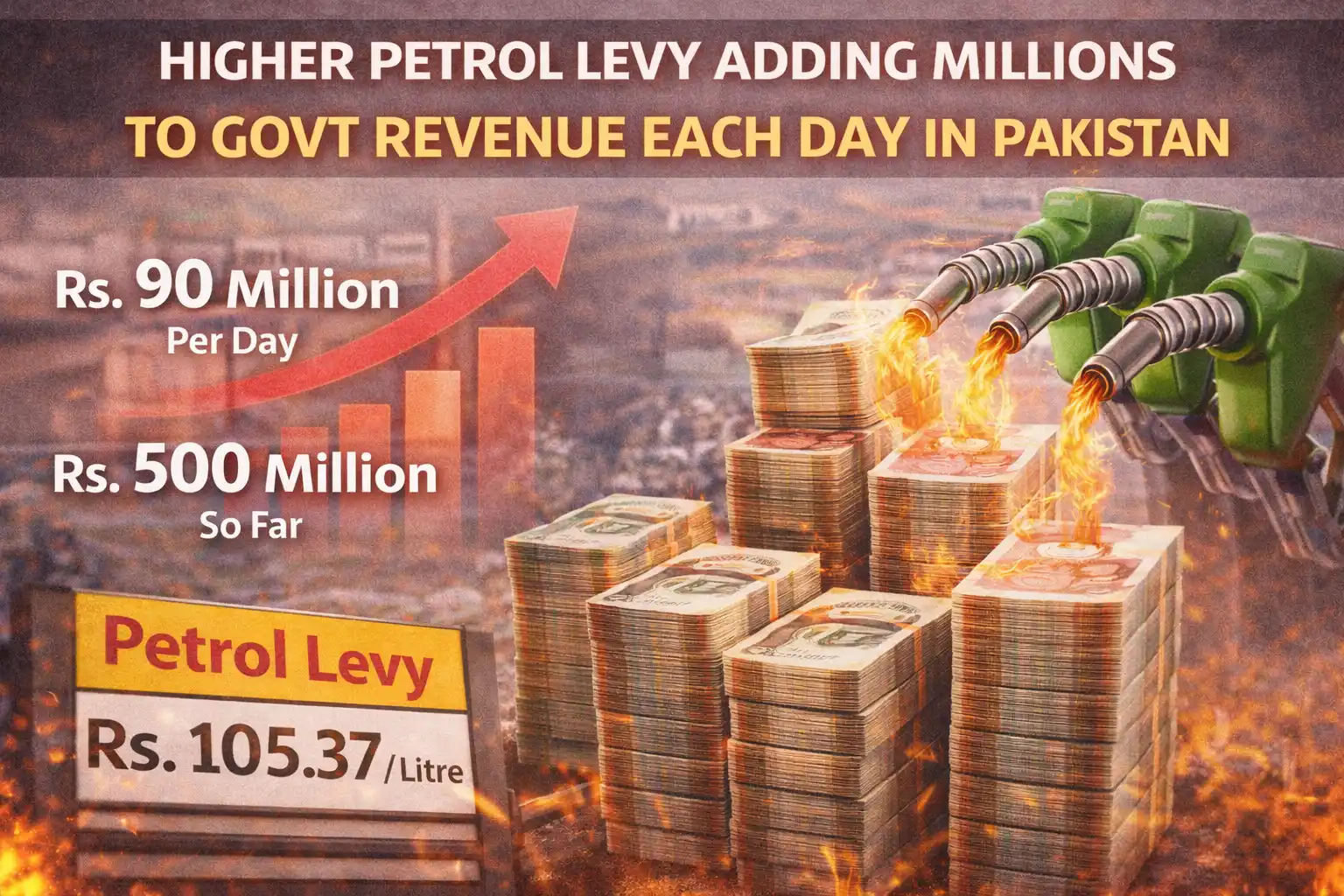
The Government of Pakistan is generating significant additional income after increasing the petroleum levy on petrol, with officials confirming that the higher levy is bringing in millions of rupees in extra revenue every day.
According to government sources, the revised levy structure is adding about Rs. 90 million in additional revenue daily, highlighting how fuel consumption continues to play a major role in Pakistan’s fiscal income.
So far, the government has already collected nearly Rs. 500 million under the updated petroleum levy policy. If current consumption levels remain stable, authorities estimate that monthly revenue could increase by Rs. 3 billion to Rs. 3.5 billion.
What Is Petroleum Levy?
The petroleum levy is a government tax imposed on petroleum products such as petrol and diesel.
Unlike other taxes, the petroleum levy is directly collected by the federal government and contributes significantly to national revenue.
The levy is often adjusted depending on economic conditions, fuel prices, and government revenue requirements.
In Pakistan, the petroleum levy has become one of the most important sources of non-direct taxation revenue.
Increase in Petrol Levy
The recent revision in fuel prices has resulted in a significant increase in the petroleum levy on petrol.
According to officials:
- The petroleum levy on petrol has increased to Rs. 105.37 per litre
- The levy has risen by Rs. 20.97 per litre
This increase has significantly boosted government revenue due to the high daily consumption of petrol across the country.
Because petrol is widely used for transportation and private vehicles, even small increases in the levy can generate large amounts of revenue.

Reduction in Diesel Levy
While the government increased the levy on petrol, it reduced the petroleum levy on high-speed diesel (HSD).
The levy on diesel has been lowered by Rs. 20.97 per litre, bringing it down to Rs. 55.24 per litre.
This adjustment was introduced to reduce the financial burden on sectors that heavily rely on diesel, such as:
- Agriculture
- Transport
- Industrial operations
Since diesel plays a critical role in economic activities, reducing the levy can help stabilize prices in these sectors.

Pakistan’s Daily Fuel Consumption
Pakistan consumes a large amount of petroleum products every day.
According to official data, the country’s daily petroleum consumption is approximately 55 million litres.
This consumption includes both petrol and diesel used in different sectors of the economy.
Petrol Consumption
Petrol consumption accounts for approximately 22,000 tonnes per day.
Petrol is mainly used in:
- Private vehicles
- Motorcycles
- Ride-hailing services
- Small commercial vehicles
Because of the large number of motorcycles and cars in Pakistan, petrol consumption remains consistently high.
Diesel Consumption
High-speed diesel consumption is estimated at around 19,000 tonnes per day.
Diesel is primarily used in:
- Heavy transport vehicles
- Agricultural machinery
- Trucks and buses
- Industrial equipment
Although diesel consumption is significant, petrol consumption is currently higher, which is why the petrol levy generates more revenue.

Why Petrol Levy Generates More Revenue
The higher petrol levy is generating more revenue for several reasons.
High Vehicle Usage
Pakistan has millions of motorcycles and cars that rely on petrol for daily transportation.
Urban areas especially have high levels of petrol consumption due to traffic and commuting needs.
Higher Petrol Demand Compared to Diesel
Petrol consumption currently exceeds diesel consumption in Pakistan.
This means that increasing the petrol levy has a much larger impact on government revenue.
Frequent Fuel Purchases
Private vehicle owners and commuters purchase petrol regularly, creating a steady and predictable revenue stream for the government.
Even small increases in the levy can translate into millions of rupees in daily revenue.
Impact on Government Revenue
The increased petroleum levy is helping the government improve its fiscal position.
Officials estimate the following financial impact:
- Rs. 90 million additional revenue per day
- Rs. 500 million collected so far
- Rs. 3–3.5 billion potential monthly increase
These funds can help the government support public spending and manage fiscal deficits.
Role of Petroleum Levy in Pakistan’s Economy
The petroleum levy has become an important financial tool for the government.
Revenue generated from fuel taxes helps fund several government initiatives, including:
- Infrastructure development
- Public sector spending
- Economic stabilization programs
- Energy sector management
However, higher fuel taxes can also affect consumer spending and transportation costs.
Economic Concerns Linked to Fuel Taxes
Although the petroleum levy increases government revenue, it may also have economic consequences.
Higher fuel prices can affect the cost of living in several ways.
Increased Transportation Costs
Fuel price increases often lead to higher transportation costs for both goods and passengers.
Inflationary Pressure
Since fuel is used in many sectors, higher fuel prices can increase production and distribution costs, contributing to inflation.
Impact on Household Budgets
Rising fuel costs can place additional financial pressure on households that rely on personal vehicles for daily commuting.
Government Strategy on Fuel Pricing
Fuel pricing in Pakistan is influenced by several factors.
These include:
- Global oil prices
- Exchange rate fluctuations
- Government tax policies
- Economic conditions
Authorities often adjust petroleum levies to balance consumer affordability and government revenue needs.
Future Outlook for Fuel Prices
Energy analysts believe that fuel prices in Pakistan will continue to depend heavily on global oil markets.
If international oil prices increase, the government may need to adjust fuel taxes or subsidies accordingly.
At the same time, fuel consumption trends will continue to play a major role in determining government revenue from petroleum levies.
Conclusion
The recent increase in the petroleum levy on petrol is generating significant additional revenue for the government of Pakistan.
With daily petrol consumption remaining high, the revised levy structure is expected to contribute billions of rupees to the national treasury each month.
While the policy helps strengthen government finances, it also highlights the delicate balance between raising revenue and managing the economic impact of higher fuel prices on consumers.
As fuel demand continues to grow, petroleum levies will likely remain a major component of Pakistan’s fiscal strategy.