
Pakistan Considers Petrol Price Freeze as Global Oil Prices Rise
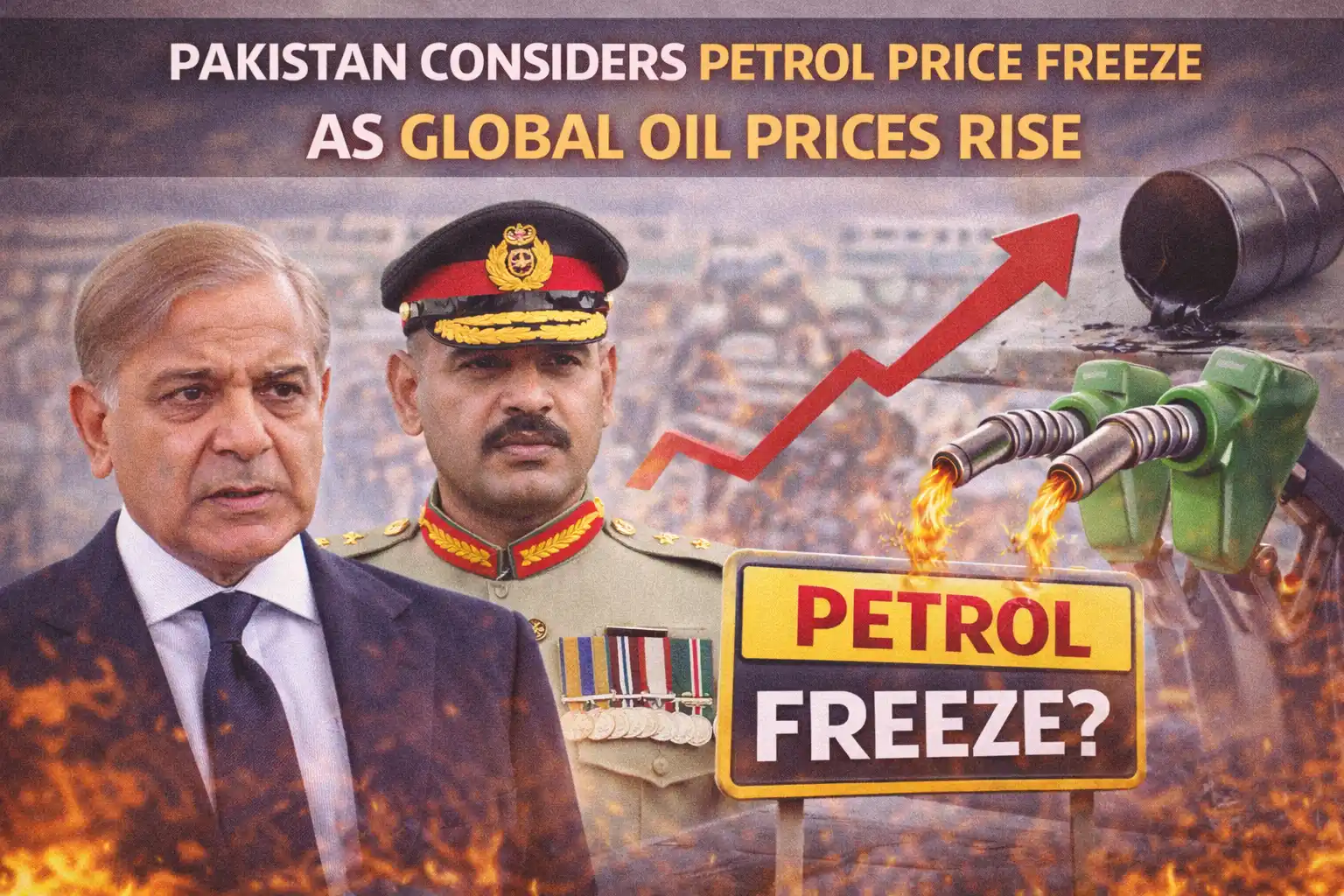
The government of Pakistan is considering freezing petrol prices despite rising global oil prices in an effort to protect consumers from further financial pressure. The proposal was discussed during a consultative meeting attended by Shehbaz Sharif, the Prime Minister of Pakistan, and Asim Munir, the Chief of Army Staff.
Officials are exploring options to stabilize fuel prices even though international oil markets have recently experienced a significant surge. The government is reportedly examining financial resources and emergency funds to offset the impact of global oil price increases.
If implemented, the decision could help limit fuel price increases in Pakistan and provide temporary relief to consumers already dealing with high living costs.
Rising Global Oil Prices Creating Pressure
Global crude oil prices have been rising due to supply disruptions, geopolitical tensions, and increasing demand in international energy markets.
When global oil prices increase, countries that import petroleum products—such as Pakistan—often experience higher domestic fuel prices.
Pakistan imports a large portion of its petroleum products, which makes local fuel prices highly sensitive to international oil market fluctuations.
This situation has placed significant pressure on policymakers to balance fiscal stability with public relief.

Possible Increase in Petrol and Diesel Prices
Based on the latest international market data, fuel prices in Pakistan could increase substantially if the government passes the full impact to consumers.
Officials estimate that:
- Petrol prices could increase by around Rs. 41 per litre
- High-speed diesel (HSD) could rise by approximately Rs. 56 per litre
Currently, retail fuel prices in Pakistan are already very high.
- Petrol price: over Rs. 322 per litre
- Diesel price: over Rs. 337 per litre
An additional increase would further burden households and businesses.

Expected Increase in Other Petroleum Products
In addition to petrol and diesel, other petroleum products may also see price adjustments.
According to preliminary estimates:
- Kerosene oil may increase by around Rs. 7 per litre
- Light diesel oil (LDO) could rise by approximately Rs. 53 per litre
These fuels are widely used in rural areas, agriculture, and industrial activities.
Any price increase could therefore affect multiple sectors of the economy.

Government Considering Emergency Financial Support
During the meeting attended by the Prime Minister and the Army Chief, officials discussed the possibility of using emergency financial reserves to stabilize fuel prices.
Reports suggest that approximately Rs. 389 billion could be used to absorb the impact of rising global oil prices.
This financial support would help the government prevent a sharp increase in petrol and diesel prices for consumers.
Such measures could provide short-term relief while the government monitors international oil market trends.

Upcoming Petroleum Price Review
Pakistan reviews petroleum prices twice every month based on international oil prices and exchange rate changes.
The next fuel price announcement is scheduled for March 15.
However, officials may make a decision earlier depending on market conditions and economic considerations.
The final decision will determine whether the government will:
- Freeze fuel prices
- Partially increase prices
- Pass the full price increase to consumers
Fuel Conservation Measures Under Consideration
Alongside price stabilization efforts, the government is also exploring fuel conservation strategies to manage energy demand and protect foreign exchange reserves.
Some measures under discussion include:
- Adjusting gas supply to industrial sectors
- Reducing non-essential energy consumption
- Managing electricity demand during peak hours
- Introducing fuel conservation policies
These policies aim to reduce energy imports and control the country’s growing energy costs.
Current Fuel Stock Levels in Pakistan
Officials have confirmed that Pakistan currently has sufficient petrol and diesel inventories for approximately three weeks.
However, maintaining stable fuel supplies could become challenging if global oil market disruptions continue.
Diesel imports may face logistical difficulties because alternative supply routes require longer shipping times.
This could affect the timing of fuel deliveries to Pakistan.
Saudi Arabia Supporting Pakistan’s Energy Supply
To help manage fuel supply challenges, Saudi Arabia is supporting Pakistan by providing crude oil supplies.
These supplies allow local refineries to increase diesel production and maintain domestic fuel availability.
Saudi support has played an important role in stabilizing Pakistan’s energy sector during periods of economic pressure.
This cooperation strengthens the long-standing economic relationship between the two countries.
Impact of Fuel Prices on Pakistan’s Economy
Fuel prices have a direct impact on the overall economy.
Higher petrol and diesel prices can lead to:
- Increased transportation costs
- Higher food prices
- Rising industrial production costs
- Inflationary pressure across sectors
For this reason, governments often attempt to control sudden fuel price increases.
However, keeping fuel prices artificially low can also create financial challenges for the government budget.
Challenges in Maintaining Price Stability
While freezing fuel prices can provide relief to consumers, it also has financial implications.
If the government absorbs rising global oil costs, it may increase fiscal pressure on national finances.
Some of the challenges include:
- Higher subsidy costs
- Increased budget deficit
- Pressure on foreign exchange reserves
Policymakers must carefully balance economic stability with consumer protection.
Future Outlook for Fuel Prices
Energy experts believe that fuel prices in Pakistan will continue to depend heavily on international oil market trends.
If global crude oil prices remain high, maintaining a long-term fuel price freeze may become difficult.
However, temporary measures could help ease the immediate burden on consumers while the government explores long-term energy strategies.
These strategies may include:
- Increasing domestic refining capacity
- Expanding renewable energy projects
- Improving fuel efficiency policies
Conclusion
The government of Pakistan is considering freezing petrol prices despite rising global oil prices in order to protect consumers from additional financial pressure.
Discussions involving Prime Minister Shehbaz Sharif and Chief of Army Staff Asim Munir highlight the importance of managing fuel price stability during a period of economic uncertainty.
With the next petroleum price review approaching, policymakers must decide whether to absorb rising global oil costs or pass them on to consumers.
The final decision will play a significant role in shaping fuel prices, inflation, and economic stability in Pakistan over the coming weeks.