
SBP Reserves Rise by $41 Million to Near $16.5 Billion
Foreign exchange reserves held by the State Bank of Pakistan (SBP) recorded a modest increase during the week ending March 06, 2026, reflecting improved inflows and stability in Pakistan’s external financial position.
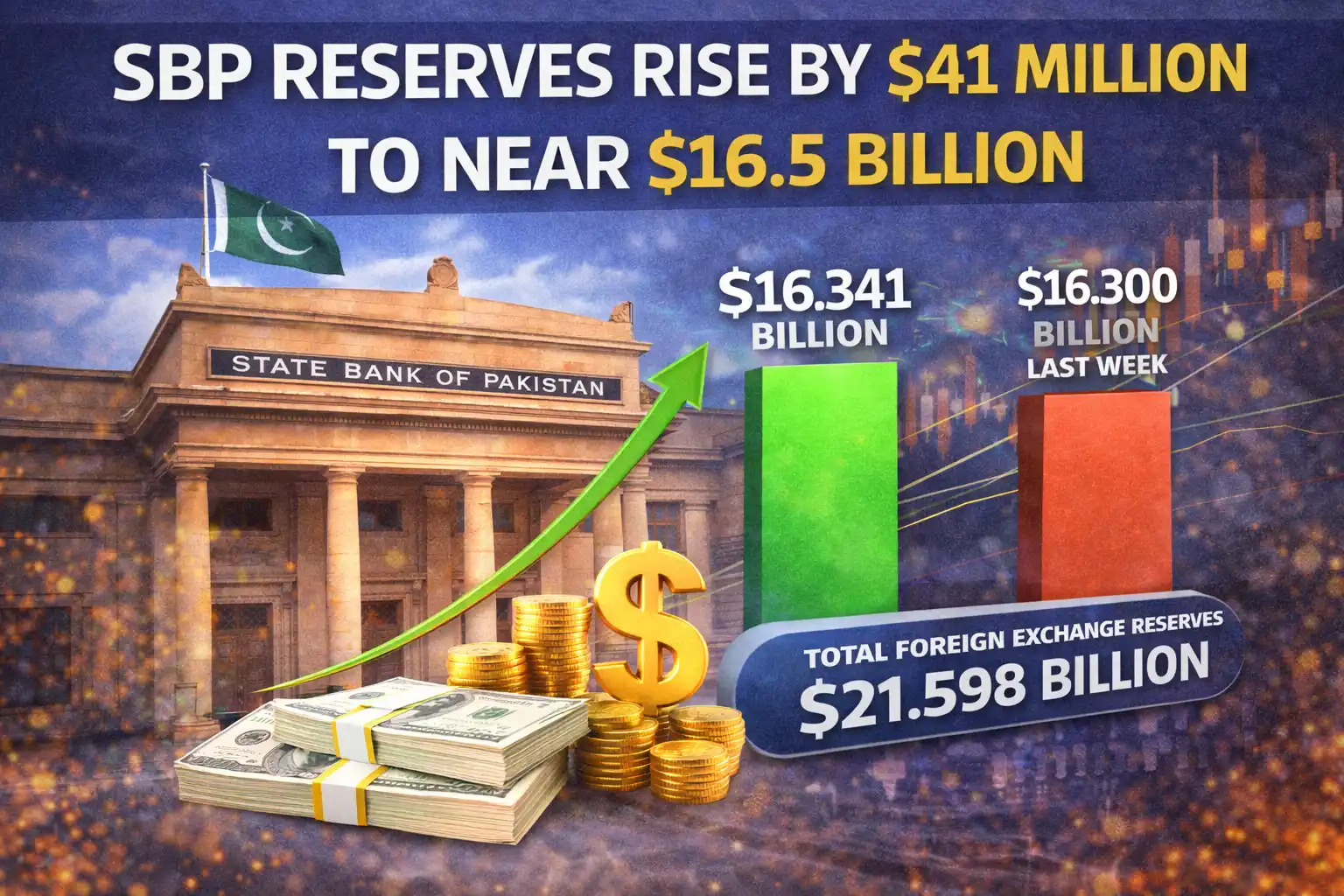
According to the central bank’s latest weekly report, SBP’s foreign reserves increased by $41 million, reaching $16.341 billion compared to $16.300 billion in the previous week.
The rise indicates a 0.3% week-on-week increase in the central bank’s reserves.
Pakistan’s Total Foreign Exchange Reserves
Pakistan’s total liquid foreign exchange reserves also showed a noticeable increase during the same period.
The country’s total reserves rose by $164 million, reaching $21.598 billion as of March 06, 2026.
In the previous week, the total reserves stood at $21.434 billion.
These reserves include funds held by the central bank as well as reserves maintained by commercial banks.

Breakdown of Pakistan’s Foreign Reserves
Pakistan’s foreign exchange reserves are divided into two main categories.
SBP Reserves
The largest share of foreign reserves is held by the State Bank of Pakistan.
During the latest reporting week:
- SBP reserves increased by $41 million
- Total SBP reserves reached $16.341 billion
Central bank reserves play a critical role in maintaining the country’s economic stability and managing external payments.
Commercial Banks’ Reserves
In addition to the central bank, commercial banks also maintain foreign currency reserves.
- Commercial banks’ reserves increased by $123 million
- Total reserves held by banks reached $5.257 billion
These reserves contribute to the country’s overall foreign exchange position.

Importance of Foreign Exchange Reserves
Foreign exchange reserves are an important indicator of a country’s financial strength.
These reserves help governments and central banks:
- Pay for imports such as oil and machinery
- Manage external debt repayments
- Stabilize the national currency
- Support international trade
A higher level of reserves generally indicates stronger financial stability.

Impact on Pakistan’s Economy
The increase in SBP reserves may provide some support to Pakistan’s economy.
Strong foreign reserves help:
- Improve investor confidence
- Stabilize the Pakistani rupee
- Strengthen the country’s ability to handle economic shocks
However, economists note that consistent growth in reserves is necessary to maintain long-term financial stability.

Factors Influencing Foreign Reserves
Several factors can affect Pakistan’s foreign exchange reserves.
These include:
- Export earnings
- Foreign investment inflows
- Remittances from overseas Pakistanis
- International financial support
- Debt repayments
Changes in any of these areas can cause reserves to rise or fall.
Role of Overseas Remittances
Remittances sent by overseas Pakistanis are one of the most important sources of foreign exchange.
Millions of Pakistanis working abroad send money back home every year, which helps strengthen the country’s reserves.
Remittances also support household incomes and contribute to economic growth.
Importance of Maintaining Reserve Stability
Maintaining adequate foreign exchange reserves is essential for economic security.
Countries with strong reserves can better manage:
- Currency fluctuations
- Global financial shocks
- Trade imbalances
For Pakistan, maintaining a stable reserve level is important to ensure smooth import payments and economic stability.
Outlook for Pakistan’s Reserves
Economic analysts expect Pakistan’s foreign reserves to continue fluctuating depending on economic conditions.
Factors such as global oil prices, export performance, and international financial support will influence future reserve levels.
The government and central bank will continue monitoring reserve levels closely to maintain economic stability.
Conclusion
The latest data from the State Bank of Pakistan shows a slight increase in the country’s foreign exchange reserves.
SBP reserves rose by $41 million, while total liquid reserves increased by $164 million during the week ending March 06, 2026.
Although the increase is relatively small, it signals some stability in Pakistan’s external financial position.
Maintaining healthy foreign reserves will remain crucial for Pakistan’s economic stability, currency management, and ability to meet international financial obligations.