Breaking News: Missile Hits US Embassy in Baghdad Amid Rising Iran-US-Israel Conflict

Tensions across the Middle East have intensified dramatically after reports emerged of attacks on the United States Embassy in Iraq and several US military bases in the region. The situation is rapidly evolving as military actions, threats, and retaliatory operations continue between Iran, Israel, and the United States, raising fears of a wider regional conflict.
Missile Attack on the US Embassy in Baghdad
According to international media outlet APA, citing Al-Hadath TV, a missile attack targeted the US Embassy in Baghdad, Iraq.
Reports indicate that a missile landed inside the embassy compound, triggering an explosion that caused smoke to rise from the diplomatic area. Security alerts were immediately activated within the embassy complex following the incident.
Initial reports suggest that no casualties have been confirmed so far, though authorities are still assessing the extent of the damage caused by the attack.
Sources familiar with the incident say the attackers may have aimed to disable the air defense systems located within the embassy grounds, potentially weakening the compound’s defensive capabilities.
Multiple Attacks on US Bases in Iraq
Meanwhile, an Iraqi resistance group has claimed responsibility for eight attacks targeting US military bases within a 24-hour period.
According to statements released by the group, the attacks involved the use of drones and missile systems aimed at American installations throughout Iraq.
However, the armed factions did not provide detailed information about the specific targets or the results of these strikes. US military officials have not yet confirmed the full scope of the attacks.
These developments highlight the increasing security challenges faced by US forces stationed in Iraq and other parts of the Middle East.
Massive US Airstrikes on Iran’s Strategic Kharg Island
In another major development, the United States launched heavy airstrikes on Iran’s strategic Kharg Island, which is considered the country’s most important oil export hub in the Persian Gulf.
According to media reports, the US President stated that US Central Command (CENTCOM) conducted large-scale bombing operations on the island.
The president described the attack as one of the most powerful bombing operations in the history of the Middle East, claiming that all military targets on Kharg Island were destroyed during the strikes.
Kharg Island plays a crucial role in Iran’s economy, as nearly 90 percent of Iran’s crude oil exports are shipped from this location.
Despite the intensity of the operation, the United States said that oil facilities were not targeted at this stage.
However, the US administration warned that oil infrastructure could become a target if Iran attempts to block international shipping routes in the Strait of Hormuz.

US Deploys B-2 Bombers and 5,000 Additional Troops
As tensions continue to escalate, the United States has dispatched B-2 stealth bomber aircraft toward Iran and announced the deployment of 5,000 additional troops to the Middle East.
According to US CENTCOM, the deployment of the long-range B-2 bombers is intended to strengthen deterrence and enable precision strikes against strategic targets if necessary.
The Wall Street Journal also reported that the US is preparing to expand its military presence by sending 5,000 Marines and soldiers along with several warships to the region.
Meanwhile, Israel claimed that its forces struck more than 200 targets within the past 24 hours, focusing on Iranian military installations.
Israeli officials said fighter jets carried out approximately 20 large-scale airstrikes, targeting facilities involved in weapons production, storage, and military operations.
In a further move to strengthen regional defenses, the United States transferred its THAAD missile defense system from South Korea to Israel, significantly enhancing Israel’s air defense capabilities.

Iran Claims Retaliatory Missile Attacks Against Israel
Iran’s Islamic Revolutionary Guard Corps (IRGC) has claimed that it launched major retaliatory strikes against Israel.
According to Iranian media, Brigadier General Seyed Majid Mousavi announced that 30 super-heavy ballistic missiles carrying warheads weighing between one and two tons were fired toward Israeli-controlled territories.
He stated that the operation successfully targeted Israel’s aerospace monitoring and surveillance systems, significantly disrupting its defensive capabilities.
Iranian officials also claimed that a considerable portion of Israeli airspace is now under their control, although independent verification of this claim has not yet been confirmed.
Iran maintains that its actions are a response to the joint US-Israel attack on February 28, which targeted Iranian military positions.
Iranian military leaders have warned that the conflict will continue until the United States and Israel acknowledge and regret their aggression against Iran.
Officials from Iran’s Khatam al-Anbiya Central Headquarters recently stated that the country possesses advanced weapons systems far beyond what its enemies expect.
Strait of Hormuz Tensions Affect Global Shipping
Amid the ongoing tensions, Iran recently allowed a Turkish-owned commercial ship to safely pass through the Strait of Hormuz, according to Turkey’s Minister of Transport.
However, reports indicate that 15 Turkish commercial ships remain in the strait due to the current security situation.
Authorities are closely monitoring vessel movements to ensure the safe navigation and return of commercial fleets.
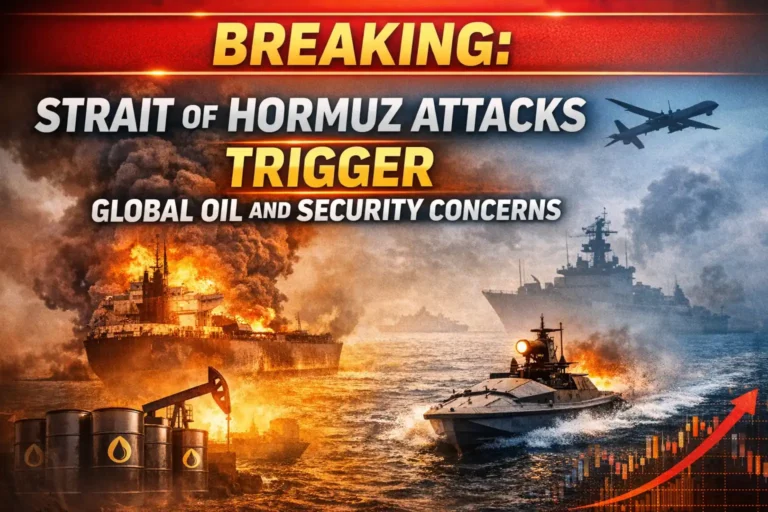
The Strait of Hormuz is one of the world’s most critical oil transit routes, and any disruption there could significantly impact global energy markets and oil prices.
US Refueling Aircraft Crash in Iraq
In a separate incident, a US Air Force KC-135 aerial refueling tanker aircraft crashed in western Iraq, killing all six American personnel on board.
The KC-135 aircraft is designed to refuel fighter jets during flight, allowing them to operate over long distances without landing.
According to aviation data sources, the aircraft’s estimated value ranges between $40 million and $60 million, equivalent to approximately 11 to 17 billion Pakistani rupees.
The US military confirmed that the crash occurred on March 12, 2026, but the exact cause of the accident remains under investigation.
Israel Restricts Access to Al-Aqsa Mosque During Quds Day
Meanwhile, Israel imposed strict security measures around Al-Aqsa Mosque, banning large gatherings and restricting Friday prayers during Quds Day events.
Reports indicate that only a limited number of elderly Palestinians were allowed to enter the mosque, forcing many younger worshippers to pray outside the compound.
Israeli Prime Minister Benjamin Netanyahu also warned that Israel could attempt to create conditions for political change in Iran, although he acknowledged that such a decision ultimately lies with the Iranian people.
Iranian Leaders Appear Publicly During Quds Day Rally
During the annual Quds Day rally in Tehran, several senior Iranian leaders appeared publicly despite threats from the United States.
Participants were surprised to see Iranian President Masoud Pezeshkian, Foreign Minister Abbas Araghchi, and National Security Council Secretary Ali Larijani among the crowd.
Thousands of people attended the rallies across Iran, chanting slogans and expressing support for the country’s leadership.
During the rally, an explosion occurred near Tehran’s Enghelab Square, though authorities confirmed no casualties or injuries.
Ali Larijani stated that the attack demonstrates Israel’s weakness and Iran’s strength, while warning the United States against escalating tensions further.