Big Revenue: KP Number Plate Auction Generates Rs 5.81 Crore
Khyber Pakhtunkhwa set a new benchmark in non-tax revenue generation on January 27, 2026, when the provincial Excise, Taxation and Narcotics Control Department raised an astonishing Rs. 5.81 crore from the auction of just 11 premium vehicle number plates. Held at Nishtar Hall, the event marked the province’s first-ever “Choice Number Plate” auction, and its success has already reshaped how provincial governments view luxury assets and voluntary revenue streams.
What made the auction remarkable was not just the amount collected, but the speed and intensity of bidding. In a single evening, KP demonstrated that identity-driven assets, when auctioned transparently, can rival traditional revenue tools.
A First-of-Its-Kind Auction in KP
Unlike routine vehicle registrations, this auction focused on vanity and identity-based number plates, including tribal names, district titles, and elite numeric combinations ending in “1”. The event targeted high-net-worth individuals, business leaders, and automobile enthusiasts who view customized plates as symbols of prestige rather than mere registration markers.
The initiative was organized by the KP Excise, Taxation and Narcotics Control Department, reflecting a broader shift toward digitization, transparency, and market-based pricing of public assets.
Provincial officials described the auction as a pilot project, designed to test public appetite for premium plates. The response exceeded expectations.

The Leaderboard: Plates That Dominated the Auction
The auction floor witnessed intense bidding wars, especially for plates tied to tribal identity and regional pride.
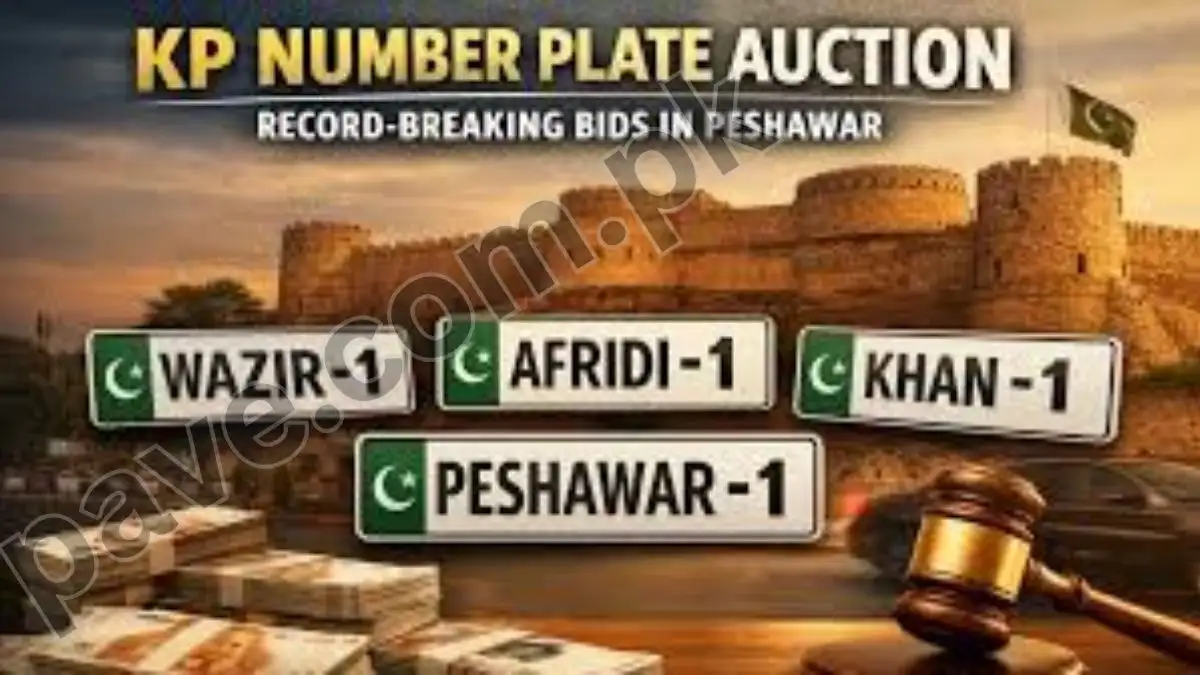
The standout of the night was “Wazir-1”, which fetched a record Rs. 1.5 crore, the highest bid of the event. Closely following was “Afridi-1”, sold for Rs. 1.405 crore and purchased by Javed Afridi, the owner of Peshawar Zalmi. The purchase drew loud applause and underscored the emotional and cultural value attached to such plates.
Other notable sales included “Khan-1” at Rs. 1.11 crore, acquired by provincial lawmaker Nek Muhammad Khan, and “Peshawar-1”, which closed at Rs. 1 crore, symbolizing pride in the historic capital of KP.
District-based plates also attracted strong interest. “Haripur-1” sold for Rs. 80 lakh, while “Yousafzai-1” fetched Rs. 49 lakh, largely due to its deep-rooted historical and tribal significance.
In total, the auction of these 11 plates alone generated Rs. 5.81 crore, a figure that surprised even senior officials.

The “Imran Khan” and “804” Mystery
One of the most talked-about aspects of the auction was not what sold, but what did not.
Plates such as “Imran Khan-1” and “Imran Khan-804” were initially listed for bidding. The number 804 holds symbolic importance, as it is widely associated with the prisoner number of PTI founder Imran Khan.
However, authorities made a last-minute decision to withdraw these plates from the physical auction. According to officials, the move was strategic rather than political. The department wants to offer these highly sensitive and globally recognizable plates through an online e-bidding platform, allowing overseas Pakistanis and international bidders to participate.
Experts believe that once listed digitally, these plates could break all previous national records, potentially crossing the Rs. 2 crore mark individually.

Why Vanity Plates Are Suddenly in Demand
The explosive interest in customized number plates reflects a shift in how wealth and identity intersect in Pakistan.
For elite buyers, such plates act as status symbols, similar to luxury watches or exclusive property addresses. A single-digit or identity-based plate instantly signals influence, heritage, or affiliation.
There is also an investment angle. Rare alphanumeric combinations are finite. Once issued, they often appreciate over time and can be resold, much like real estate or collectibles. Buyers increasingly view them as alternative assets rather than sunk costs.

Government Reform and Transparency
The success of the auction is also tied to governance reform. Under the leadership of KP’s Excise Minister Syed Fakhar Jehan, the province is moving away from discretionary allotments toward open, competitive auctions.
This shift reduces favoritism, improves transparency, and ensures that the state captures the true market value of premium public assets. Officials have hinted that similar auction models may be applied to other sectors in the future.
How to Participate in the Next Auction
Following the overwhelming response, the department has confirmed that additional phases are planned.
Interested bidders will need to register either through the Dastak App or the official KP Excise website. Participation typically requires a refundable security deposit, commonly around Rs. 100,000, to discourage frivolous bidding.
Future auctions, particularly those involving politically or culturally significant plates, are expected to be conducted entirely online, making them accessible to bidders worldwide.
Bottom Line
The KP number plate auction of January 27, 2026, was more than a revenue event. It was a proof of concept. By selling just 11 plates, the province unlocked Rs. 5.81 crore without imposing new taxes or levies.