Breaking: Strait of Hormuz Attacks Trigger Global Oil and Security Concerns
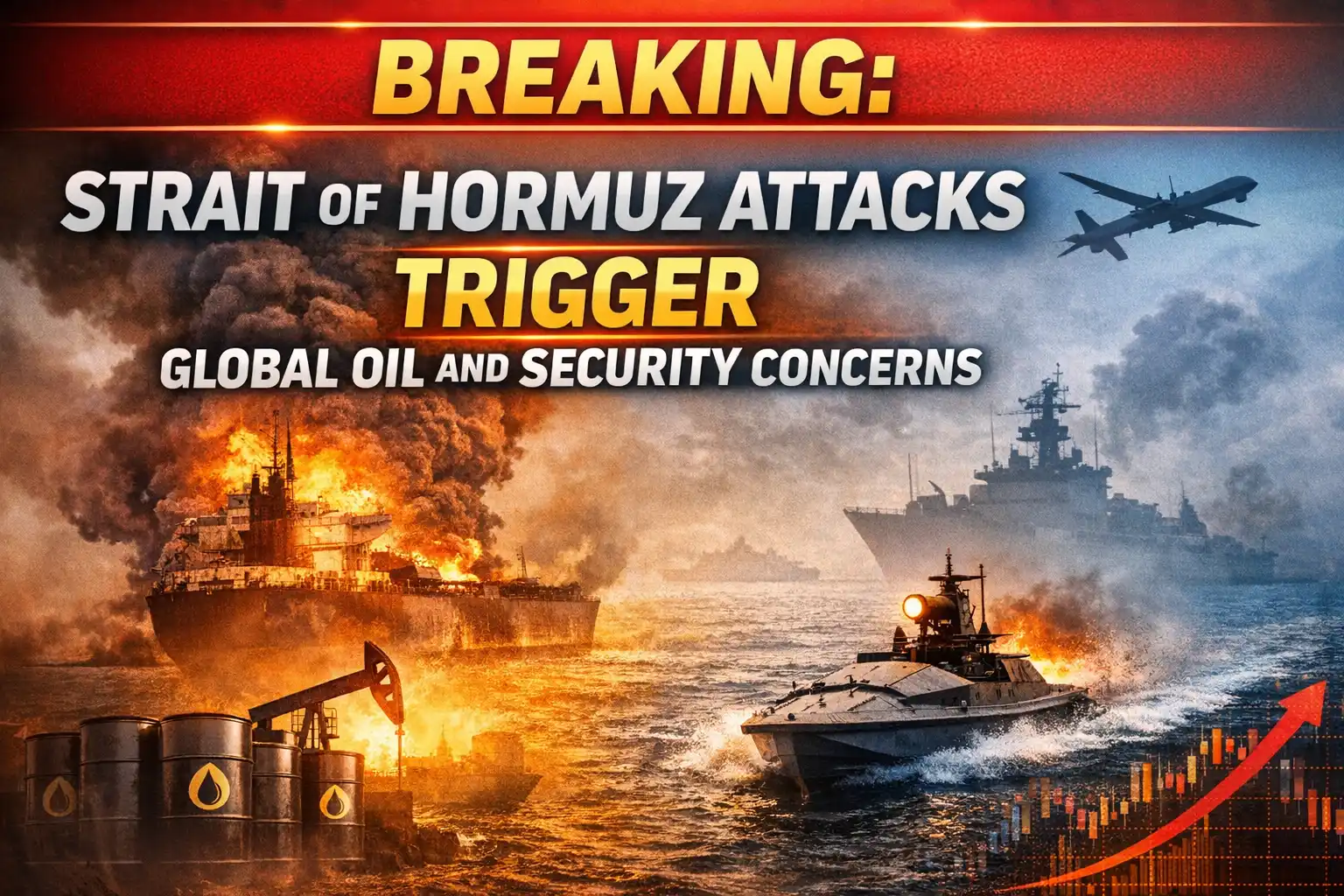
Tensions in the Middle East have reached a dangerous level as attacks on ships in the Strait of Hormuz continue. The situation has become more serious after reports of drone boat attacks, sea mines, and missile strikes on commercial vessels and military targets.
The conflict between Iran, the United States, and Israel has also triggered a series of global reactions. Several countries are now monitoring the situation closely because the Strait of Hormuz is one of the most important shipping routes in the world.
Recent developments include attacks on ships in Gulf waters, missile strikes on US bases in Iraq, large-scale airstrikes on Iran, and the cancellation of flights between Pakistan and Middle Eastern countries.

These events have raised fears of a wider regional conflict that could affect global oil prices, international trade, and global security.
Japanese Prime Minister Plans Meeting with Donald Trump
Amid rising tensions in the Middle East, Japanese Prime Minister Sanae Takaichi has announced that she will visit the United States next week.
During this visit, she is expected to meet US President Donald Trump to discuss the growing global tensions, especially the crisis in the Middle East.
According to media reports, this will be Takaichi’s first official visit to Washington since becoming prime minister last year.
The meeting between the two leaders is expected to focus on several important issues including:
- Middle East conflict
- Iran-US tensions
- East Asia security
- Global economic stability
Speaking to the Japanese parliament, Takaichi said that Japan wants to present its diplomatic position to the United States during this time of rising global tensions.
She also emphasized that it is difficult to legally evaluate the recent US-Israeli military actions in Iran, and called for immediate steps to reduce tensions.
Apart from security issues, both leaders are also expected to discuss economic cooperation, Japanese investment, and bilateral trade relations between Japan and the United States.
Strait of Hormuz Attacks Threaten Global Shipping
One of the most serious developments in the current crisis is the escalating tension in the Strait of Hormuz, a narrow waterway connecting the Persian Gulf to the Arabian Sea.
This strategic route is extremely important because around 20% of the world’s oil and gas shipments pass through it.
Recent reports suggest that several commercial ships have been attacked using:
- Drone boats
- Sea mines
- Missile-like projectiles
According to international media reports, at least six ships were targeted in Gulf waters near Iraq.
Two oil tankers caught fire after the attacks, and one foreign crew member was reportedly killed.
Among the targeted ships were:
- Safe Sea Vishnu, an oil tanker sailing under the Marshall Islands flag
- Zephyros, another tanker carrying fuel from Iraq
Authorities confirmed that both ships suffered major damage after fires broke out on board.
Rescue teams managed to evacuate several crew members and move them to safer locations.
Other vessels that were reportedly attacked include:
- A Thai cargo ship
- A Japanese container ship
- Another commercial shipping vessel
Fortunately, most of the crew members on these ships remained safe.
Experts say these attacks could seriously disrupt global maritime trade and oil supply chains.
Global Shipping Companies Request Security
Due to the increasing attacks on commercial vessels, global shipping companies have requested military protection for ships traveling through the Strait of Hormuz.
However, reports suggest that the US Navy has not yet agreed to provide escort services because the current situation is extremely dangerous.
Security experts warn that if the attacks continue, shipping companies may avoid the Strait of Hormuz altogether.
This could lead to:
- Delays in global oil supply
- Higher transportation costs
- Rising global energy prices
Since many countries depend heavily on oil transported through this route, the global economy could also be affected.
25 More Flights from Pakistan to the Middle East Cancelled
The ongoing conflict has also disrupted international aviation.
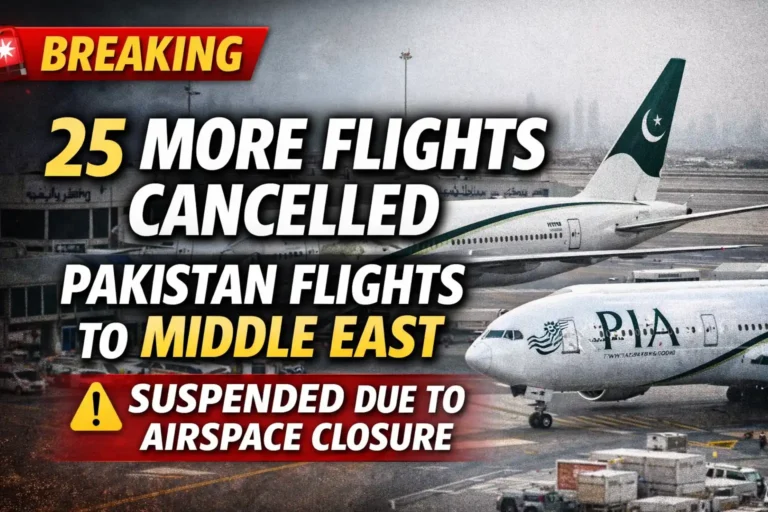
Flight operations between Pakistan and the Middle East remain suspended, and 25 more flights from Pakistan to Middle Eastern destinations have been cancelled.
According to aviation sources, 14 flights traveling between Lahore and cities such as Dubai, Abu Dhabi, Sharjah, Bahrain, Kuwait, and Qatar were cancelled.
Meanwhile:
- 4 flights from Sialkot Airport were cancelled
- 7 flights from Multan and Faisalabad were also suspended
These cancellations occurred because many Middle Eastern countries have temporarily closed their airspace due to the conflict involving Iran, the United States, and Israel.
Earlier, 72 flights from Pakistan to the Middle East were also cancelled on Friday, showing how seriously the crisis has affected international travel.
Thousands of passengers have been affected by these cancellations.
Many travelers were planning to go to Gulf countries for:
- Employment
- Business trips
- Family visits
Airlines have advised passengers to check flight schedules before going to the airport.
Attacks on US Embassy and Military Bases in Iraq
Another alarming development in the region is the attack on US military installations in Iraq.
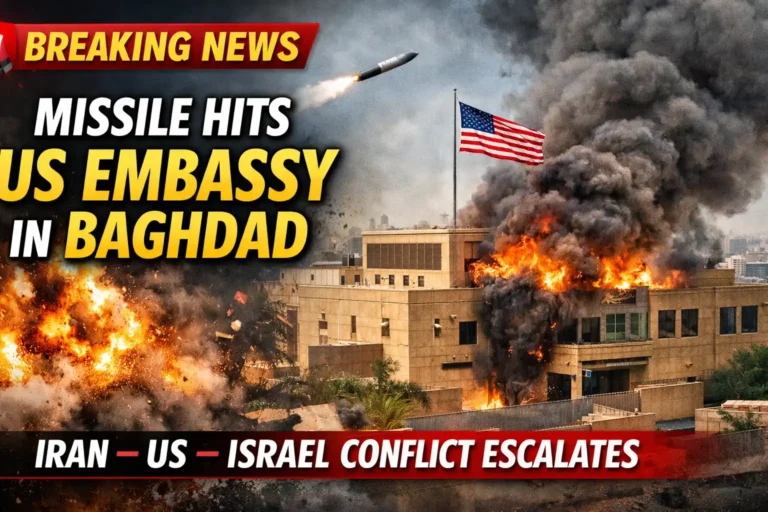
According to reports from international media outlet APA, citing Al-Hadath TV, a missile struck the US Embassy compound in Baghdad.
Witnesses reported seeing smoke rising from the embassy area after the explosion.
So far, no casualties have been confirmed, but the full extent of the damage is still unknown.
Security analysts believe the attack was intended to disable the air defense systems located inside the embassy compound.
At the same time, a resistance group in Iraq claimed that it had launched eight attacks on US military bases within 24 hours.
These attacks reportedly involved:
- Drones
- Missiles
However, detailed information about the attacks has not yet been released.
Trump Claims Largest Attack in Middle East History
Former US President Donald Trump claimed that the United States had carried out one of the most powerful bombing operations in Middle Eastern history.
According to reports, the US Central Command (CENTCOM) conducted large-scale airstrikes on Iran’s Kharg Island.
Kharg Island is extremely important for Iran because it serves as the country’s main oil export hub.
Approximately 90% of Iran’s crude oil exports pass through Kharg Island.
Trump stated that all military targets on the island were destroyed during the operation.
However, he clarified that oil facilities were not targeted.
He also warned that if Iran tries to block shipping routes in the Strait of Hormuz, the United States could target oil infrastructure as well.
US Sends B-2 Bombers and Deploys More Troops
In response to the growing conflict, the United States has increased its military presence in the region.
Reports confirm that the US has:
- Sent B-2 stealth bomber aircraft toward Iran
- Deployed 5,000 additional troops in the Middle East
According to US Central Command, the purpose of deploying B-2 bombers is to carry out long-range military operations.
These aircraft are capable of striking targets from long distances while avoiding radar detection.
The Wall Street Journal reported that the US also plans to deploy additional naval warships and Marines to strengthen its presence in the region.
Israel Targets Iranian Military Facilities
Meanwhile, Israel claimed it had launched more than 200 attacks on Iranian targets in the past 24 hours.
Israeli officials said that fighter jets conducted around 20 major airstrikes targeting Iranian military installations, weapons production sites, and storage facilities.
To strengthen Israel’s defense systems, the United States has also transferred the THAAD missile defense system from South Korea to Israel.
This advanced system is designed to intercept ballistic missiles and protect against long-range attacks.
Iran Claims Control Over Part of Israeli Airspace
Iran has also claimed that it has launched strong retaliatory attacks against Israel.
According to Iranian media, Brigadier General Seyed Majid Mousavi of the Islamic Revolutionary Guard Corps (IRGC) said that 30 heavy ballistic missiles were fired at Israeli targets during the Night of Power (Shab-e-Qadr).
These missiles reportedly carried warheads weighing between 1 and 2 tons.
Mousavi claimed that the attacks damaged Israel’s aerospace monitoring and surveillance systems.
He also stated that a significant portion of Israeli airspace is now under Iranian control.
Iranian officials have said that the conflict will continue until the United States and Israel acknowledge what Iran describes as aggression against the country.
Global Impact of the Middle East Crisis
The ongoing conflict in the Middle East is not only affecting the region but also the global economy.
Experts warn that if tensions continue to rise, the following impacts could occur:
- Rising oil prices worldwide
- Disruption of international shipping routes
- Flight cancellations and travel disruptions
- Increased military deployments
- Greater geopolitical instability
Because the Middle East is a key energy supplier, any disruption in this region can quickly affect global markets.
Conclusion
The crisis in the Middle East has reached a critical stage with attacks on ships in the Strait of Hormuz, military operations between Iran, the United States, and Israel, and rising global diplomatic tensions.
With global leaders monitoring the situation and military forces increasing their presence in the region, the coming weeks could be crucial for the future of international security.
Countries around the world are now calling for diplomacy and peaceful negotiations to prevent the conflict from turning into a larger war.
For now, the world continues to watch closely as events unfold in one of the most strategically important regions on the planet.