
British Airways Suspends Middle East Flights Amid Rising Regional Tensions
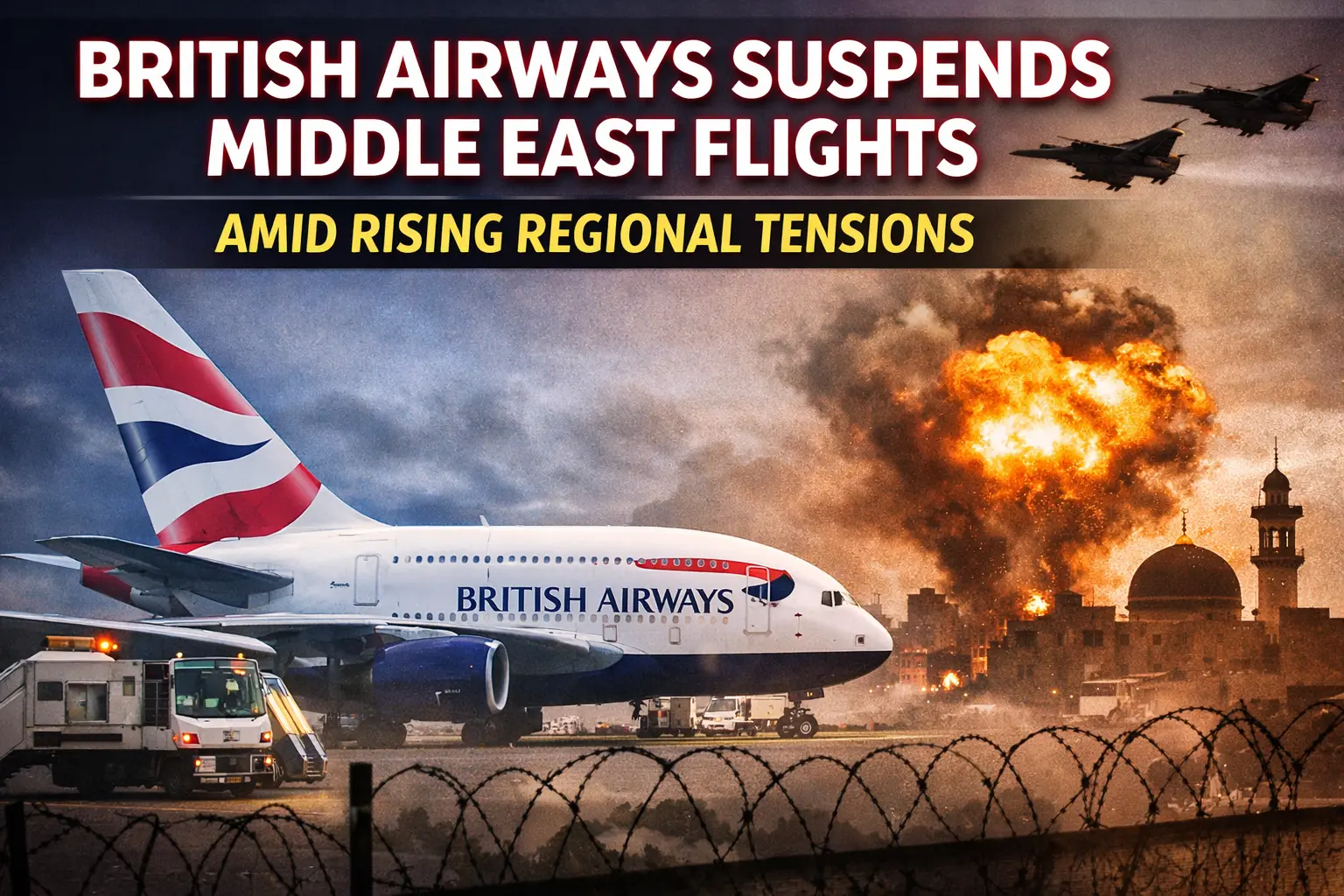
The global aviation industry is once again facing disruption as British Airways suspends several Middle East flights due to increasing regional tensions and airspace instability linked to the conflict involving Iran. The airline confirmed that multiple routes across the Middle East have been temporarily halted as safety concerns continue to grow.
This decision has affected thousands of passengers traveling between Europe and the Middle East, while airlines across the world are closely monitoring the evolving security situation. According to aviation reports, the ongoing conflict has already resulted in tens of thousands of flight cancellations, making it one of the most significant aviation disruptions in recent years.
In this article, we will explain why British Airways suspended Middle East flights, which routes are affected, how passengers are impacted, and what travelers should do next.
Why British Airways Suspended Middle East Flights
British Airways announced that it has temporarily suspended flights to several key Middle Eastern destinations due to safety concerns caused by rising geopolitical tensions.
The airline said the decision was made after carefully reviewing airspace security risks and regional instability linked to the conflict involving Iran.
Air travel safety remains the airline’s top priority. When airspace becomes unstable or risky, airlines often choose to cancel or reroute flights to avoid potential danger.
British Airways stated that it is continuously monitoring the situation and working with aviation authorities and international security agencies before resuming operations.
This situation has also forced airlines to adjust flight paths, delay flights, or suspend operations entirely in affected regions.

List of Suspended British Airways Routes
British Airways confirmed that flights to and from several Middle Eastern cities have been temporarily suspended.
Suspended Destinations
The following destinations are affected:
- Amman (Jordan)
- Bahrain
- Doha (Qatar)
- Dubai (UAE)
- Tel Aviv (Israel)
Flights to these cities will remain suspended until later this month, depending on the security situation.
Abu Dhabi Flights Suspended Longer
Flights to Abu Dhabi have been suspended for a longer period and are expected to remain halted until later this year.
The airline did not provide an exact date for when flights will resume but said updates will be shared as the situation evolves.

Impact on Global Aviation Routes
The suspension of British Airways flights is part of a wider aviation disruption affecting airlines worldwide.
Since the conflict escalated on February 28, aviation authorities have reported that more than 27,000 flights across the Middle East and Tel Aviv region have been cancelled.
Airspace restrictions have forced airlines to:
- Change flight routes
- Increase travel times
- Cancel flights
- Delay departures
- Adjust flight schedules
These changes have also led to higher airline operational costs, which may ultimately affect ticket prices for passengers.

Airlines Increasing Ticket Prices
The aviation industry is also facing rising costs due to the crisis.
Airlines have reported increased jet fuel prices, longer flight routes, and operational delays. Because of these factors, many airlines are raising ticket prices to cover additional costs.
Some airlines flying between Europe, Asia, and the Middle East are now taking longer routes to avoid risky airspace. This means aircraft must burn more fuel, increasing travel expenses.
Passengers traveling internationally may therefore experience:
- Higher ticket prices
- Longer travel times
- More flight delays

Pakistan Also Affected by Regional Aviation Tensions
The aviation crisis has also affected travel in Pakistan.
Authorities temporarily halted the Hajj flight schedule due to regional security concerns and changes in flight routes.
When major air corridors become unstable, airlines operating in nearby countries—including Pakistan—often need to modify their flight plans.
This demonstrates how regional conflicts can impact global air travel networks.
What British Airways Said in Its Official Statement
British Airways released an official statement addressing the situation and reassuring customers.
The airline stated that it is closely monitoring the security environment and staying in contact with affected passengers.
According to the statement, passengers will receive support, including:
- Alternative flight options
- Ticket changes
- Refund assistance
- Travel guidance
British Airways also requested passengers who have already arranged alternative travel plans to inform the airline as soon as possible.
Advice for Passengers Affected by Flight Suspensions
Travelers who had booked flights to the affected destinations should follow these steps.
1. Check Your Flight Status
Passengers should regularly check the airline’s website or mobile app to see whether their flight has been canceled or rescheduled.
2. Contact Customer Support
British Airways is offering assistance to passengers affected by flight cancellations.
Travelers can contact customer service to:
- Rebook flights
- Request refunds
- Change travel dates
3. Consider Alternative Routes
Some travelers may still be able to reach their destination using alternative routes or connecting flights through different countries.
However, passengers should confirm availability and travel restrictions before booking.
4. Stay Updated on Travel Advisories
Government travel advisories and airline updates can change quickly during regional conflicts.
Passengers should stay informed through official airline announcements and aviation authorities.
How Regional Conflicts Affect Global Air Travel
Air travel is extremely sensitive to geopolitical conflicts.
When tensions rise in key regions, airlines often take immediate action to protect passengers and crew.
Airspace closures can lead to:
- Flight cancellations
- Rerouted flights
- Increased fuel costs
- Schedule disruptions
For example, flights between Europe and Asia often pass through Middle Eastern airspace. If those corridors become unsafe, airlines must take longer routes around the region.
This can affect global aviation schedules for weeks or even months.
Future Outlook for Middle East Flights
At the moment, it is unclear how long the current aviation disruptions will continue.
Much depends on the security situation and diplomatic developments in the region.
If tensions ease, airlines like British Airways may gradually resume flights to affected destinations.
However, if the conflict escalates further, additional airlines may also suspend services.
Industry experts say the situation remains highly unpredictable, and airlines must prioritize safety above all else.
Conclusion
The suspension of British Airways Middle East flights highlights the serious impact that geopolitical tensions can have on global aviation.
With thousands of flights already canceled across the region, airlines are taking precautionary measures to ensure passenger safety.
Flights to Amman, Bahrain, Doha, Dubai, and Tel Aviv are currently paused until later this month, while Abu Dhabi flights will remain suspended longer.
Passengers affected by the disruptions are advised to stay updated, contact their airline for assistance, and explore alternative travel options if necessary.
As the situation continues to evolve, airlines, aviation authorities, and governments will closely monitor developments before restoring normal flight operations.