
Why Chilgoza Prices Have Dropped Massively in Pakistan – Full Report Inside
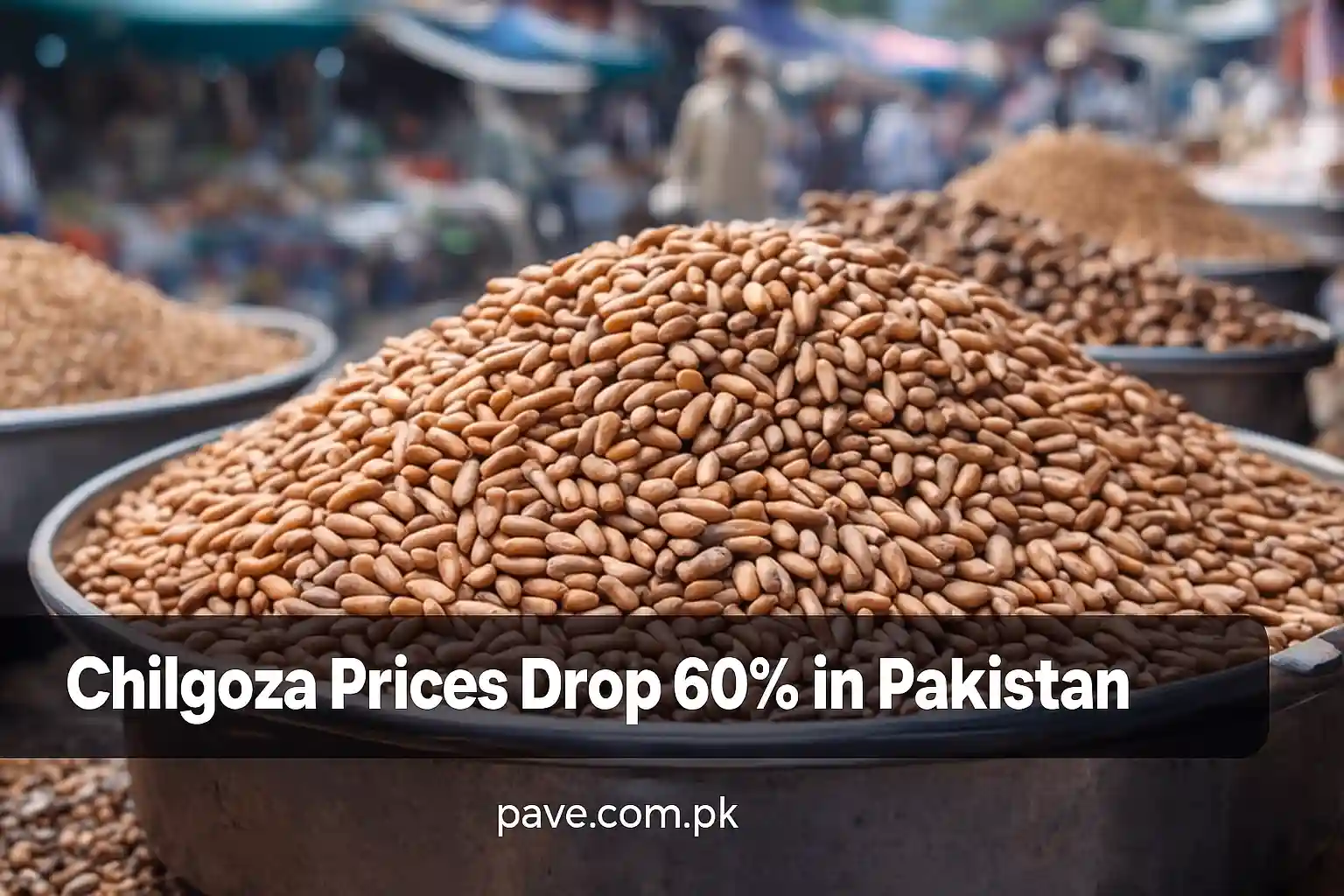
Pakistan’s dry fruit markets are experiencing an unexpected shift this season as Chilgoza Prices have dropped by 50–60%, marking one of the largest declines in recent years. For a product that has traditionally been considered a luxury item, this sharp fall has attracted widespread attention from consumers, traders and farmers across the country.
Just months ago, chilgoza was being sold between Rs. 15,000 and Rs. 18,000 per kg, but this year the price has dramatically slid to Rs. 6,000 to Rs. 9,000 per kg in major Pakistani cities. In Balochistan’s Zhob and Sherani districts, where much of the local supply originates, pine nuts have been sold for as low as Rs. 3,000 to Rs. 5,000 per kg.
This report explains why the prices collapsed, how the market is reacting, and what consumers should expect in the coming weeks.
Major Factors Behind the Massive Price Drop
The sudden decline is not the result of a single event but a combination of economic, environmental and logistical challenges.
1. Closure of the Pakistan–Afghanistan Border
Much of Pakistan’s chilgoza supply chain is linked with Afghanistan through harvesting, transportation and processing.
- Border restrictions disrupted trade routes.
- Thousands of tons of chilgoza could not move to regular markets.
- Traders were forced to sell pine nuts locally at cheaper rates.
This bottleneck directly pushed prices downward.
2. Insufficient Rainfall Impacted Harvest
Farmers in Balochistan confirm that poor rainfall affected:
- The size of the pine nuts
- The quantity of extractable seeds
- The overall health of pine trees
A weakened harvest meant that even good-quality chilgoza could not command its usual premium rates.
3. No Cold Storage Facilities in Producing Areas
Another major reason is the lack of cold storage facilities, especially in Balochistan.
Experts explain that chilgoza must be kept in a cool environment because:
- Pine nuts lose weight if not refrigerated.
- Their oil content evaporates.
- The kernals shrink, reducing market value.
Since traders cannot store the product for long:
- They rush to sell quickly
- Prices crash due to oversupply
This year’s drop is the clearest example yet of how poor infrastructure causes price instability.
4. Oversupply in Local Markets
With limited export routes and no long-term storage options, large quantities of chilgoza flooded local markets, causing:
- Panic selling
- Weekly price reductions
- Traders undercutting each other
This oversupply continues to push the rates lower.

Farmers and Traders Facing Heavy Losses
While consumers are enjoying cheap chilgoza, farmers and wholesalers are struggling.
- Many invested heavily in harvesting and labour costs.
- Low prices mean they cannot even recover the basic expenses.
- Traders say this year’s profit margins are the lowest in a decade.
Some farmers warned that continued price instability may discourage harvesting in future seasons, causing long-term challenges.

Consumers Benefiting From Lower Rates
For the first time in years, families across Pakistan can afford chilgoza — a dry fruit traditionally considered expensive.
Consumers are benefiting because:
- Rates are the lowest in several years.
- Demand rises in winter, especially for weddings and gatherings.
- Affordable prices have boosted sales in Lahore, Karachi, and Islamabad.
Many dry fruit shops reported record footfall in the last two weeks.

Market Reaction Across Pakistan
In Lahore & Karachi
The price range is currently Rs. 7,000 to Rs. 9,000 per kg, depending on quality.
In Islamabad & Rawalpindi
Most vendors are selling chilgoza at Rs. 6,000 to Rs. 8,000 per kg.
In Balochistan
Zhob and Sherani districts remain the cheapest sources, with rates starting from Rs. 3,000 per kg for locally harvested stock.

Will Chilgoza Prices Increase Again?
Market analysts believe that prices may rise again under the following conditions:
- Border reopening between Pakistan and Afghanistan
- Improved rainfall in the next season
- Government-supported cold storage development
- Higher winter-season demand
If export routes resume smoothly, traders expect chilgoza to return to its Rs. 12,000+ per kg range.
However, without major structural improvements, prices may continue to fluctuate every year.
What Experts Recommend
For Farmers
- Government investment in cold storage hubs
- Better training on pine nut handling
- Insurance options to handle yearly price risks
For Authorities
- Ensuring smoother border operations
- Supporting local dry fruit economies
- Facilitating export regulatory pathways
For Consumers
- Buy early before winter demand peaks
- Watch for quality differences (size, aroma, freshness)
- Compare rates across markets
Conclusion – Chilgoza Prices Drop Pakistan Report 2025
The massive drop in chilgoza prices is a rare event driven by border closures, weak rainfall, oversupply, and the absence of storage infrastructure. While consumers are enjoying affordable pine nuts this year, the situation has put enormous pressure on farmers and traders who rely heavily on this seasonal income.
If long-term solutions are not introduced — especially cold storage facilities and trade route ease — the chilgoza market in Pakistan will continue to face unpredictable price swings.
For now, consumers can take advantage of this unusual season where premium-grade chilgoza is available at nearly half its regular price.