
FBR Imposes Austerity Measures After Buying Over 1,000 Cars for Tax Officers
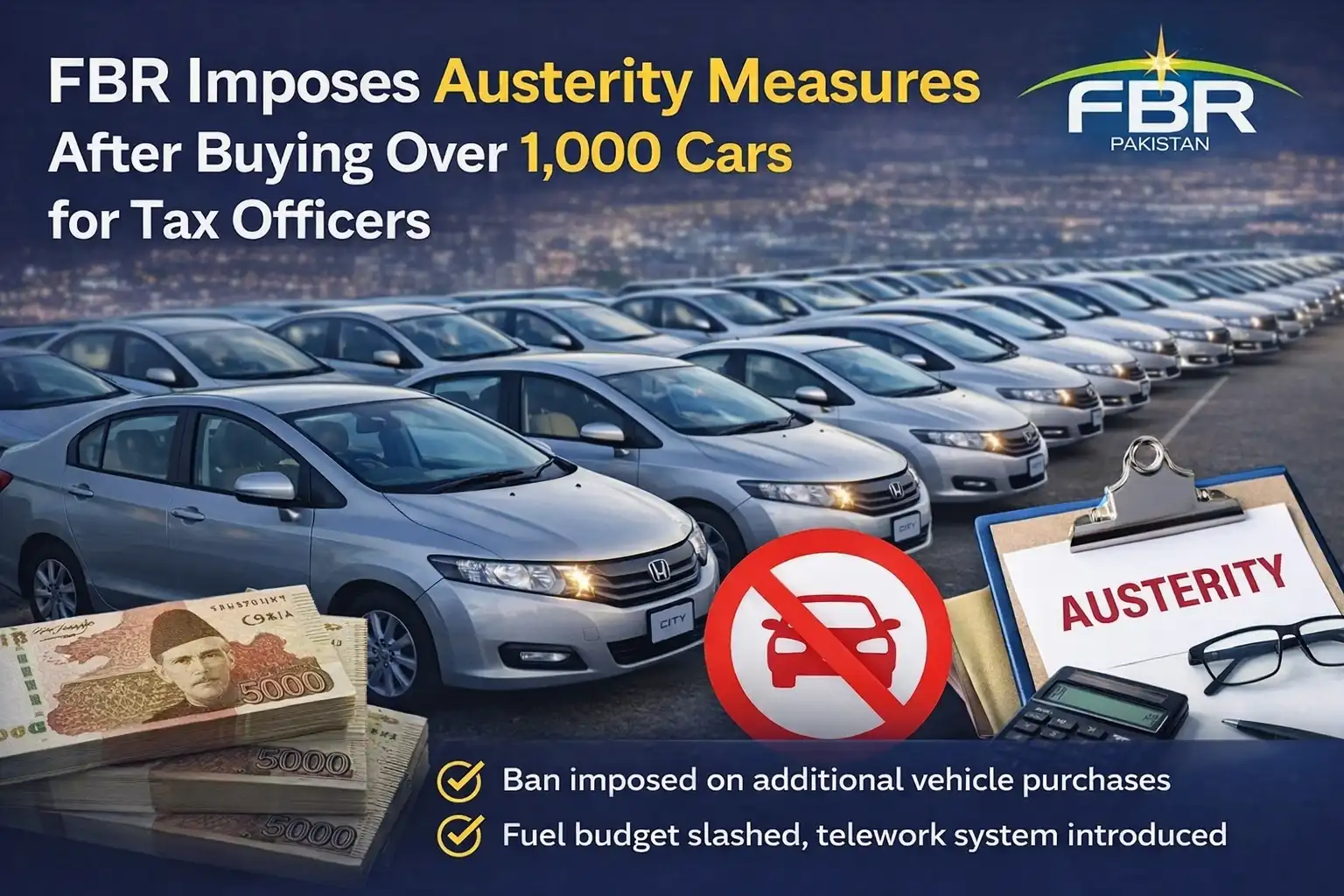
The Federal Board of Revenue (FBR) has recently announced strict austerity measures across its offices after purchasing more than 1,000 Honda City cars for tax officers. The move has sparked debate among the public and policymakers because the spending occurred shortly before the government introduced nationwide cost-cutting policies.
The new austerity steps are part of a broader plan introduced by Shehbaz Sharif to reduce government spending and manage economic pressures. These measures include reducing fuel consumption, limiting official transport usage, implementing work-from-home policies, and cutting operational expenses.
Many people searching online for FBR austerity measures 2026, FBR car purchase controversy, government austerity plan Pakistan, FBR tax officers vehicles news, and Pakistan government spending cuts want to understand the full details of the situation. This article explains the background of the FBR vehicle purchase, the new austerity measures, and their impact on government operations and the economy.

Background of the FBR Vehicle Purchase
The Federal Board of Revenue, Pakistan’s main tax collection authority, recently expanded its official fleet by purchasing more than 1,000 Honda City vehicles for revenue officers.
The decision was intended to improve field operations and tax enforcement activities, enabling officers to travel more efficiently for inspections, audits, and tax compliance checks.
However, critics argue that such a large purchase contradicts the government’s call for austerity and reduced spending.
Why the Government Introduced Austerity Measures
Pakistan is currently facing several economic challenges, including rising inflation, increasing fuel prices, and global economic uncertainty.
To address these issues, the federal government introduced a nationwide austerity plan aimed at reducing unnecessary expenses and conserving resources.
Main Objectives of the Austerity Plan
The government’s austerity measures focus on:
- Reducing government spending
- Lowering fuel consumption
- Managing economic pressure
- Improving financial discipline in public institutions
These policies are being implemented across all federal departments, including the FBR.
Ban on Purchasing Additional Vehicles
Following the large purchase of official vehicles, the FBR has now imposed a ban on buying additional vehicles.
This restriction is part of the government’s cost-cutting strategy and aims to prevent further expansion of government fleets.
Purpose of the Ban
The ban on vehicle purchases aims to:
- Reduce government expenditure
- Limit fuel consumption
- Encourage efficient use of existing resources
- Support national austerity policies
Government departments are now expected to manage operations using existing vehicles and resources.
Reduction in Government Transport Usage
Another major step announced under the austerity plan is the reduction in official transport usage.
According to the new directives:
- 60% of official vehicles will be parked temporarily
- Only essential vehicles will remain operational
This measure is expected to significantly reduce fuel consumption and transportation costs.
Fuel Consumption Reduction Plan
Fuel usage is one of the largest operational expenses for government institutions.
To address this issue, the government has directed departments to cut fuel expenditures by 50%.
How Fuel Reduction Will Be Implemented
The fuel reduction strategy includes:
- Limiting vehicle usage
- Encouraging remote work for employees
- Reducing official travel
- Optimizing transportation systems
These steps are designed to reduce Pakistan’s dependence on imported fuel and lower government expenses.
Work From Home Policy for Government Employees
The austerity plan also includes a work-from-home policy for government employees.
Under this policy:
- Up to 50% of the workforce will work remotely
- Essential staff will continue working in offices
- Digital communication and online meetings will be prioritized
Remote work reduces commuting needs and helps conserve fuel and energy.
Staff Rotation System for Government Employees
To maintain operational efficiency while reducing expenses, the government has introduced a staff rotation system.
Rotation System Details
Employees in the following categories will follow a rotation schedule:
- BS-1 to BS-16 employees
This system ensures that only a portion of staff is present in offices at any given time, reducing operational costs.
Salary Contribution by Senior Officials
As part of the austerity initiative, senior government officials have been requested to contribute financially.
Officials in BS-20 and above have been asked to voluntarily surrender two days’ salary.
Purpose of the Salary Contribution
This initiative aims to:
- Demonstrate leadership responsibility
- Support national economic recovery
- Encourage financial discipline in government institutions
Although voluntary, the request highlights the government’s emphasis on shared sacrifice during economic challenges.
Reduction in Non-Employee Related Expenses
Another important component of the austerity plan involves reducing Non-Employee Related Expenditure (Non-ERE).
What is Non-ERE Spending?
Non-ERE spending includes expenses such as:
- Office supplies
- Equipment purchases
- Administrative expenses
- Operational services
Under the new policy, these expenditures will be reduced by 20%.
Creation of an Oversight Committee
To ensure that austerity measures are properly implemented, the government has established a special oversight committee.
Responsibilities of the Oversight Committee
The committee will:
- Monitor compliance with austerity policies
- Review spending across departments
- Ensure cost-cutting targets are met
- Evaluate the effectiveness of the measures
Government institutions must also submit weekly progress reports regarding implementation.
Impact on FBR Operations
The new austerity policies may affect the daily operations of the Federal Board of Revenue.
Possible Operational Changes
- Reduced vehicle availability for field officers
- Increased reliance on digital communication
- Greater emphasis on remote work
- Improved resource management
However, the FBR will still continue its core responsibility of tax collection and enforcement.
Public Reaction to the FBR Vehicle Purchase
The purchase of over 1,000 cars for tax officers has generated mixed reactions among the public.
Criticism
Some critics argue that the purchase contradicts the government’s austerity message.
They believe that government departments should prioritize financial discipline and efficient spending.
Support
Others argue that tax officers require proper transportation to conduct field inspections and improve tax compliance.
The government has responded by introducing stricter spending controls.
Importance of Tax Collection for Pakistan’s Economy
The Federal Board of Revenue plays a crucial role in Pakistan’s economic system.
Role of the FBR
The FBR is responsible for:
- Collecting federal taxes
- Monitoring tax compliance
- Implementing tax policies
- Supporting government revenue generation
Efficient tax collection is essential for funding public services and development projects.
Government’s Efforts to Improve Financial Discipline
The current austerity plan reflects the government’s broader effort to improve financial discipline in public institutions.
These reforms aim to ensure that taxpayer money is used efficiently and responsibly.
Key Goals of Financial Reforms
- Reduce unnecessary spending
- Improve transparency in government operations
- Strengthen accountability in public institutions
Such reforms are necessary for maintaining economic stability.
Future Outlook for Government Spending
Experts believe that austerity measures may continue in the coming months as the government works to stabilize the economy.
Future reforms may include:
- Further reductions in operational expenses
- Increased use of digital systems
- Improved financial oversight in government departments
These measures are intended to create a more efficient and accountable public sector.
Final Words
The Federal Board of Revenue’s decision to impose austerity measures after purchasing more than 1,000 vehicles for tax officers highlights the challenges of balancing operational needs with financial discipline.
As part of the government’s broader cost-cutting strategy, the new policies aim to reduce fuel consumption, limit spending, and improve resource management across government departments.
While the measures may affect daily operations, they also represent an important step toward strengthening Pakistan’s economic stability and promoting responsible government spending.