Fuel Price Update: Diesel Rates Expected to Drop, Petrol Prices to See Minor Increase
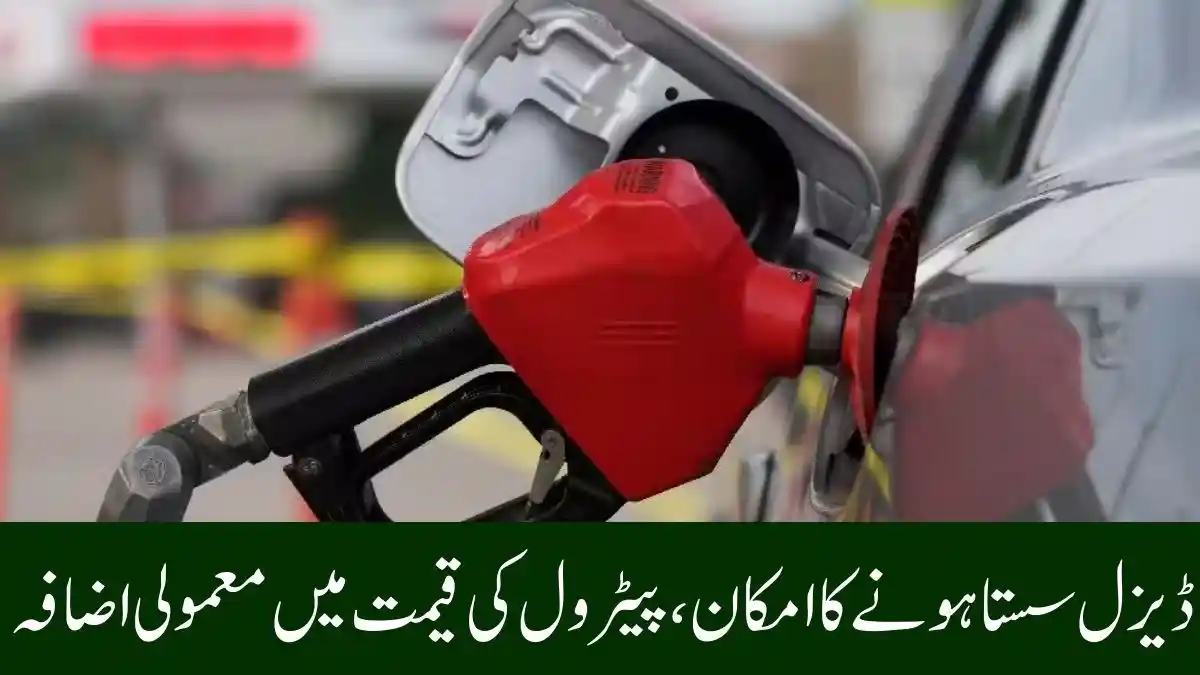
Pakistan Fuel Price Update expected to witness mixed changes in fuel prices in the upcoming review, with diesel rates likely to drop sharply while petrol prices may increase slightly. According to market estimates and industry data, the price of high-speed diesel (HSD) could be reduced by Rs 13.69 per litre, whereas petrol (motor spirit) prices are projected to rise by Rs 1.43 per litre.
The expected changes are linked to global oil market trends, stable exchange rates, and domestic pricing adjustments. While the diesel price cut may bring relief to transport, agriculture, and industry, the slight petrol increase could add pressure on daily commuters.
Is the oil price expected to drop?
International oil prices have shown a downward trend recently, especially for diesel, due to lower global demand and easing supply pressures. This decline is expected to result in a reduction in diesel prices in Pakistan, while petrol prices may not see the same level of relief because global gasoline prices remain relatively stable.
What is the future of petrol and diesel?
In the near term, diesel prices in Pakistan are expected to decline due to falling international gas oil prices, providing relief to key sectors of the economy. Petrol prices, however, may remain under pressure or increase slightly, depending on global market trends, exchange rate stability, and government tax policies.
What is the price of petrol diesel in Pakistan today?
As per the current pricing cycle, the price of petrol in Pakistan is Rs 263.45 per litre, while high-speed diesel (HSD) is priced at around Rs 278–280 per litre. These prices are reviewed every 15 days and may change based on global oil prices and government decisions.
What are the effects of an increase in fuel prices?
An increase in fuel prices leads to higher transportation and commuting costs, which directly affects household budgets. It also raises the cost of goods and services, contributes to inflation, and puts pressure on industries, agriculture, and public transport, ultimately impacting overall economic stability.
Expected Changes in Diesel and Petrol Prices
Diesel Prices Likely to See Major Reduction
Diesel prices are expected to fall significantly due to a sharp decline in international gas oil prices. If approved, this reduction would be one of the largest diesel price cuts in recent months, offering broad economic relief.
Petrol Prices May Increase Slightly
In contrast, petrol prices are expected to rise modestly. The limited decline in global gasoline prices and domestic cost adjustments leave little room for a price cut in petrol.

Why Diesel Prices Are Falling
The expected reduction in diesel prices is primarily driven by international market movements.
Global Diesel Prices Decline
According to industry data:
- Average international gas oil prices dropped by around 7.8 percent
- Prices fell from approximately $88.27 per barrel to $81.40 per barrel
- This sharp decline created space for a significant local price cut
Diesel prices globally experienced a much steeper fall compared to petrol, directly influencing local pricing trends.

Why Petrol Prices Are Increasing
Unlike diesel, petrol prices did not witness a major drop in the global market.
Limited Decline in Global Petrol Rates
- Average global petrol prices stood near $75.20 per barrel
- The decline was minimal compared to diesel
- This limited reduction restricts the possibility of local price relief
As a result, petrol prices in Pakistan are expected to edge up rather than decrease.

Role of Exchange Rate Stability
Exchange rate movements play a critical role in determining fuel prices in Pakistan.
Stable Rupee Supports Pricing Adjustments
- The Pakistani rupee remained largely stable against the US dollar
- The average exchange rate stayed around Rs 280.59 per dollar
- Stability helped pass on the benefit of lower diesel prices
However, while a stable rupee prevents sharp increases, it does not automatically guarantee price cuts when global prices fall slightly.
Current and Expected Fuel Prices
Estimated Price Comparison
- Diesel (HSD):
- Expected reduction: Rs 13.69 per litre
- New estimated price: Around Rs 265–266 per litre
- Petrol (MS):
- Current price: Rs 263.45 per litre
- Expected increase: Rs 1.43 per litre
- New estimated price: Rs 264.87 per litre
Final prices will be announced officially after approval from the government.
Why Diesel Prices Matter More for the Economy
Diesel plays a central role in Pakistan’s economic activity.
Key Sectors Using Diesel
Diesel is heavily used in:
- Freight transport and logistics
- Public transport and buses
- Agriculture (tractors and tube wells)
- Construction and heavy machinery
- Industrial generators
Due to its widespread use, diesel prices directly affect inflation, food costs, and transport fares.
Impact on Transport and Logistics
Lower diesel prices can bring immediate relief to the transport sector.
Transport Sector Benefits
- Reduced freight charges
- Lower operating costs for transporters
- Possible stabilization of transport fares
Since goods across Pakistan are mostly moved by diesel-powered vehicles, the price cut could reduce overall supply chain costs.
Relief for Agriculture Sector
Farmers are among the biggest beneficiaries of lower diesel prices.
Agricultural Impact
- Lower fuel costs for tractors and harvesters
- Reduced tube well operating expenses
- Cheaper transportation of crops
Diesel price relief can help farmers manage rising input costs and support food price stability.
Effect on Inflation
Fuel prices have a direct and indirect impact on inflation.
Inflation Outlook
- Diesel price cut may help slow food inflation
- Lower transport costs can ease price pressure on goods
- Petrol price increase may slightly raise urban commuting costs
Overall, the net impact on inflation will depend on how much relief is passed on after taxes.
Government’s Role in Fuel Pricing
Fuel prices in Pakistan are reviewed every 15 days under a regulated pricing mechanism.
Key Pricing Components
- International oil prices
- Exchange rate
- Petroleum levy (PL)
- Sales tax and duties
- Oil marketing company (OMC) margins
The government has flexibility to adjust prices through taxes and levies.
Petroleum Levy Could Offset Diesel Relief
Analysts caution that the government may increase the petroleum levy on diesel.
Fiscal Considerations
- Petroleum levy is a major revenue source
- Falling global prices create room for higher PL
- Higher levy could reduce consumer benefit
This practice has been used in the past to meet fiscal targets.
Oil Marketing Companies’ Margins
OMC margins are also under consideration.
Proposed Margin Adjustment
- OMC margins may increase by Rs 0.61 per litre
- Approval is pending from the Economic Coordination Committee (ECC)
If approved, the margin increase may slightly affect final prices.
Public Reaction and Expectations
Public response to the expected fuel price update is mixed.
Public Sentiment
- Diesel users welcome the expected relief
- Petrol consumers express concern over price increase
- General expectation for inflation relief remains high
Many consumers hope that the diesel price cut will translate into lower prices of essential goods.
What to Watch in the Final Announcement
Several factors could influence the final fuel prices:
Key Factors
- Government decision on petroleum levy
- ECC approval on OMC margins
- Final OGRA recommendations
- Last-minute changes in global oil prices
The official notification will confirm the final rates.
Conclusion – Fuel Price Update Diesel Drop Petrol Prices Increase Pakistan
Pakistan’s latest fuel price update points towards significant relief in diesel prices, with a projected cut of Rs 13.69 per litre, while petrol prices are expected to increase slightly by Rs 1.43 per litre. The mixed trend reflects different global market movements and domestic pricing policies.
If implemented without major tax adjustments, the diesel price cut could help reduce transport costs, ease inflation, and support key economic sectors. However, the petrol price increase may continue to burden daily commuters. The final impact will depend on the government’s policy decisions in the upcoming price review.