
Growing Wheat Crisis in Punjab Raises Alarm Before Ramadan
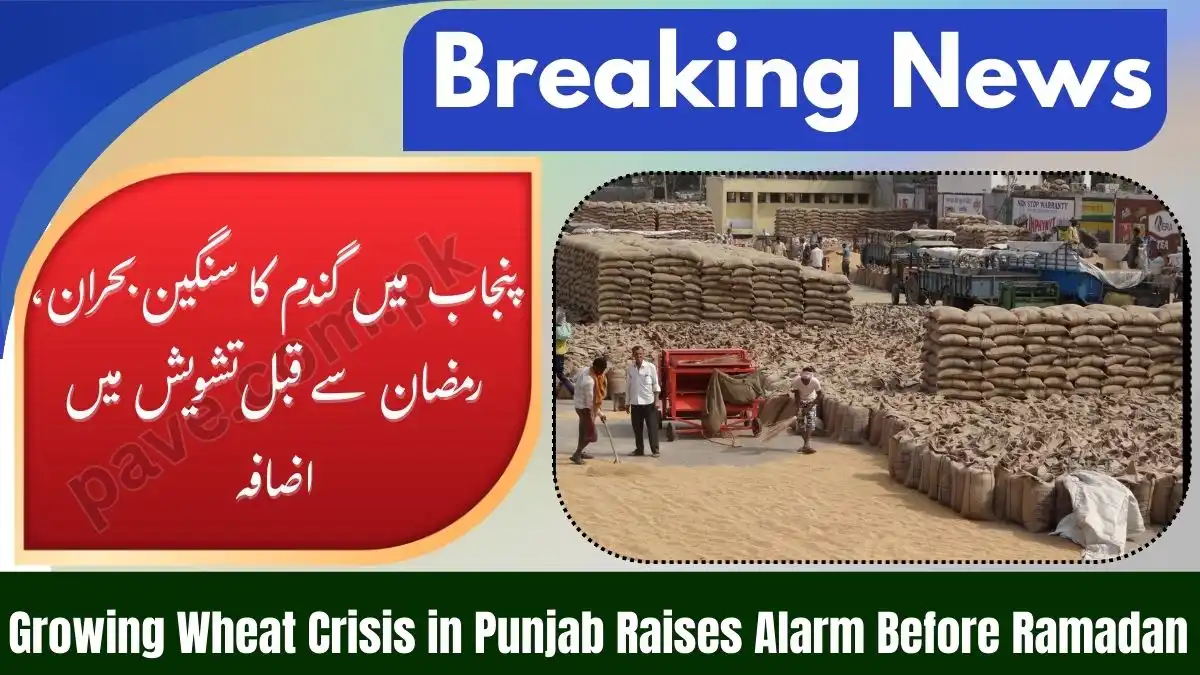
Punjab is heading into a high-risk food security window just weeks before Ramadan, as official figures released in January 2026 expose a widening gap between wheat supply and consumption needs. The situation has already begun to impact markets, with prices climbing sharply and availability tightening—raising concerns over affordability during the holy month.
The Shortfall Statistics: A Clear Supply–Demand Gap
According to official data, Punjab’s wheat balance sheet for the upcoming quarter paints a worrying picture:
- Required Stock: Approximately 1.75 million metric tons of wheat needed over the next three months
- Available Stock: Around 1.496 million metric tons currently in storage
- Net Deficit: Over 250,000 metric tons, right before Ramadan, when wheat and flour consumption peaks
This shortfall is not marginal. Analysts warn that without swift corrective measures, the deficit could directly translate into market instability and consumer distress.

Price Hikes and Market Scarcity: The Crisis Hits Consumers
The supply pressure has already filtered down to retail markets across Punjab and adjoining regions.
Sharp Price Spikes
In major urban centers such as Lahore, Rawalpindi, and Islamabad, wheat prices have surged by nearly 30% in just one week, touching Rs. 4,800 per maund (40kg) in some markets.
Flour Shortages Emerge
Flour mills have issued warnings that stocks are rapidly depleting. On-ground reports indicate:
- 10kg and 20kg flour bags are already scarce in parts of Lahore
- The price of a 15kg flour bag has jumped from Rs. 1,500 to Rs. 1,750 within days
These increases are particularly alarming as they come before Ramadan demand has fully kicked in.
Inter-Provincial Friction
Adding to the pressure are reports of unofficial restrictions on wheat movement from Punjab to Khyber Pakhtunkhwa. Such bottlenecks could exacerbate shortages in northern regions and fuel further price volatility nationwide.

The Wheat Policy 2026: Punjab Government’s Crisis Response
In response to the unfolding situation, the Government of Punjab, under Maryam Nawaz, officially notified the Wheat Policy 2026 on January 21, 2026.
The policy represents a structural shift in how wheat procurement and storage are managed.
Key Features of Wheat Policy 2026
📌 Support Price Announced
- The procurement (support) price for the upcoming crop has been fixed at Rs. 3,500 per maund
📌 Strategic Reserves Target
- The province aims to procure 2.5 million metric tons of wheat to rebuild buffer stocks and stabilize prices
📌 Public–Private Partnership (PPP) Model
For the first time, Punjab is moving away from a purely state-led model:
- Private aggregators will handle procurement, storage, and financing
- The government will provide free warehouse space
- 70% of financing costs will be covered by the government
Officials argue this will reduce fiscal strain while improving storage efficiency.
📌 Zero Tolerance for Hoarding
Authorities have announced a “zero-tolerance” policy against hoarders and profiteers, warning of strict action against anyone artificially inflating prices ahead of Ramadan.

Government’s Reassurance vs Market Reality
Despite the data showing a significant shortfall, the Punjab Food Department has publicly downplayed fears of a severe crisis.
Officials maintain that:
- 15,000 metric tons of wheat are being released daily to flour mills
- Enhanced market monitoring is underway
- Flour should remain available at the official rate of Rs. 1,810 per 20kg bag
However, traders and consumers argue that controlled rates are increasingly difficult to find in open markets, especially as private stocks tighten.

Outlook for Ramadan: A Narrow Window to Act
The coming weeks are critical.
If the provincial government fails to:
- Bridge the 250,000-ton shortfall through timely imports, or
- Effectively mobilize and regulate existing private stocks
then the pressure on wheat and flour prices could intensify sharply during Ramadan, a period when household consumption traditionally rises.
Final Analysis
Punjab’s wheat situation is no longer a theoretical risk—it is actively unfolding in markets. While the Wheat Policy 2026 introduces long-term structural reforms, its impact may not arrive quickly enough to ease immediate Ramadan pressures.
The difference between stability and crisis now hinges on execution, enforcement, and speed. Without decisive intervention, the holy month could begin under the shadow of rising food inflation—placing an added burden on households already stretched by economic pressures.