Opposition Alliance Warns of Turning K-P into ‘D-Chowk’ Amid Governor’s Rule Threats
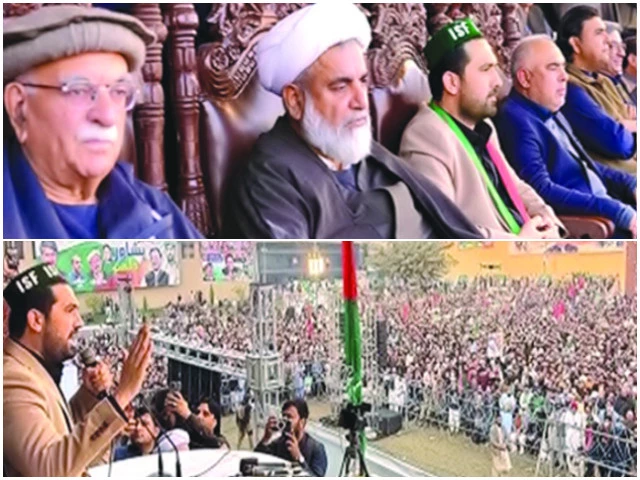
PESHAWAR: The political scenario in Khyber-Pakhtunkhwa (K-P) is heating up as opposition leaders warn against the imposition of governor’s rule in the province.
The alliance, Tehreek-e-Tahafuz Ayeen-e-Pakistan (TTAP), which includes the provincial ruling Pakistan Tehreek-e-Insaf (PTI), has expressed strong opposition to any federal intervention, saying it could destabilize the province and provoke protests across every city and town.
What Triggered the Controversy?
The controversy arose as whispers of potential governor’s rule in K-P gained momentum. Governor’s rule is a provision in Pakistan’s Constitution that allows the federal government to assume direct control over a province under certain conditions. The opposition argues that such a step would undermine democratic norms and threaten political stability.
Mahmood Khan Achakzai, the head of TTAP, addressed supporters during a rally in Peshawar, warning, “If governor’s rule is imposed in K-P, every square of the province will become D-Chowk.” This statement references the iconic D-Chowk in Islamabad, a symbol of large-scale political protests. The alliance emphasized that former Prime Minister Imran Khan represents the country’s true democratic force and claimed that the political environment in K-P has reached a critical point.
Also read:Breaking News: New Motorcycle License Deadline Announced for School & College Students

Opposition’s Stance on Democracy and Governance
At the rally, Achakzai expressed regret that political leaders who defend the Constitution and rule of law are being imprisoned. He stressed the need for a national conference, bringing together judges, generals, religious scholars, and politicians to serve as a platform for reconciliation and forgiveness. According to him, this forum could bridge political divides and help “save the country” from further instability.
The opposition criticized federal authorities, claiming that the imposition of governor’s rule would bypass elected representatives and violate democratic principles. They highlighted the deepening political fault lines and warned that suppressing voices like Imran Khan’s could provoke widespread public unrest in K-P.
Also read: Breaking News: Cloudflare Services Down Again — What’s Causing Today’s Outage?
Chief Minister Afridi’s Response
Chief Minister Sohail Afridi of K-P also addressed the rally, stating that the province is “not a laboratory” for outsiders to impose decisions. He stressed that future policies should involve consultation with provincial politicians, national assembly members, and tribal elders. Afridi used metaphorical language to assert his determination, saying some “political crows” tried to push him out of office, but he, like “Iqbal’s shaheen,” would continue to rise above political attacks.
Afridi also announced a Rs100 billion development package for Peshawar, highlighting the city’s long-standing support for PTI since 2013. He defended his government’s record, stating that if governance had been poor, PTI would not have been able to form the provincial government for a third consecutive term. He dismissed criticism about administrative failures, claiming that government officials were conducting “operation after operation and drone after drone,” and argued that policy failures should lead to reforms rather than blaming political opponents.
Allegations Against Federal Leaders
Afridi criticized federal ministers for targeting PTI leadership. He mentioned “two political clown ministers” who held press conferences against Imran Khan and used “wrong words” against him. Afridi emphasized that his upbringing and tribal values prevent him from responding to abuse with abuse. Despite avoiding criticism of state institutions, he distinguished between genuine leaders and “fake ministers, fake senators, and an institution’s spokesperson.”
He reiterated his commitment to constitutional politics, stating that PTI has always chosen legal and democratic paths. Afridi underscored the sacrifices made by K-P elders and youth for Pakistan’s development and prosperity, emphasizing the need for political maturity and unity in governance.

Implications of Governor’s Rule in K-P
Governor’s rule, if imposed, could have serious political and social consequences. It would temporarily dissolve the provincial assembly and transfer decision-making authority to the federal government. Such a move could escalate protests, particularly in PTI strongholds like Peshawar, and deepen the political divide between federal and provincial leadership. Opposition leaders have warned that citizens may mobilize en masse, potentially turning every public square into a protest hub similar to D-Chowk in Islamabad.
Political analysts suggest that the announcement of governor’s rule could serve as a catalyst for nationwide demonstrations, challenging the government’s authority and testing the strength of democratic institutions in Pakistan. The opposition’s strong rhetoric indicates a growing frustration with what they perceive as federal overreach and political targeting of PTI leaders.
PTI’s Role in K-P Politics
Since 2013, PTI has maintained a strong foothold in K-P. The party has consistently won provincial elections, reflecting public trust in its governance model. Chief Minister Afridi highlighted that this electoral success validates the party’s administrative policies and public support. PTI’s governance has focused on development projects, law and order, and institutional reforms, according to Afridi, making the province resilient against political disruptions.
The recent political tension also highlights PTI’s national ambitions and its influential role in shaping the country’s democratic discourse. The alliance’s alignment with TTAP underscores a collective effort to defend provincial autonomy and resist perceived political interference from the center.
Public Reaction and Political Mobilization
The public reaction in K-P to the threat of governor’s rule has been mixed. Supporters of PTI and TTAP view it as a violation of democratic principles, while critics argue that federal intervention could restore stability in governance. The warning that every square of the province could turn into D-Chowk suggests that mass protests may be imminent if political tensions escalate.
Civil society groups and political commentators are closely monitoring the situation, warning that large-scale demonstrations could impact daily life, business activities, and law and order in the province. Social media platforms have also become a forum for public debate, with citizens expressing opinions on both sides of the issue.
Future of Governance in K-P
Chief Minister Afridi emphasized that governance in K-P will continue through consultation, legal frameworks, and constitutional measures. He promised that development projects and public welfare programs would remain a priority. The announcement of a Rs100 billion package for Peshawar reflects the government’s commitment to infrastructural development and economic growth, even amid political uncertainty.
The ongoing political tension between provincial and federal authorities highlights the fragile balance of power in Pakistan’s federal structure. How this conflict unfolds may set a precedent for future governance issues in other provinces as well.
Conclusion
The warning from the opposition alliance TTAP against the imposition of governor’s rule in K-P has intensified political tensions in the province. With Chief Minister Afridi defending his government’s record and asserting PTI’s commitment to constitutional politics, the stage is set for a confrontation that could affect the province’s stability. Citizens, political parties, and institutions are watching closely, aware that the coming weeks could redefine political dynamics in Khyber-Pakhtunkhwa.
As protests loom and political debates intensify, the key questions remain: Will the federal government proceed with governor’s rule, and how will the people of K-P respond? The outcome will likely have significant implications for democracy, governance, and political activism in Pakistan.
Frequently Asked Questions (FAQs) About K-P Political Tensions and Governor’s Rule
1. What is governor’s rule in Khyber-Pakhtunkhwa?
Governor’s rule is a constitutional provision in Pakistan that allows the federal government to take direct control of a province if the provincial government cannot function properly. It temporarily suspends the provincial assembly’s powers and transfers authority to the governor.
2. Why is the opposition warning of turning K-P into D-Chowk?
The opposition alliance TTAP warned that if governor’s rule is imposed, mass protests could erupt across K-P. The reference to “D-Chowk” symbolizes large-scale political demonstrations similar to those in Islamabad, showing public resistance to federal intervention.
3: What is PTI’s stance on governor’s rule?
PTI, led by Chief Minister Sohail Afridi in K-P, opposes governor’s rule. Afridi stated that the province is not a laboratory for outsiders and emphasized that all decisions should involve consultation with provincial leaders, tribal elders, and the public.
4. What development projects has PTI announced in Peshawar?
Chief Minister Afridi announced a Rs100 billion development package for Peshawar, focusing on infrastructure, public welfare, and economic growth, reaffirming PTI’s commitment to the province even amid political tensions.
5. How could governor’s rule affect political stability in K-P?
If imposed, governor’s rule could dissolve the provincial assembly and increase political tensions. The opposition warns it may lead to protests, disrupt governance, and challenge democratic norms in Khyber-Pakhtunkhwa.