
Inflation in Pakistan Set to Rise in November 2025 as Food Costs Surge – Complete Analysis
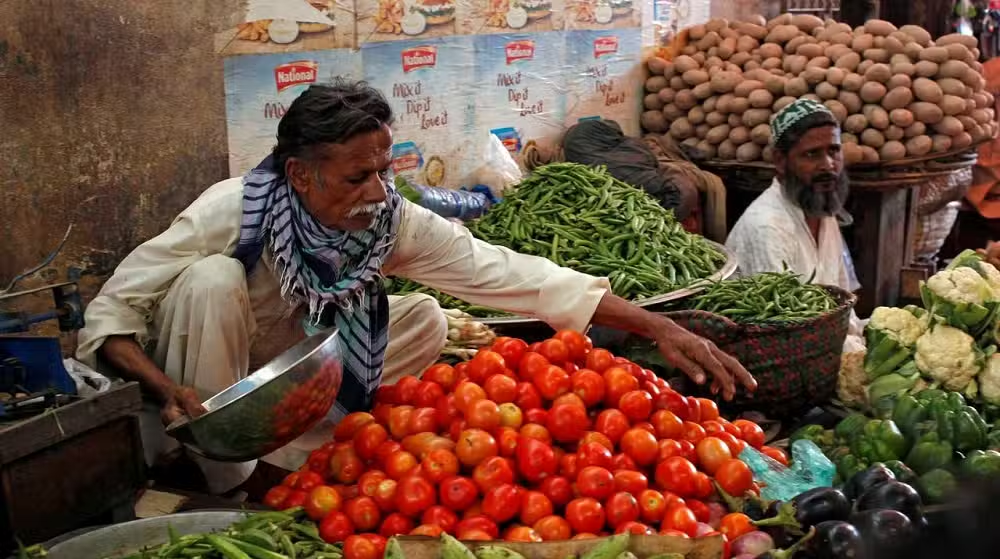
Pakistan’s inflation outlook for November 2025 shows renewed upward pressure as food prices jump due to floods, supply-chain disruptions, and market instability. Analysts expect the Consumer Price Index (CPI) to increase to 6.5%–7.0%, marking a rise from 6.25% in October 2025 and 4.86% in November 2024.
This detailed report explains why inflation is rising, which sectors are affected, how food and fuel prices are changing, and what people should expect in the coming months. The article uses easy English and includes SEO-friendly keywords for better ranking on Google.
Overview of Pakistan’s Inflation Trend in November 2025
Inflation in Pakistan remains one of the most closely watched indicators because it affects household budgets, business decisions, and government policies. For November 2025:
- Expected CPI: 6.5% to 7.0%
- CPI in October 2025: 6.25%
- CPI in November 2024: 4.86%
- Month-over-month inflation: 0.8%
This increase is mainly linked to rising food prices after heavy floods damaged crops and the temporary Afghan border closure slowed down supplies moving across Pakistan.
Read Also: Breaking News: NADRA Launches Online Biometric Verification for Islamabad Vehicle Transfers
Why Inflation is Rising: Key Factors Behind the November 2025 Increase
Inflation is rising because of several major reasons. These include:
1. Sharp Increase in Food Prices
Food inflation is the biggest factor behind the November price jump.
- Onions: +59%
- Chicken: +16%
- Meat: +15%
- Fresh vegetables: +12%
Floods damaged key crops and interrupted the flow of vegetables from farms to cities. Additionally, the brief closure of Pakistan’s border with Afghanistan disrupted supply chains, leading to shortages in wholesale markets.
Relief in Tomato Prices
Interestingly, tomato prices dropped by 56% due to a sudden increase in supply. This helped reduce some pressure on overall food inflation.
Read Also: Breaking News: NADRA Launches Online Biometric Verification for Islamabad Vehicle Transfers

2. Higher Electricity Costs
The Housing, Water, Electricity & Gas category is expected to rise 0.79% month-over-month.
This came from:
- A 2.83% increase in electricity charges
- Quarterly tariff adjustment of Rs. 1.8881 per kWh (not carried into November)
- Fuel Charges Adjustment (FCA) of –Rs. 0.4812 per kWh
Even though FCA is negative, the overall impact is still positive because the base tariff increased.

3. Mixed Trend in Transport Inflation
Transport inflation is expected to decrease by 0.05%, due to:
- Petrol price: –1% (decrease)
- High-speed diesel: +0.8% (increase)
Since transport affects supply chains, fuel changes may impact prices in December.
Real Interest Rates Remain Strongly Positive
Pakistan’s real interest rate (policy rate minus inflation) is expected to stay around 4.38% in November. Analysts predict:
- Real rates will stay 400–450 basis points (4%–4.5%)
- This is higher than Pakistan’s historical average of 200–300 basis points
High real interest rates usually help control inflation but also slow down economic activity, borrowing, and business investment.
Read Also: Breaking News: NADRA Launches Online Biometric Verification for Islamabad Vehicle Transfers
How Rising Food Prices Affect the Common People
The average household in Pakistan spends almost 40% of its income on food, which means a rise in food prices hits low-income and middle-class families the hardest.
Effects on Daily Life
- Higher vegetable and meat prices increase weekly grocery bills
- Costlier electricity affects home budgets
- Businesses may increase prices of prepared foods
- Transport fares may increase if diesel prices rise again
Consumers should expect continued volatility in vegetable, poultry, and meat markets through December and early 2026.
Impact of Floods and Border Closure
Pakistan’s agriculture sector faced heavy losses due to monsoon floods. Fields of onions, potatoes, and green vegetables were damaged in Punjab and Sindh.
How Floods Increase Inflation
- Lower supply of vegetables
- Higher transportation cost from alternate routes
- Crop re-planting delays
- Rising demand in cities with limited supply
Afghan Border Closure Impact
Pakistan imports and exports food items through Afghanistan. When borders closed temporarily:
- Trucks carrying vegetables and fruits were stuck
- Wholesale markets faced shortages
- Import costs increased
- Market traders increased prices due to uncertainty
All of these factors contributed to a rise in food inflation.
Electricity Prices and Energy Inflation
Electricity price adjustments are impacting monthly household budgets. The rise of 2.83% in electricity bill charges is mainly due to:
- Fuel cost adjustment
- Quarterly adjustments
- Exchange rate changes
- Higher generation cost during peak usage
Energy prices have a direct link with inflation because almost all goods in the market require electricity for production, storage, or transportation.
Transport Inflation: Fuel Price Stability Helps, but Risks Remain
Although petrol prices decreased by 1%, diesel increased by 0.8%, which can increase:
- Goods transport charges
- School van fees
- Inter-city travel fares
- Production costs for businesses
Fuel price trends depend heavily on international oil markets, which remain unstable due to global geopolitical tensions.
Outlook for December 2025 and Early 2026
Analysts believe inflation may continue to fluctuate due to:
1. Global Commodity Volatility
Oil, wheat, sugar, and gas prices can rise anytime.
2. Local Weather and Crop Supply
Winter vegetables and fruits may face shortages.
3. Policy Decisions
Government tariff adjustments, fuel prices, and taxation changes will affect inflation.
4. Exchange Rate Stability
Any pressure on the rupee can quickly increase import costs.
5. International Crises
Conflicts in global markets may slow supply chains and raise commodity costs.
What Analysts Predict
- CPI will remain around 6.5–7% in November
- Real interest rates will stay high
- Food inflation will ease slightly in December as new supply arrives
- Overall inflation will remain manageable if global commodity prices stay stable
However, Pakistan still faces uncertainty due to weak supply chains, climate-related crop damage, and global price movements.
Conclusion
Inflation in Pakistan is expected to rise in November 2025 mainly because of a sharp increase in food prices caused by floods and disrupted supply chains. Electricity price adjustments and mixed fuel trends also contributed to the rise.
Although some relief came from falling tomato prices and slightly lower petrol prices, the overall inflation outlook remains cautious due to global market volatility. Real interest rates remain high, offering stability but slowing economic recovery.
People should expect moderate inflation levels in the coming months unless global commodity markets stabilize and Pakistan experiences better agricultural supply conditions.

Five Important FAQs (One-Line Answers)
1. Why is inflation rising in Pakistan in November 2025?
Inflation is rising mainly because food prices increased due to floods and supply-chain disruptions.
2. What is the expected inflation rate for November 2025?
Analysts expect CPI inflation to settle between 6.5% and 7.0%.
3. Which items became most expensive this month?
Onions, chicken, meat, and fresh vegetables saw the biggest price increases.
4. Did any food item become cheaper in November?
Yes, tomato prices dropped by 56% due to a sharp rise in supply.
5. Will inflation stay high in the coming months?
Inflation may remain moderate but uncertain due to global commodity markets and local supply issues.