
Matric and Inter Exams in Punjab to Go Digital From 2026
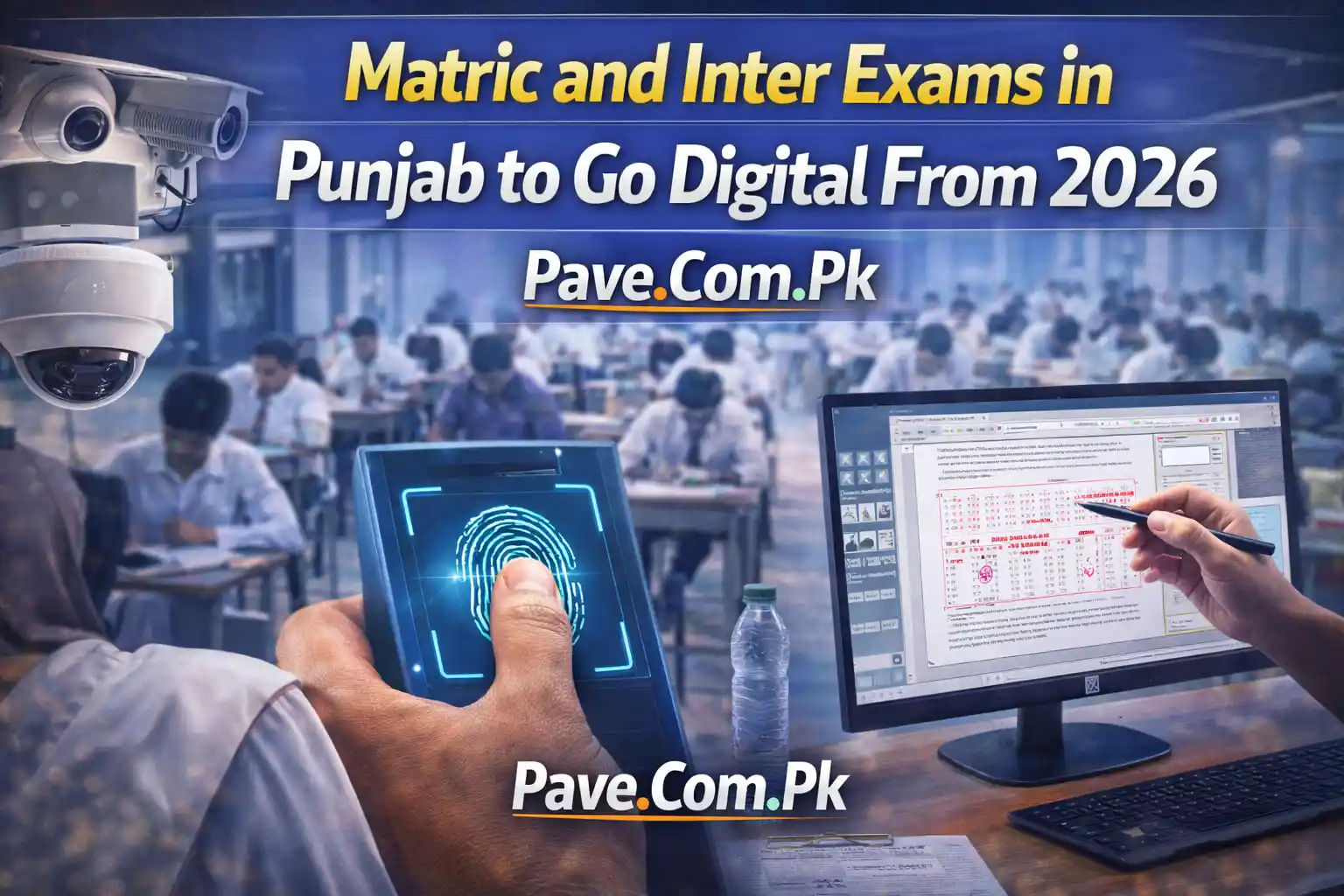
In a landmark move to modernize the education system, the Board Committee of Chairmen (BCC) representing all nine educational boards of Punjab has approved major reforms in the Matriculation and Intermediate examination system. These changes aim to eliminate outdated manual practices, curb cheating, improve transparency, and ensure fair assessment for millions of students across the province.
The reforms include mandatory biometric attendance, digital paper marking, upgraded practical examinations, and CCTV surveillance at exam centers. Starting from 2026, Punjab’s board exams will undergo one of the biggest transformations in decades.
This detailed article explains Punjab’s new Matric and Inter exam reforms, how biometric verification will work, digital checking system, CCTV monitoring, impact on students and schools, and why these changes matter. The article is written in easy English, includes SEO-friendly Google keywords, and ends with a meta description and focus keywords.
Why Punjab Introduced Major Exam Reforms
Punjab’s examination system has long faced criticism due to:
- Manual checking errors
- Fake candidates and impersonation
- Cheating during exams
- Weak monitoring of practical exams
To address these issues, education authorities decided to shift towards a technology-driven examination system.

Decision by the Board Committee of Chairmen
The reforms were approved by the Board Committee of Chairmen, which includes chairmen of all nine Punjab boards, including Lahore, Rawalpindi, Multan, Faisalabad, and others.
Key Objectives of the Decision
- Ensure transparency in exams
- Reduce human error
- Stop cheating and impersonation
- Improve credibility of board results
This unified decision means the reforms will be implemented province-wide.

Biometric Attendance Made Mandatory
One of the most significant changes is the introduction of biometric attendance.
Who Will Be Affected?
- All male and female candidates
- Matric (Class 9 & 10) students
- Intermediate (Class 11 & 12) students
From 2026, students registering for Class 9 and Class 11 must provide thumb impressions.

How Biometric Verification Will Work
Biometric data will be used to verify students at exam centers.
Biometric Process
- Thumb impressions collected at registration
- Data stored digitally
- Biometric verification at exam center entry
- No entry without biometric match
This system will eliminate fake candidates and proxy exam attempts.

Responsibility of Schools and Colleges
Both government and private schools/colleges will play a major role.
Responsibilities of Institutions
- Provide biometric devices
- Arrange laptops or computers
- Ensure smooth biometric registration
Examination boards will only provide the software, while institutions will manage hardware and setup.
End of Manual Paper Checking
Another historic reform is the complete shift to digital paper marking.
What Will Change?
- Answer sheets will be scanned
- Examiners will check papers on computer screens
- No physical handling of answer sheets
This move ends the decades-old manual checking system.
Benefits of Digital Paper Marking
Officials say digital marking will solve multiple problems.
Key Advantages
- Elimination of calculation mistakes
- No total marks errors
- Faster result compilation
- Increased transparency
- Reduced chances of favoritism
Students can expect fairer and more accurate results.
Upgraded Science Practical Examination System
Science practical exams will no longer be treated as a formality.
What’s New in Practical Exams?
- Proper assessments
- Improved monitoring
- Real evaluation of skills
- Reduced chances of fake practical marks
This reform ensures students are tested on actual scientific understanding.
Partial Implementation in 2026
Authorities have confirmed that 2026 will see partial implementation of reforms.
What Will Be Implemented First?
- Biometric registration for Class 9 and 11
- Initial digital marking trials
- Enhanced monitoring
Full implementation will follow after successful testing.
CCTV Cameras Mandatory at Exam Centers
Another major step is mandatory CCTV surveillance.
CCTV Policy Details
- CCTV cameras at all exam centers
- Live monitoring
- Recording for later review
This will significantly reduce:
- Cheating
- Paper leaks
- External interference
Rawalpindi Division: CCTV Installation Already Started
In Rawalpindi Division, implementation is already underway.
Rawalpindi Exam Setup
- 400 Matric and Inter exam centers
- CCTV installation in progress
- Funding provided by students
This division will act as a model for other regions.
Role of Technology in Education Reforms
Punjab’s reforms show a strong push toward digital governance.
Technology Being Used
- Biometric systems
- Digital scanning
- Online marking platforms
- Surveillance systems
Experts believe this will modernize Pakistan’s education assessment system.
Impact on Students
The reforms will directly affect millions of students.
Positive Impact
- Fair exams
- Equal evaluation
- Reduced cheating pressure
- More credible results
However, students will need to:
- Complete biometric registration
- Follow strict exam rules
Impact on Teachers and Examiners
Teachers will also adapt to new systems.
Changes for Examiners
- Training for digital marking
- Online assessment methods
- Reduced workload of manual checking
While the transition may be challenging, it will improve efficiency.
Concerns and Challenges
Despite benefits, some challenges remain.
Possible Issues
- Technical failures
- Lack of equipment in rural schools
- Training requirements
Authorities have assured that support and training programs will be provided.
Why These Reforms Are Important
These changes are crucial for restoring trust in board exams.
Long-Term Benefits
- International credibility
- Better academic standards
- Merit-based results
- Stronger education system
Punjab aims to set a national example.
Public and Parent Reaction
Parents and education experts have largely welcomed the reforms.
Public Opinion
- Positive response from parents
- Students hopeful for fair exams
- Demand for proper implementation
Many believe this is a much-needed step.
Google Search Keywords Used in This Article
- Punjab matric exam changes 2026
- Inter exams biometric attendance
- Digital paper checking Punjab boards
- CCTV exam centers Punjab
- Punjab education reforms 2026
- Matric Inter exam system Pakistan
Conclusion
Punjab’s decision to introduce biometric attendance, digital paper marking, upgraded practical exams, and CCTV monitoring marks a turning point in Pakistan’s education system. By ending outdated manual processes, the province is moving toward transparent, fair, and technology-driven examinations.
If implemented effectively, these reforms will not only benefit students but also strengthen the credibility of Punjab’s education boards for years to come.