NADRA Warns Citizens Against Fake Cash Reward Claims on Social Media
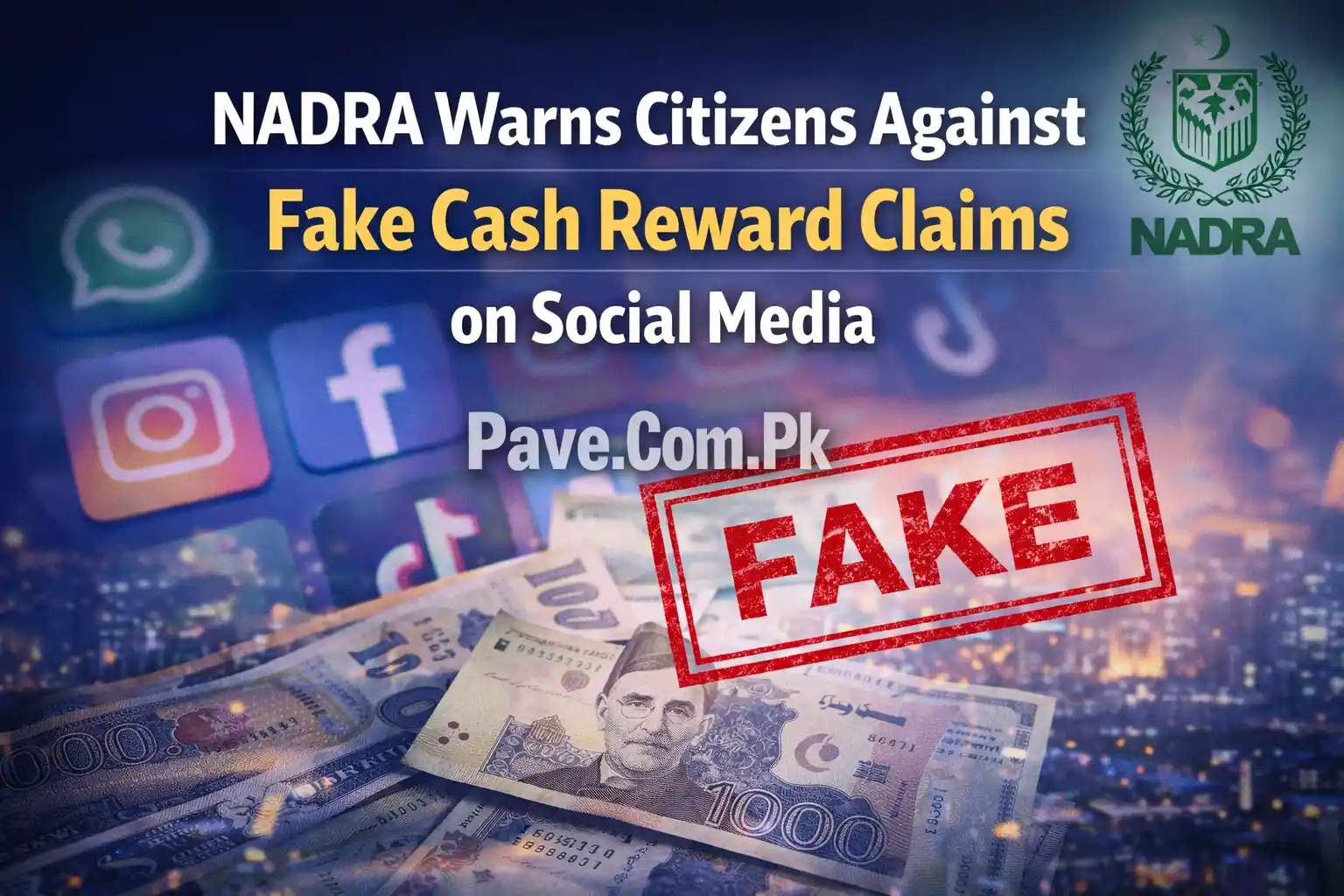
The National Database and Registration Authority (NADRA) has issued a strong public warning after fake and misleading videos began circulating widely on social media, falsely claiming that citizens are eligible for cash rewards linked to their CNICs.
According to NADRA, these fraudulent videos—mostly shared in the Saraiki language—are deliberately designed to deceive people by misusing the name of a former NADRA chairman and exploiting public trust in government institutions.
This article explains what the fake cash reward scam is, how it works, NADRA’s official response, who is being targeted, how citizens can protect themselves, and why misinformation linked to CNICs is becoming increasingly dangerous. The article is written in easy English, includes Google-search-friendly keywords, and ends with a meta description and focus keywords, as requested.
NADRA Issues Public Alert Against CNIC Scam
NADRA confirmed that false videos and posts are being shared on platforms such as Facebook, WhatsApp, TikTok, and YouTube. These videos claim that people holding computerized national identity cards (CNICs) are entitled to receive cash prizes.
NADRA’s Key Message
- The videos are completely fake
- NADRA is not offering any cash rewards
- No CNIC holder is eligible for prize money
- Citizens should not believe or share such content
The authority described the campaign as a deliberate fraud attempt.

How the Fake Cash Reward Claim Works
The scam follows a familiar pattern used in many online fraud cases.
Common Claims in the Videos
- CNIC holders with a specific signature qualify for cash
- Former NADRA chairman approved the scheme
- Government funds are being distributed secretly
- People must act quickly to claim money
These claims are entirely false and have no legal or official basis.

Misuse of Former NADRA Chairman’s Name
NADRA clarified that scammers are falsely using the name of Usman Yousuf Mubin to make the scam appear credible.
Why This Is Dangerous
- Creates false trust
- Exploits respect for public officials
- Confuses less digitally aware citizens
NADRA stressed that no former or current official has announced any such scheme.

Videos Circulating in Saraiki Language
NADRA highlighted that many of the fake videos are produced in Saraiki, suggesting that scammers are targeting specific communities.
Why Language Matters
- Builds emotional connection
- Targets rural and less digitally literate users
- Reduces suspicion
Authorities say this shows intentional targeting, not random misinformation.

NADRA Categorically Rejects All Claims
In its official awareness message, NADRA categorically rejected all claims made in the videos.
NADRA’s Official Position
- No CNIC-based cash rewards exist
- No prize scheme approved or launched
- Videos are fabricated and misleading
NADRA urged citizens to rely only on official communication channels.
Why CNIC-Based Scams Are Increasing
Scams involving CNICs have become more common in recent years.
Reasons for the Rise
- CNIC is widely used for verification
- Public trust in NADRA systems
- Increased social media usage
- Low awareness of digital fraud
Scammers exploit the importance of CNICs in everyday life.
How These Scams Exploit Citizens
The fake cash reward scam aims to extract personal information or money.
Possible Objectives of Scammers
- Stealing CNIC numbers
- Collecting phone numbers
- Requesting “processing fees”
- Gaining access to bank accounts
Even sharing basic information can lead to serious financial loss.
Common Red Flags in Fake Reward Videos
Citizens can protect themselves by recognizing warning signs.
Red Flags to Watch For
- Promises of free government money
- Urgent deadlines
- Requests for personal details
- Unofficial social media accounts
- Poor-quality videos or voiceovers
Legitimate government programs are never announced this way.
NADRA’s Advice to the Public
NADRA has advised citizens to remain vigilant and cautious.
Official Safety Advice
- Do not believe unverified videos
- Do not share CNIC details
- Do not send money to unknown sources
- Verify information from NADRA’s official website
Staying alert is the best protection.
Role of Social Media in Spreading Misinformation
Social media platforms play a major role in spreading fake news.
How Misinformation Spreads
- Rapid sharing in WhatsApp groups
- Emotional or attractive claims
- Lack of fact-checking
- Forwarded messages without sources
Once shared, fake content can reach thousands within minutes.
Impact on Vulnerable Communities
The scam disproportionately affects low-income and rural communities.
Why These Groups Are Targeted
- Limited digital literacy
- Greater trust in voice messages
- Hope for financial relief
Authorities urge families to educate elders and relatives.
Legal Consequences for Scammers
Spreading fake government claims is a criminal offense.
Possible Legal Action
- Cybercrime charges
- Fraud and impersonation cases
- Arrests under digital laws
NADRA said it is working with law enforcement agencies to track offenders.
How NADRA Communicates Official Announcements
NADRA reminded the public that it uses official channels only.
NADRA’s Official Platforms
- Official website
- Verified social media pages
- Press releases
- National media
Any announcement outside these channels should be treated as fake.
What To Do If You See a Fake NADRA Video
Citizens should take immediate action if they encounter such content.
Steps to Take
- Do not share the video
- Report it to the platform
- Inform friends and family
- Contact NADRA helpline if unsure
Reporting helps stop the spread.
The Importance of Digital Awareness
Digital awareness is becoming essential in modern Pakistan.
Why Awareness Matters
- Protects personal data
- Prevents financial loss
- Reduces spread of fake news
Authorities stress the need for public education campaigns.
Government Efforts to Counter Online Fraud
The government is increasing efforts to tackle cyber fraud.
Ongoing Measures
- Public awareness campaigns
- Cybercrime monitoring
- Coordination with social media platforms
NADRA’s warning is part of a broader anti-fraud strategy.
Role of Families and Communities
Families play a key role in preventing scams.
How Families Can Help
- Guide elders on digital safety
- Verify information before sharing
- Encourage critical thinking
Community awareness can significantly reduce risk.
Economic Pressure and Scam Vulnerability
Economic challenges make people more vulnerable to scams.
Why Scams Increase During Hard Times
- Financial stress
- Hope for quick relief
- Reduced skepticism
Scammers exploit economic anxiety.
Comparison With Other Recent Scams
The fake cash reward claim is similar to other scams.
Common Scam Types
- Fake prize lotteries
- Fake government aid schemes
- Fake banking messages
Recognizing patterns helps prevent future fraud.
NADRA’s Commitment to Public Protection
NADRA reaffirmed its commitment to protecting citizens.
NADRA’s Focus Areas
- Data security
- Public awareness
- Transparent communication
The authority says public cooperation is crucial.
Why You Should Never Share CNIC Details Online
CNIC information is highly sensitive.
Risks of Sharing CNIC Data
- Identity theft
- Financial fraud
- Fake SIM registration
NADRA emphasized that no one should ask for CNIC details online.
Building Trust Through Verified Information
Trust must be built on verified sources.
How to Verify Information
- Check official websites
- Look for verified accounts
- Confirm through news outlets
Verification prevents panic and confusion.
Conclusion
The warning issued by NADRA against fake cash reward claims highlights the growing threat of digital fraud in Pakistan. By misusing the name of former chairman Usman Yousuf Mubin and spreading misleading videos in regional languages, scammers are attempting to exploit public trust and financial vulnerability.
NADRA has made it clear that no such cash reward scheme exists, and citizens should remain cautious, avoid sharing personal information, and rely only on official sources. Public awareness, responsible sharing, and digital vigilance are essential to stopping such scams and protecting communities from financial and identity fraud.