No More Waiting Long At The Airports in Pakistan From February 1 | Pakistan Launches New Immigration Clearance System
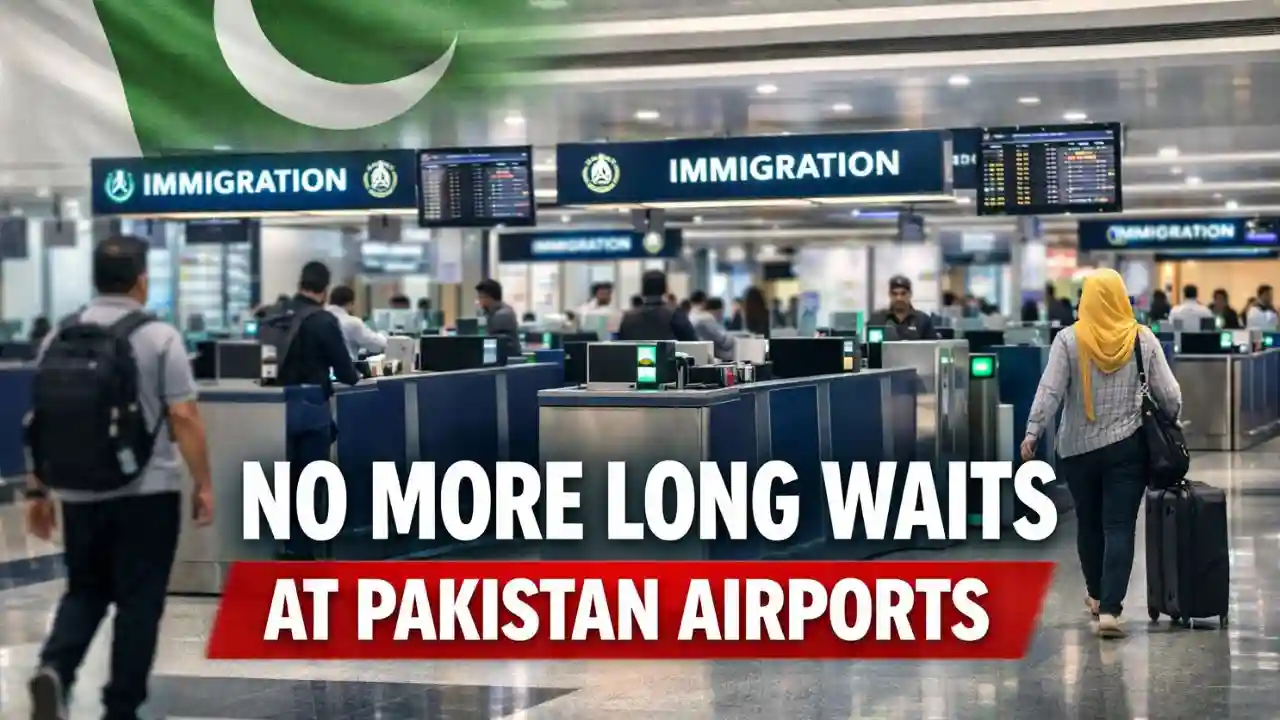
No More Waiting Long At The Airports in Pakistan From February 1 has taken a major step toward modernizing its airport operations with the launch of a new immigration clearance system, aimed at eliminating long queues and reducing passenger waiting times. Starting February 1, travelers arriving in and departing from Pakistan can expect a faster, smoother, and more efficient immigration process at major international airports.
For years, passengers traveling through Pakistani airports have complained about overcrowded immigration counters, manual passport checks, and lengthy delays. With international travel increasing and overseas Pakistanis returning home in large numbers, the pressure on airport infrastructure has continued to grow. The newly launched immigration clearance system is designed to address these challenges by introducing digital processing, automation, and smarter passenger flow management.
Pakistan Launches New Immigration Clearance System: What Has Changed?
The new immigration clearance system introduced by Pakistani authorities focuses on speed, accuracy, and transparency. Instead of relying heavily on manual procedures, the system integrates digital verification tools, real-time data access, and automated decision-making support for immigration officers.
Under the updated system, passenger data is processed more efficiently, reducing the time required to verify travel documents, visas, and entry or exit records. Immigration staff are now supported by technology that minimizes human error and speeds up routine checks.
Authorities state that the system has been tested extensively and will be rolled out in phases, beginning with major international airports, before expanding to regional airports in the future.

End of Long Queues: Faster Immigration Clearance at Pakistani Airports
One of the most noticeable benefits of the new system is the reduction in long immigration queues, especially during peak travel hours. Previously, passengers often waited 45 minutes to over an hour at immigration counters. With the new system in place, processing time per passenger is expected to drop significantly.
Key improvements include:
- Faster passport scanning and verification
- Improved coordination between immigration counters
- Better allocation of staff during high-traffic periods
- Reduced manual data entry
For families, elderly travelers, and overseas Pakistanis arriving after long international flights, this change is expected to make a huge difference in overall travel experience.

Major Airports to Benefit First from the New Immigration System
Initially, the system is being implemented at Pakistan’s busiest international airports, including:
- Jinnah International Airport
- Allama Iqbal International Airport
- Islamabad International Airport
These airports handle the majority of international arrivals and departures, making them the ideal starting point for deployment. Once fully operational and optimized, the system is expected to expand to other airports across the country.

How the New Immigration Clearance System Works
The updated immigration clearance process relies on centralized digital databases that allow immigration officers to access passenger information instantly. Travel records, visa details, and identity verification are completed in real time, eliminating delays caused by fragmented or outdated systems.
The system also helps officers quickly identify travelers who require additional screening, while allowing low-risk passengers to clear immigration faster. This balanced approach improves both security and efficiency, ensuring that speed does not come at the cost of safety.

Benefits for Overseas Pakistanis and International Travelers
The launch of the new system is particularly important for overseas Pakistanis, who form a large portion of international arrivals. Many return home during holidays, religious occasions, and school breaks, causing congestion at airports.
Key benefits include:
- Shorter waiting times after long flights
- Reduced stress during arrival and departure
- More organized immigration halls
- Improved overall perception of Pakistani airports
International travelers visiting Pakistan for business, tourism, or diplomatic purposes will also experience a more professional and welcoming entry process.
Digital Transformation of Pakistan’s Aviation Sector
The new immigration clearance system is part of a broader effort to digitize Pakistan’s aviation and border management infrastructure. Authorities have emphasized that modern airports are not just about buildings and runways, but also about smart systems that improve passenger flow.
This move aligns Pakistan with international trends, where countries are investing heavily in automation, data integration, and passenger convenience. The goal is to transform Pakistani airports into efficient gateways that reflect the country’s progress and readiness for global engagement.
Security Remains a Top Priority
While speed and convenience are major objectives, officials stress that security standards have not been compromised. In fact, the new system strengthens security by enabling better data analysis and faster identification of irregular travel patterns.
By reducing reliance on manual checks, officers can focus more attention on passengers who require closer scrutiny. This targeted approach improves border security while allowing the majority of travelers to move through immigration smoothly.
Passenger Experience: A Long-Overdue Improvement
For frequent travelers, the changes represent a long-overdue improvement. Long waits at immigration were often one of the most criticized aspects of air travel in Pakistan. With the new system, authorities hope to restore traveler confidence and improve Pakistan’s image as an international travel destination.
Better immigration clearance also has a positive impact on airport operations as a whole, reducing congestion in arrival halls and improving coordination with customs and baggage handling services.
Future Expansion and Continuous Improvements
Officials have indicated that this is not a one-time upgrade. The system will continue to evolve based on passenger feedback and operational needs. Future enhancements may include additional automation, improved data sharing with airlines, and further integration with airport management systems.
The long-term vision is to create a seamless arrival and departure experience, where passengers move efficiently from aircraft to exit without unnecessary delays.
FAQs – Pakistan’s New Immigration Clearance System
When will the new immigration clearance system start?
The system will be officially implemented starting February 1.
Which airports are included in the first phase?
Major international airports in Karachi, Lahore, and Islamabad are included in the initial rollout.
Will waiting times really be reduced?
Yes. Authorities expect a significant reduction in waiting times due to faster digital processing and better counter management.
Is the new system safe and secure?
Yes. Security remains a top priority, and the system enhances monitoring through real-time data access and smarter screening.
Does this affect departing passengers as well?
Yes. Both arriving and departing passengers will benefit from improved immigration clearance procedures.
Will regional airports get this system too?
Yes. After successful implementation at major airports, the system is expected to expand to other airports across Pakistan.
Conclusion
The launch of Pakistan’s new immigration clearance system marks a major milestone in airport modernization. By addressing long-standing issues of delays and overcrowding, the initiative promises a faster, safer, and more passenger-friendly experience.
From February 1 onward, travelers can expect shorter queues, smoother processing, and a more professional airport environment. This step not only improves daily travel experiences but also strengthens Pakistan’s position as a country moving confidently toward digital transformation and global standards.