
Pakistan Facing Critical Public Health Challenges Due to 600,000 Fake Doctors
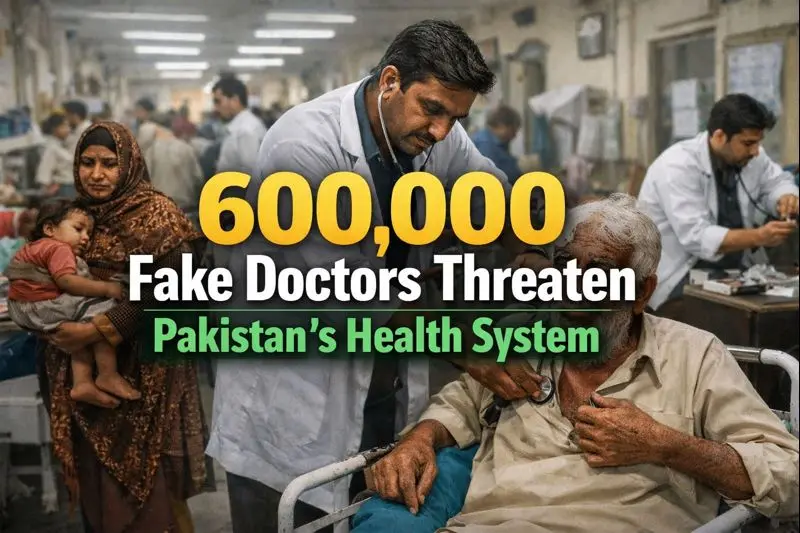
Pakistan is facing one of its most serious public health challenges as reports suggest that nearly 600,000 fake doctors are operating across the country. These individuals, who do not have valid medical degrees or professional licenses, are openly treating patients and putting millions of lives at risk. The issue has exposed deep flaws in the healthcare system, weak regulation, and poor public awareness.
Health experts warn that the unchecked presence of fake doctors is not just an administrative failure but a direct threat to national health security. From minor illnesses to life-threatening conditions, unqualified practitioners are handling patients without proper training, leading to misdiagnosis, wrong treatments, and in many cases, preventable deaths.
The Growing Scale of the Problem
The issue of fake doctors is not new, but its scale has now reached alarming levels. According to estimates shared by health authorities and medical associations, hundreds of thousands of people across Pakistan are practicing medicine illegally. These include fake general practitioners, bogus specialists, unregistered dentists, and unqualified dispensers.
Many of them operate small private clinics in residential areas, villages, and marketplaces. Some even work in private hospitals and diagnostic centers using forged documents. Due to poor monitoring systems, these individuals often remain undetected for years.
The problem is especially severe in rural areas where access to qualified doctors is already limited. People living in villages have little choice but to rely on whoever is available, regardless of their credentials.

How Fake Doctors Put Lives at Risk
Fake doctors lack proper medical education and clinical training. As a result, they often fail to diagnose diseases correctly. Simple infections turn into severe complications because of wrong medicines or delayed treatment. In many cases, patients are given strong antibiotics or steroids without any medical need, causing long-term damage.
Pregnant women, children, and elderly patients are among the worst affected. Unsafe delivery practices, incorrect injections, and unhygienic procedures increase the risk of infections and fatalities. Health experts say many deaths that occur in small clinics could have been prevented if patients were treated by qualified professionals.
Another major concern is the misuse of injections and drips. Fake doctors often rely heavily on injections to impress patients, even when oral medicines are sufficient. This practice increases the risk of disease transmission and medical complications.

Weak Regulation and Enforcement Failures
The widespread presence of fake doctors highlights serious weaknesses in regulatory enforcement. Medical councils and provincial health departments are responsible for licensing doctors and monitoring healthcare facilities. However, limited manpower, outdated systems, and lack of coordination have made effective oversight difficult.
Crackdown operations are usually reactive rather than proactive. Authorities often take action only after media reports or public complaints. Even then, these operations are short-lived. Many fake doctors shut down their clinics temporarily and resume practice once inspections slow down.
In some cases, illegal practitioners enjoy local influence or political backing, which makes enforcement even more challenging. Poor coordination between health departments and law enforcement agencies further weakens accountability.

Lack of Public Awareness
Public awareness remains one of the biggest challenges in tackling this crisis. A large portion of the population does not know how to verify whether a doctor is registered or qualified. Many people assume that anyone wearing a white coat or displaying a certificate on the wall is a legitimate doctor.
Illiteracy, poverty, and lack of access to digital tools make verification difficult, especially in rural areas. Even when online verification systems exist, they are rarely promoted or explained to the public.
Health experts stress that patient education is just as important as regulatory enforcement. Without informed citizens, fake doctors will continue to find opportunities to operate freely.

Economic Factors and Healthcare Gaps
The shortage of qualified doctors in public hospitals also contributes to the problem. Overcrowded government hospitals, long waiting times, and limited facilities push patients toward private clinics, regardless of quality.
Private healthcare is expensive, and many qualified doctors charge consultation fees that poor families cannot afford. Fake doctors take advantage of this gap by offering cheaper services, making them more attractive to low-income patients.
Unemployment and lack of strict punishment also encourage illegal practice. Some individuals with basic medical knowledge or paramedical experience start practicing as doctors to earn money, knowing that the chances of being caught are low.
Government Response and Ongoing Challenges
Government officials have acknowledged the seriousness of the issue and claim that steps are being taken to control it. These include verification drives, inspections, sealing of illegal clinics, and public warnings.
However, healthcare professionals argue that these efforts are not enough. Given the massive number of fake doctors, temporary crackdowns cannot solve the problem. Experts are calling for permanent monitoring systems, digital licensing databases, and stronger penalties.
There is also a demand for collaboration between federal and provincial authorities to create a unified healthcare regulation framework. Without coordination, fake doctors simply move from one area to another.
What Needs to Be Done
To address this crisis effectively, Pakistan needs a comprehensive and long-term strategy.
First, licensing systems must be fully digitized and made accessible to the public. Every citizen should be able to verify a doctor’s registration using a simple online or mobile system.
Second, inspections should be regular and continuous rather than occasional. Dedicated teams should be formed to monitor clinics, especially in high-risk and rural areas.
Third, strict legal action must be taken against fake doctors. Heavy fines, imprisonment, and permanent bans are necessary to discourage illegal practice.
Fourth, public hospitals must be strengthened. Improving staffing, facilities, and service delivery will reduce dependence on unqualified private practitioners.
Finally, awareness campaigns through television, radio, social media, and community outreach are essential. People must understand the dangers of consulting fake doctors and learn how to identify qualified professionals.
A Matter of Life and Death
The presence of 600,000 fake doctors is not just a healthcare issue. It is a national emergency that affects every household. Without immediate and serious reforms, the consequences will continue to be devastating.
Protecting public health requires strong governance, informed citizens, and a healthcare system that prioritizes safety over shortcuts. Eliminating fake doctors is not easy, but it is necessary to restore trust and save lives.
Pakistan stands at a critical point. The choices made today will determine whether the healthcare system becomes safer or more dangerous for future generations.