Pakistan Govt Approves Health Education Curriculum for Students
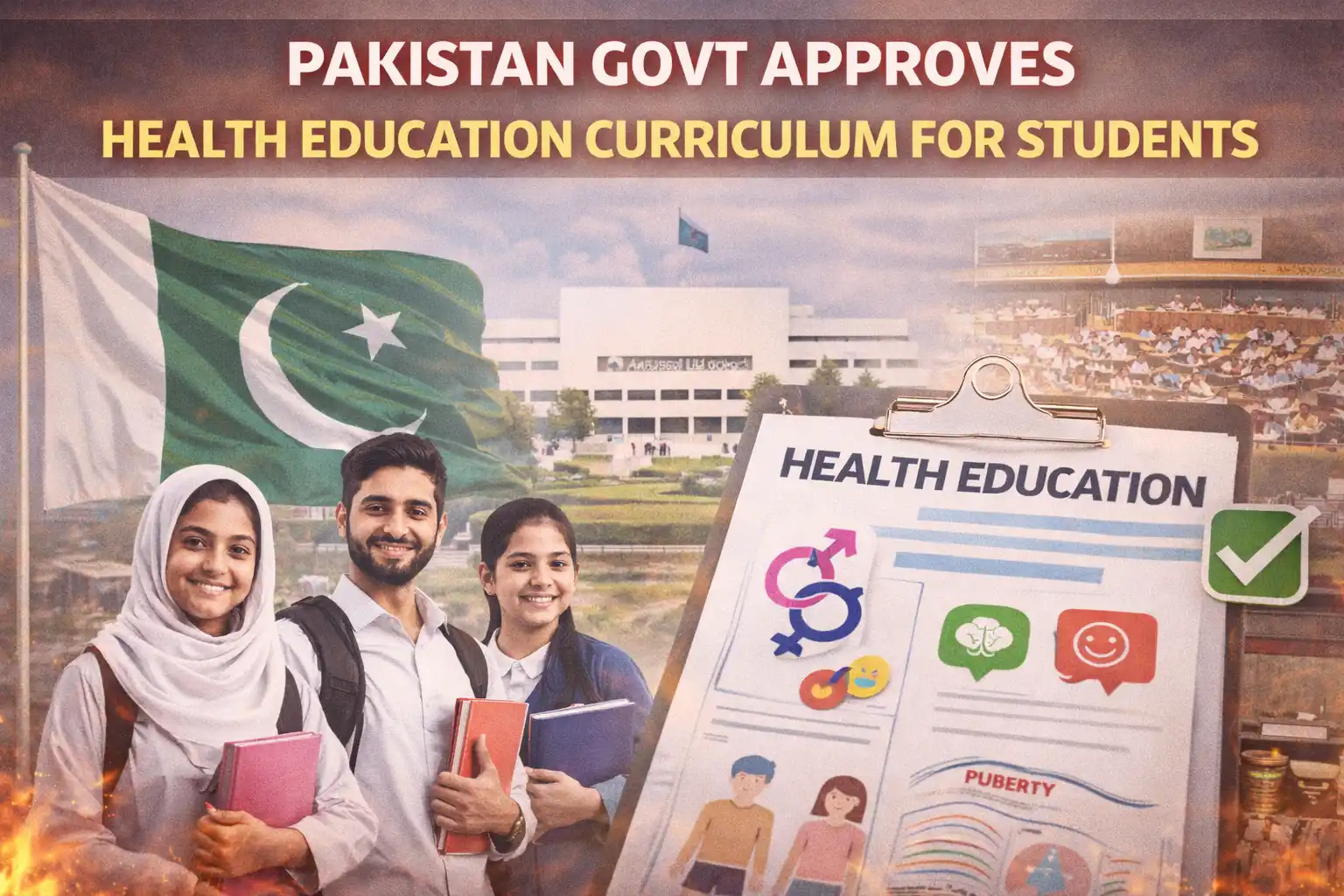
The National Assembly of Pakistan has passed a new bill introducing reproductive health education for students aged 14 and above in educational institutions located in the Islamabad Capital Territory. The legislation is considered an important step toward improving awareness about health, well-being, and responsible decision-making among young students.
The bill was presented in the National Assembly by Shazia Marri, while it had earlier been introduced and approved in the Senate of Pakistan by Quratul Ain Marri.
After approval by both houses of parliament, the bill will now be sent to the President of Pakistan for final approval before becoming an official law.

What the New Reproductive Health Education Bill Includes
The newly approved legislation focuses on providing age-appropriate reproductive health education to students who are 14 years or older.
The law amends the Federal Supervision of Curricula, Text-Books and Maintenance of Standards of Education Act, 1976, which regulates educational curriculum standards in Pakistan.
The aim of this amendment is to ensure that students receive proper guidance regarding their physical and emotional development during adolescence.
Purpose of Introducing Reproductive Health Education
The government introduced this bill to improve awareness among students about health and personal well-being.
Adolescence is a stage where young individuals experience many physical and emotional changes. Without proper education, students may face confusion or misinformation about these changes.
The new educational program aims to:
- Improve students’ understanding of their health
- Promote respect in relationships
- Provide accurate information about personal development
- Encourage responsible decision-making
Education experts believe that providing correct knowledge can help young people build healthier lifestyles and relationships.
Mandatory Parental Consent for Students
One of the key features of the legislation is that parental or guardian consent will be mandatory before students receive reproductive health education.
Educational institutions must obtain written permission from parents or legal guardians before teaching these topics.
This requirement ensures that families remain involved in their children’s education and that parents are aware of the subjects being taught in schools.
Topics Covered in Reproductive Health Education
The curriculum will include several important topics related to health and personal development.
Physical Development
Students will learn about natural physical changes that occur during adolescence.
This includes understanding body growth and maintaining personal hygiene.
Emotional Well-Being
The program will also focus on emotional development and mental health.
Students will learn how to manage emotions, build confidence, and develop healthy self-esteem.
Social and Relationship Skills
Another important aspect of the curriculum will be teaching students about respectful relationships and social responsibility.
This includes understanding personal boundaries and mutual respect.
Health Awareness
Students will also receive information about general health and well-being to help them make informed decisions.
Importance of Health Education for Teenagers
Health experts believe that early education about personal health can have long-term benefits for young people.
Proper awareness helps teenagers:
- Understand their physical development
- Avoid misinformation from unreliable sources
- Build confidence in their personal identity
- Develop healthy relationships
Providing structured education in schools ensures that students receive accurate and age-appropriate information.
Role of Educational Institutions
Schools and colleges in the Islamabad Capital Territory will be responsible for implementing the new curriculum once the bill becomes law.
Educational institutions may:
- Introduce specialized lessons or workshops
- Train teachers to deliver the curriculum effectively
- Provide guidance sessions for students
Schools will also need to coordinate with parents to obtain the required consent before conducting these lessons.
Reaction from Education Experts
Many education experts have welcomed the initiative, saying that health education is an important part of modern learning.
They believe that students should be provided with reliable information to help them understand their health and development.
Experts also emphasize that parental involvement and proper teacher training will be essential for the successful implementation of the program.
Legislative Process of the Bill
The bill has completed several stages before reaching its current status.
The legislative process included:
- Introduction of the bill in the Senate
- Approval by the Senate of Pakistan
- Presentation in the National Assembly
- Approval by the National Assembly
After being approved by both houses of parliament, the bill will now move to the final stage.
Final Approval by the President
Before the legislation becomes an official law, it must receive approval from the President of Pakistan.
Once the president signs the bill, it will officially become part of Pakistan’s education framework.
Educational authorities will then begin implementing the curriculum in institutions across the Islamabad Capital Territory.
Impact on Pakistan’s Education System
The introduction of reproductive health education reflects an effort to modernize Pakistan’s education system.
Many countries around the world already include health education in their school curricula to help students understand their development.
By introducing similar programs, Pakistan aims to:
- Improve youth awareness about health and well-being
- Support responsible behavior among students
- Promote healthy and respectful relationships
This step could also encourage further educational reforms focused on student well-being.
Challenges in Implementing the Program
While the initiative has been welcomed by many experts, implementing the program may face certain challenges.
These may include:
- Ensuring proper teacher training
- Addressing cultural sensitivities
- Maintaining parental involvement
- Designing age-appropriate learning materials
Authorities will need to carefully design the curriculum to ensure it is informative, respectful, and culturally appropriate.
Importance of Parental Involvement
The bill places strong emphasis on parental participation.
Parents will play an important role in deciding whether their children receive reproductive health education in school.
This approach ensures that families remain part of the educational process and can guide their children alongside school programs.
Conclusion
The approval of the reproductive health education bill by the National Assembly of Pakistan marks a significant step toward improving awareness and health education among young students.
By introducing structured education for students aged 14 and above in the Islamabad Capital Territory, the government aims to provide accurate knowledge about physical, emotional, and social development.
With parental consent required and a carefully designed curriculum, the initiative seeks to promote healthy lifestyles, respectful relationships, and informed decision-making among Pakistan’s youth.
Once the bill receives final approval from the President of Pakistan, educational institutions will begin implementing the program as part of the national education framework.