
Pakistan Increases Kerosene Oil Price by Rs. 39.20 Per Litre
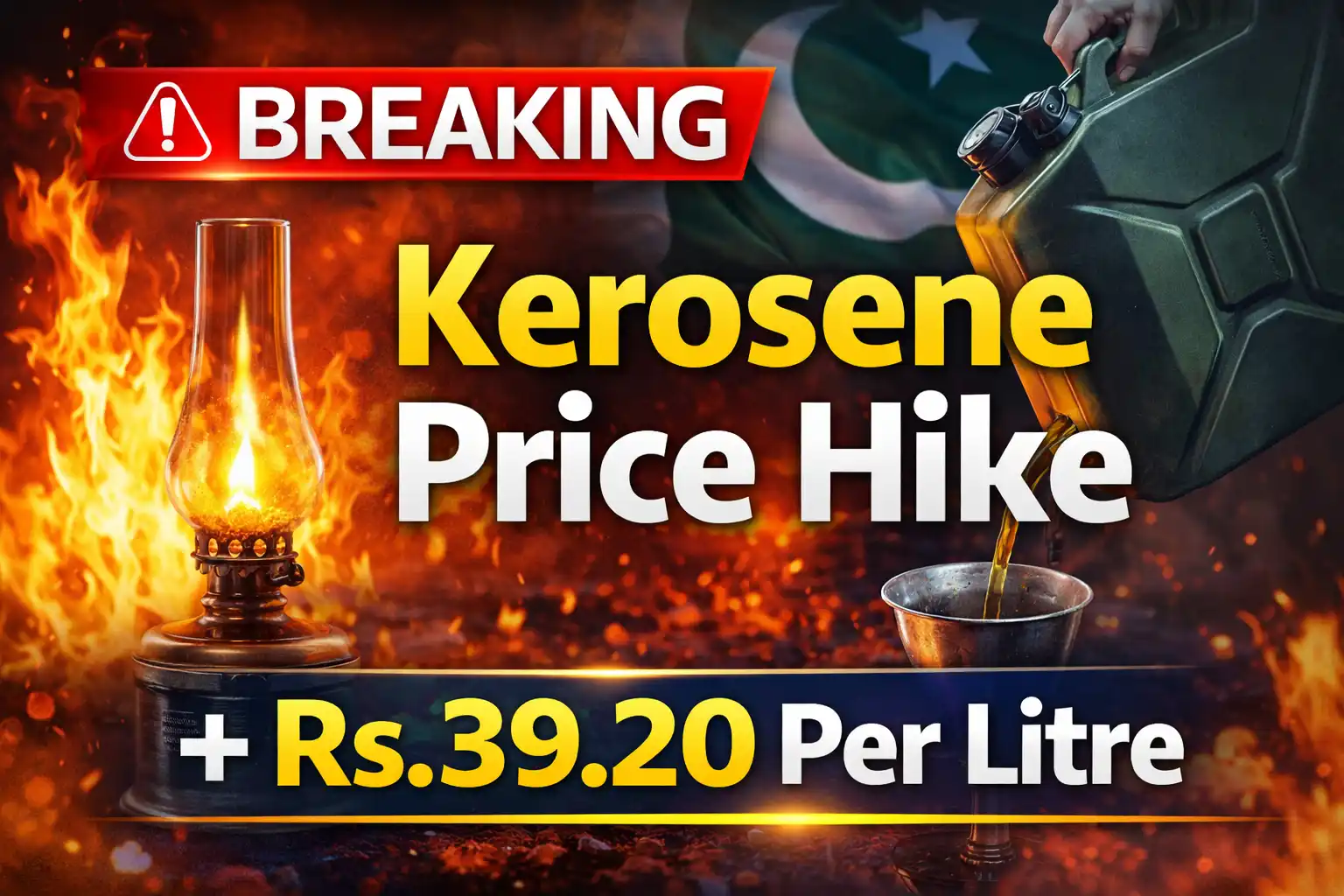
The Government of Pakistan has announced a significant increase in the price of kerosene oil following a new notification issued by the Oil and Gas Regulatory Authority (OGRA).
According to the official announcement, the price of kerosene oil has increased by Rs. 39.20 per litre, raising the new price to Rs. 358.01 per litre.
Previously, kerosene oil was priced at Rs. 318.81 per litre, meaning consumers will now face higher fuel costs for this widely used petroleum product.
New Kerosene Oil Price in Pakistan
The latest notification confirms the updated kerosene price across the country.
Old Price: Rs. 318.81 per litre
Increase: Rs. 39.20 per litre
New Price: Rs. 358.01 per litre
This price revision reflects changes in the petroleum pricing structure and adjustments made by authorities after reviewing international energy market trends.

Petrol and Diesel Prices Remain Unchanged
While kerosene prices have increased significantly, the government has decided to keep petrol and diesel prices unchanged during the latest fuel price review.
Under the current pricing structure:
- Petrol price: Rs. 321.17 per litre
- High-speed diesel price: Rs. 335.86 per litre
These prices will remain in effect until the next official review of petroleum product prices.

Government Decision to Protect Consumers
Prime Minister Shehbaz Sharif stated that the government decided not to increase petrol and diesel prices despite rising global oil prices.
The decision aims to reduce financial pressure on the public, particularly those who rely on transportation and diesel-powered vehicles.
Authorities believe that keeping petrol and diesel prices stable will help provide some relief to consumers amid increasing energy costs.

Why Kerosene Oil Prices Increased
The increase in kerosene oil prices is largely linked to fluctuations in international oil markets and changes in import costs.
Several factors may influence fuel price adjustments in Pakistan, including:
- Rising global crude oil prices
- Higher transportation and shipping costs
- Exchange rate fluctuations
- Changes in petroleum levies and taxes
These factors often affect different petroleum products in varying ways.

Importance of Kerosene Oil in Pakistan
Kerosene oil remains an important fuel for many households in Pakistan, especially in rural and remote areas.
It is commonly used for:
- Cooking
- Heating
- Lighting in areas without electricity
In colder regions, kerosene is also used in heaters during the winter season.
As a result, any increase in kerosene prices can directly affect household budgets for many families.
Impact of the Price Increase
The latest increase in kerosene oil prices may have several economic effects.
Higher Household Expenses
Families that rely on kerosene for cooking and heating may experience higher monthly expenses.
Rising Energy Costs
The increase may contribute to higher overall energy costs for households in areas where kerosene remains a primary fuel source.
Inflationary Pressure
Fuel price adjustments can sometimes influence the prices of other goods and services in the economy.
Pakistan’s Petroleum Pricing Mechanism
Fuel prices in Pakistan are reviewed periodically based on recommendations from OGRA.
The government considers several factors when determining fuel prices, including:
- International oil prices
- Import costs
- Currency exchange rates
- Government taxes and levies
Price adjustments are typically announced after each review period.
Global Oil Market Influence
Pakistan imports a large portion of its petroleum products, meaning local fuel prices are often influenced by global energy market trends.
Recent fluctuations in international oil prices have created pressure on many countries to adjust domestic fuel prices.
Despite this, the government has attempted to limit increases for certain fuels in order to protect consumers.
Future Fuel Price Reviews
The government will review petroleum product prices again in the next scheduled review period.
Future adjustments will depend on:
- Global oil market conditions
- Import costs
- Domestic economic considerations
Authorities have indicated that they will continue monitoring the situation to balance economic stability with consumer protection.
Conclusion
The recent increase in kerosene oil prices marks a significant change in Pakistan’s fuel pricing structure. With a rise of Rs. 39.20 per litre, kerosene now costs Rs. 358.01 per litre across the country.
While the government has chosen to keep petrol and diesel prices unchanged to provide relief to consumers, the increase in kerosene prices may still impact household budgets, particularly in rural areas where the fuel is widely used.
As global oil prices continue to fluctuate, future fuel price adjustments will remain closely linked to international energy market trends.