
Pakistan Loses Highest Number of Doctors on Record in 2025
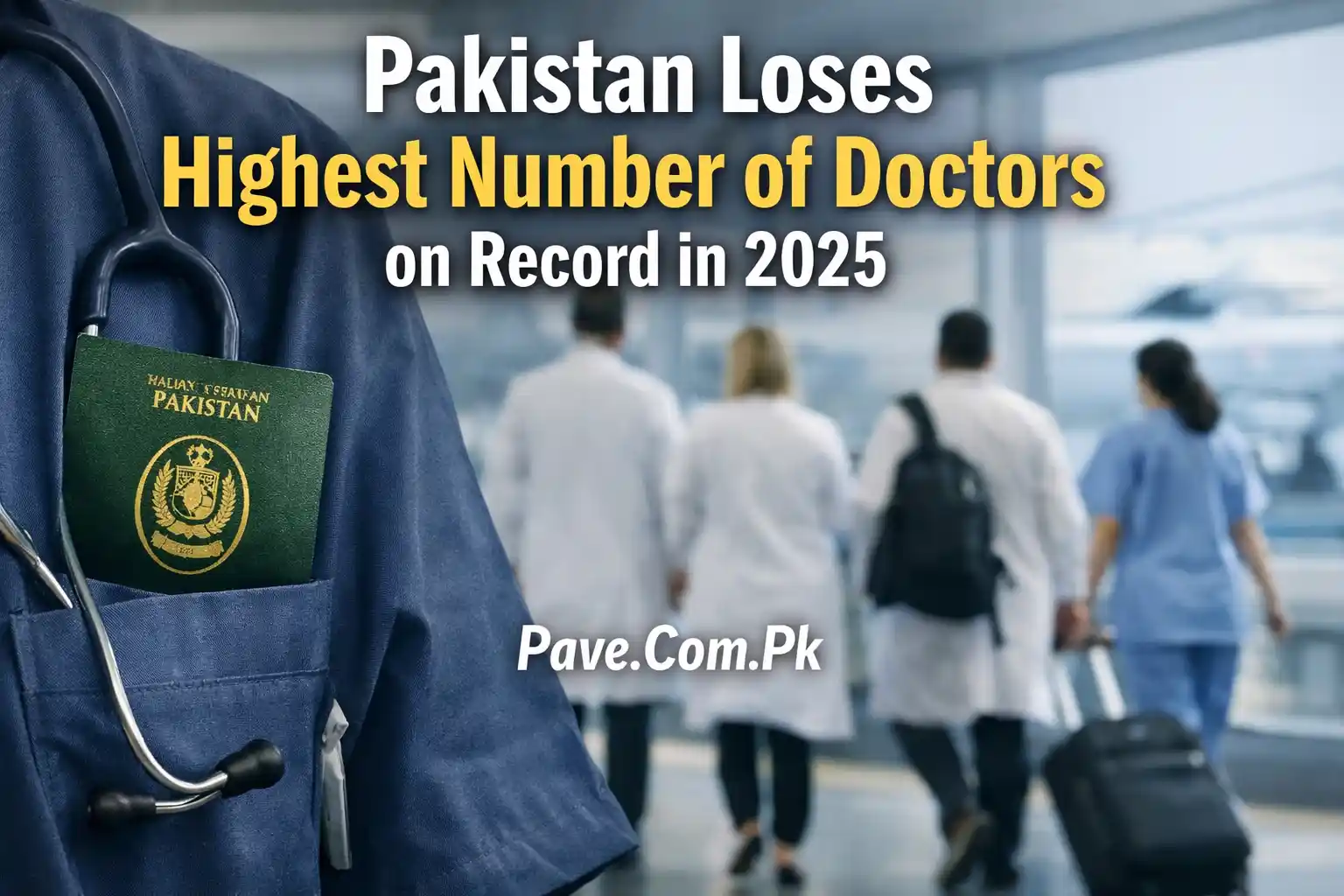
Pakistan witnessed a record exodus of doctors in 2025, triggering serious concerns about the future of the country’s healthcare system. Despite producing tens of thousands of medical graduates every year, the growing number of doctors leaving the country has exposed deep structural problems in retention, working conditions, and long-term planning.
According to an analysis by Gallup Pakistan, based on data from the Bureau of Emigration, approximately 3,800 to 4,000 doctors emigrated in 2025. This is the highest annual figure ever recorded, marking a sharp departure from previous decades when the number remained in the hundreds.
This article explains why Pakistani doctors are leaving in record numbers, how it affects healthcare delivery, what the government is doing, and what the long-term consequences could be — all in easy English and with a clear, SEO-friendly structure.
Overview: Doctor Exodus Reaches Historic High
The scale of doctor migration in 2025 has shocked policymakers and health experts. While Pakistan officially produces around 22,000 new doctors every year, the loss of thousands of trained professionals annually is creating a serious imbalance between supply and actual availability.
Experts warn that this trend is no longer temporary. Instead, it represents a structural shift, where Pakistan risks becoming a training ground for doctors who eventually serve foreign healthcare systems.

Key Statistics: What the Data Shows
Doctor Migration in Numbers
- Doctors who left Pakistan in 2025: 3,800–4,000
- Registered doctors in Pakistan: Around 370,000
- New doctors produced annually: About 22,000
- Population: Nearly 250 million
Although these numbers may appear sufficient on paper, officials stress that registration does not equal availability.

Why Official Numbers Overstate Real Capacity
Many of Pakistan’s registered doctors are not actively practicing medicine in the country.
Reasons Include
- Doctors working abroad
- Medical professionals employed in non-clinical jobs
- Female doctors not practicing due to social or family reasons
- Unemployment or underemployment
As a result, the effective number of practicing doctors is far lower than official statistics suggest.

Pakistan and WHO Doctor Requirement
According to the World Health Organization, countries should have at least one doctor per 1,000 people.
Pakistan’s Requirement
- Required doctors: At least 250,000 practicing doctors
- On paper: Pakistan appears close to meeting this standard
- In reality: The growing exodus is eroding actual healthcare access, especially in rural and underdeveloped areas
Health experts warn that the situation could worsen rapidly if current trends continue.

Why Are Doctors Leaving Pakistan?
1. Poor Working Conditions
Many doctors cite difficult working environments as a major reason for leaving.
- Long working hours
- Inadequate facilities
- Lack of modern equipment
- High patient-to-doctor ratios
These conditions lead to burnout and frustration, particularly among young doctors.
2. Low Salaries and Financial Stress
Compared to international standards, doctors in Pakistan are underpaid, especially during early career stages.
- House officers and junior doctors earn modest wages
- Delayed promotions and pay increases
- Rising inflation reduces real income
In contrast, overseas opportunities offer significantly higher and stable incomes.
3. Limited Career Growth and Training Opportunities
Many doctors leave due to a lack of:
- Postgraduate training slots
- Research opportunities
- Transparent merit-based promotions
Countries like the UK, Gulf states, and Australia offer clear career pathways and advanced training.
4. Safety and Social Concerns
Security issues, workplace violence, and lack of institutional protection also push doctors abroad.
- Incidents of violence against medical staff
- Weak legal protection
- Stressful work environment
These factors make overseas options more attractive.
Migration Trend Since 2010: A Steady Rise
Gallup Pakistan notes that doctor migration began accelerating after 2010 and has risen almost every year since.
Key Observations
- Early years: Hundreds of doctors leaving annually
- Mid-2010s: Numbers crossed into the thousands
- 2025: Highest ever recorded
Researchers describe this as a long-term structural change, not a short-term spike.
Impact on Pakistan’s Healthcare System
1. Increased Pressure on Remaining Doctors
With fewer doctors available:
- Workload increases
- Burnout becomes common
- Quality of care suffers
This creates a vicious cycle, encouraging more doctors to leave.
2. Rural and Underserved Areas Hit Hardest
Doctor shortages are most severe in:
- Rural districts
- Remote regions
- Public hospitals
Urban private hospitals often retain staff, widening healthcare inequality.
3. Rising Patient Waiting Times
Fewer doctors mean:
- Longer waiting periods
- Shorter consultation times
- Overcrowded hospitals
Patients often bear the cost of workforce shortages.
Govt Sets Maximum Annual Fee Limit for Private Medical Colleges
In response to growing criticism, the government has announced a maximum annual fee limit for private medical colleges.
Purpose of the Policy
- Reduce financial burden on students
- Make medical education more accessible
- Ensure fairness in fee structures
However, experts argue that fee regulation alone will not stop doctor migration unless workplace conditions improve.
Is Pakistan Training Doctors for Overseas Markets?
Health researchers increasingly believe Pakistan may be subsidizing healthcare systems abroad.
Why This Is a Concern
- Public funds support medical education
- Doctors leave after graduation
- Local healthcare system loses skilled manpower
This raises questions about return on public investment.
Comparison With Other Countries
Many developing countries face similar challenges, but successful ones focus on retention strategies.
Effective Retention Measures Elsewhere
- Competitive salaries
- Safe working environments
- Continuous training
- Clear promotion paths
Pakistan lags behind in implementing these measures at scale.
What Can Be Done to Stop the Exodus?
Policy Recommendations
- Increase doctor salaries, especially for junior staff
- Improve hospital infrastructure
- Expand postgraduate training programs
- Ensure workplace safety
- Introduce bonding or incentive-based retention models
Experts stress that retention is cheaper than replacement.
Long-Term Risks if Trend Continues
If doctor migration continues at this pace, Pakistan may face:
- Chronic healthcare staff shortages
- Declining healthcare quality
- Increased dependence on private care
- Worsening health outcomes
The consequences could take decades to reverse.
Public Reaction and Expert Warnings
The news of record doctor migration has sparked debate on social media and among health professionals.
- Doctors demand reforms
- Patients express concern
- Experts warn of a looming healthcare crisis
Many agree that urgent action is needed.
Conclusion
The fact that a record number of doctors left Pakistan in 2025 is a wake-up call for policymakers. While Pakistan produces a large number of medical graduates, the failure to retain skilled professionals threatens the stability of the healthcare system.
Without meaningful reforms in pay, working conditions, training, and safety, Pakistan risks losing its most valuable medical talent to overseas markets. Addressing this crisis now is essential to protect the health of 250 million citizens.