Pakistan Suspends 25 More Flights to Middle East as Airspace Closures Continue
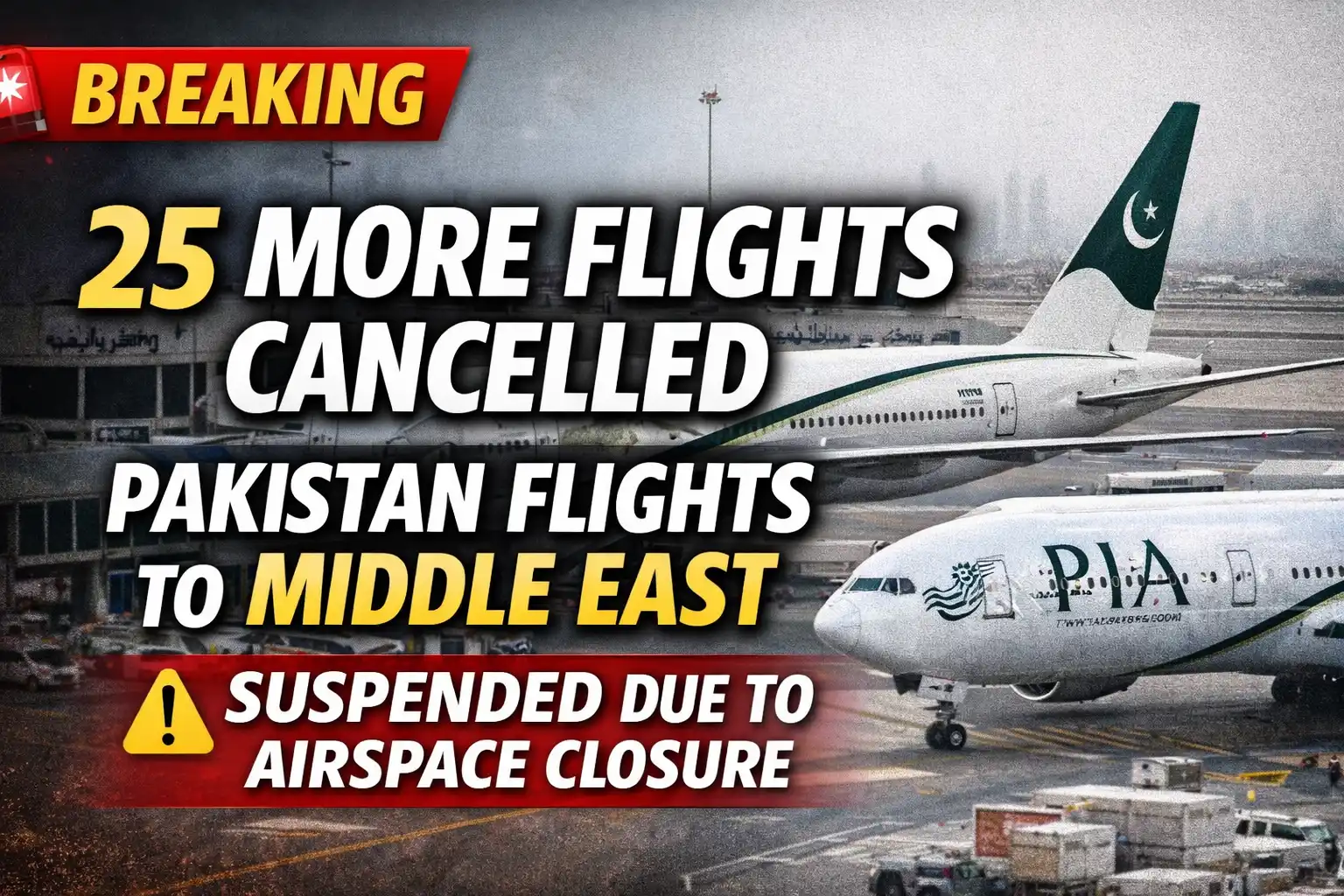
Flight operations between Pakistan and several Middle Eastern countries have been heavily affected due to the ongoing tensions in the Middle East. According to aviation sources, 25 more flights from Pakistan to Middle Eastern destinations have been cancelled, creating difficulties for passengers who were planning to travel for work, business, or family visits.
The situation has become serious because many countries in the Middle East have temporarily closed their airspace due to rising military tensions in the region. As a result, airlines are unable to operate normal flight schedules.
These cancellations have affected major airports across Pakistan including Lahore, Sialkot, Multan, and Faisalabad. Thousands of passengers are now waiting for updates about their travel plans as airlines continue to monitor the situation.

Why Flights to the Middle East Are Being Cancelled
The main reason behind the cancellation of flights is the closure of airspace in several Middle Eastern countries following military tensions between Iran, the United States, and Israel.
When countries close their airspace, commercial aircraft are not allowed to fly through those areas for safety reasons. Airlines must either cancel flights or change routes, which can sometimes be impossible due to distance or security risks.
Airlines prioritize passenger safety, which is why many flights from Pakistan to cities like Dubai, Abu Dhabi, Sharjah, Bahrain, Kuwait, and Doha have been suspended.
Experts say the situation will depend on how quickly tensions in the Middle East calm down.
Lahore Airport Flights Cancelled
One of the most affected airports in Pakistan is Allama Iqbal International Airport in Lahore.
According to aviation officials, 14 flights traveling between Lahore and Middle Eastern cities have been cancelled.
These flights were scheduled for popular destinations including:
- Dubai
- Abu Dhabi
- Sharjah
- Bahrain
- Kuwait
- Qatar
These cities are major travel hubs for Pakistanis because many people work in the Gulf region. Every day thousands of workers travel between Pakistan and Gulf countries.
Because of these cancellations, many passengers at Lahore Airport faced delays and uncertainty regarding their travel schedules.
Flight Cancellations at Sialkot Airport
Sialkot International Airport has also experienced disruptions in its flight schedule.
Reports confirm that four flights from Sialkot to Middle Eastern countries have been cancelled.
Sialkot Airport mainly serves travelers from northern Punjab and nearby areas. Many overseas Pakistanis from this region live in Gulf countries and regularly travel between Pakistan and the Middle East.
Passengers who were scheduled to depart from Sialkot were informed by airlines about the cancellations and advised to contact airline offices for further updates.
Multan and Faisalabad Flights Also Suspended
Apart from Lahore and Sialkot, flight operations have also been affected at Multan International Airport and Faisalabad International Airport.
According to aviation sources:
- Seven flights from Multan and Faisalabad were cancelled.
These airports serve many workers who travel to Gulf countries for employment. As a result, flight suspensions have created problems for many travelers who were planning to return to their workplaces abroad.
Some passengers were forced to postpone their travel plans, while others are waiting for airlines to announce new schedules.
Earlier 72 Flights Were Cancelled
This is not the first time flights have been cancelled during the current crisis.
Just a day earlier, 72 flights from Pakistan to the Middle East were cancelled on Friday due to the same situation.
The large number of cancellations shows how serious the situation has become. Airlines are trying to avoid flying through dangerous areas where military activity is taking place.
Travel experts say the number of cancellations could increase if tensions in the Middle East continue.
Impact on Pakistani Travelers
The cancellation of flights has affected thousands of Pakistani passengers.
Many people traveling to the Middle East include:
- Overseas workers
- Business travelers
- Students
- Families visiting relatives
Since Gulf countries host millions of Pakistani workers, flights between Pakistan and the Middle East are among the busiest international routes.
Travelers whose flights were cancelled are now facing several problems such as:
- Delayed travel plans
- Rescheduling flights
- Waiting for refunds or new tickets
- Missing work deadlines abroad
Airlines have advised passengers to stay in contact with their airline offices or check flight status online before going to the airport.
Airlines Monitoring the Situation
Airlines operating in Pakistan are closely monitoring the situation in the Middle East.
Some airlines may resume flights once airspace restrictions are lifted and it becomes safe to travel again. However, aviation experts say safety remains the top priority.
International aviation authorities constantly review security conditions, airspace safety, and military activity before allowing flights to operate normally.
Until the situation improves, airlines may continue to cancel or delay flights.
Middle East Crisis Affecting Global Aviation
The conflict in the Middle East is not only affecting Pakistan. Airlines around the world are also facing disruptions.
Many international carriers have:
- Cancelled flights
- Changed flight routes
- Avoided certain airspaces
When airspace becomes unsafe due to military tensions, airlines must reroute aircraft around those regions. This increases fuel costs and travel time.
For this reason, many airlines prefer to cancel flights rather than take longer and more expensive routes.
What Passengers Should Do
Passengers who were planning to travel to Middle Eastern countries from Pakistan should take the following steps:
Check Flight Status
Always check the latest flight status through airline websites or airport authorities.
Contact Airlines
Passengers should contact their airline’s customer service to know whether their flight has been rescheduled.
Avoid Going to Airport Without Confirmation
Travelers should confirm their flight before going to the airport to avoid inconvenience.
Stay Updated with News
Since the situation is changing quickly, passengers should stay informed through official aviation announcements.
Future Outlook for Flights to the Middle East
Experts believe that flight operations may resume once the security situation in the Middle East improves.
However, if tensions between countries continue, more disruptions could occur in international aviation.
Airlines and governments are closely watching the developments and will make decisions based on safety assessments.
For now, passengers traveling between Pakistan and Middle Eastern countries should remain prepared for possible delays and cancellations.
Conclusion
The cancellation of 25 more flights from Pakistan to the Middle East highlights the serious impact of the current regional tensions on global aviation.
Major airports including Lahore, Sialkot, Multan, and Faisalabad have been affected, leaving thousands of passengers waiting for updates.
With 72 flights already cancelled earlier, the aviation sector continues to face challenges due to airspace closures and security concerns.
Passengers are advised to stay informed, contact airlines for updates, and avoid unnecessary travel plans until the situation becomes stable.