PCB Rejects Reports of Approaching ICC Over India Match Boycott
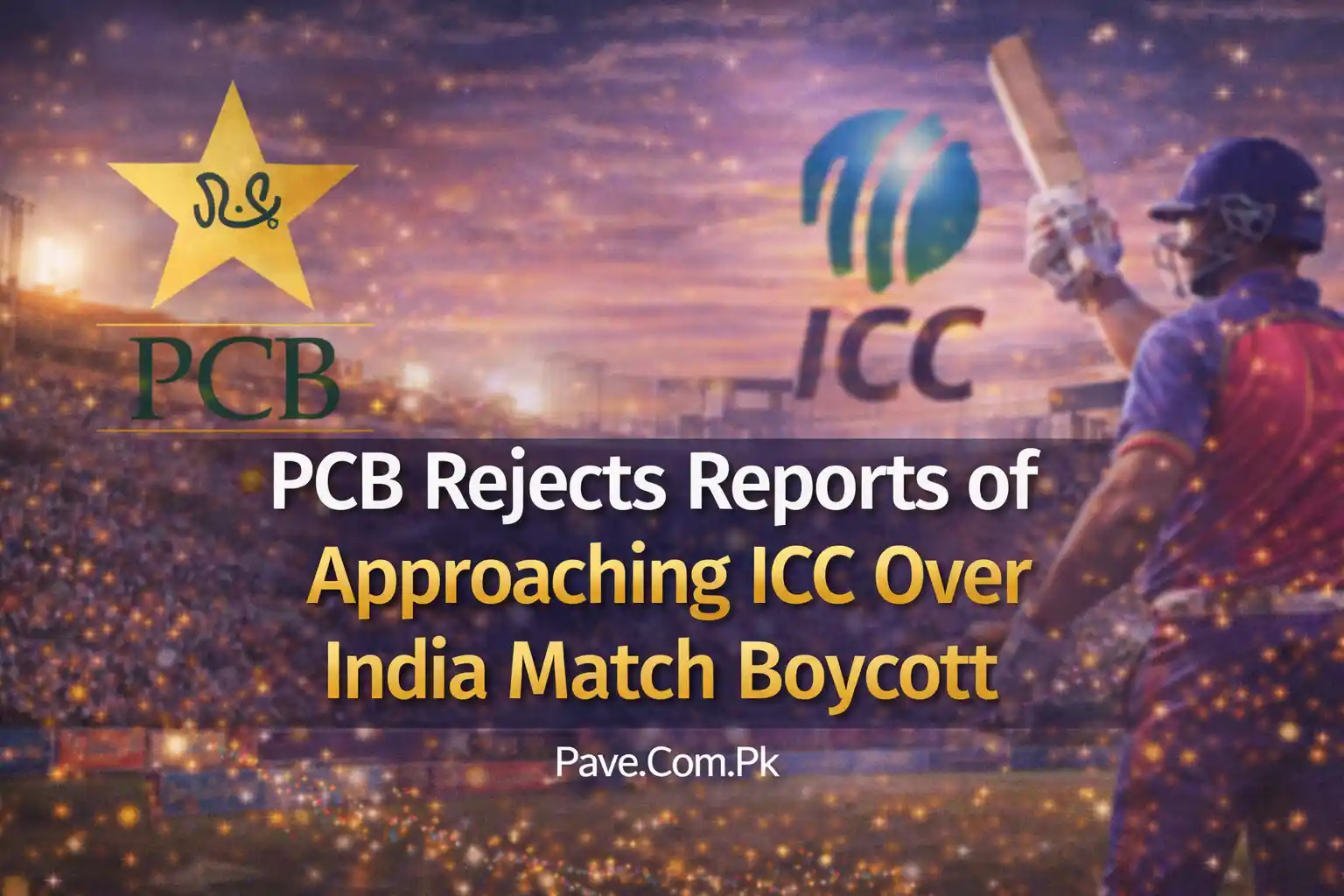
The Pakistan Cricket Board (PCB) has strongly rejected claims circulating in Indian media that it contacted the International Cricket Council (ICC) regarding a possible boycott of its ICC T20 World Cup 2026 match against India. The board has described these reports as false, misleading, and completely fabricated, warning against the spread of speculative narratives during a sensitive period for international cricket.
The controversy erupted after Indian journalist Vikrant Gupta claimed that the PCB had approached the ICC to discuss withdrawing from its high-profile clash against India. The PCB immediately dismissed the allegation, stating categorically that no such communication was initiated by Pakistan.
This article explains the background of the controversy, the PCB’s official stance, the role of force majeure, the ICC’s concerns, and the broader implications for the T20 World Cup 2026, in easy English with search-friendly headings and keywords.
Background: How the Controversy Began
Speculation around Pakistan–India cricket ties has intensified in recent weeks due to political developments and government directives. In this context, some Indian media outlets published reports suggesting that the PCB had reached out to the ICC to explore the possibility of boycotting the Pakistan vs India match at the T20 World Cup 2026.
The reports quickly gained traction on social media, raising questions about:
- The future of Pakistan–India matches
- ICC’s position on a potential boycott
- Possible legal and commercial fallout
The PCB responded swiftly to contain what it called “fictional reporting.”

PCB’s Official Response: Clear and Categorical Denial
The PCB spokesperson Amir Mir issued a strong statement rejecting the claims.
According to Amir Mir:
- The PCB did not approach the ICC
- Reports claiming otherwise are fabricated
- Certain Indian media outlets are spreading fiction instead of facts
He emphasized that patience and time would reveal who actually initiated any communication, making it clear that it was not the PCB.

Statement That Set the Record Straight
In his official remarks, Amir Mir stated that the narrative presented by Indian media was misleading and inaccurate. He stressed that the PCB would not accept false portrayals and urged media outlets to verify facts before publishing sensitive claims.
The PCB’s stance signals a firm approach against misinformation and a refusal to be drawn into media-driven speculation.

Role of Force Majeure: Why the Issue Escalated
At the heart of the controversy is the concept of force majeure, a legal provision that allows parties to suspend obligations under extraordinary circumstances.
Pakistan Government’s Force Majeure Directive
Pakistan’s government reportedly invoked a force majeure directive that allows:
- Selective non-participation against India
- Consideration of political and security factors
- Flexibility under exceptional circumstances
This development triggered speculation, not an official boycott decision.

ICC’s Concerns: Commercial and Legal Implications
According to reports, the ICC became concerned after the force majeure directive surfaced, mainly due to:
- Broadcast contracts
- Sponsorship agreements
- Tournament scheduling
- Governance and legal risks
Matches between Pakistan and India are among the most commercially valuable fixtures in world cricket. Any uncertainty naturally attracts ICC scrutiny.
What Indian Media Claimed
Some Indian outlets reported that:
- The ICC sought clarification from the PCB
- The PCB then entered into dialogue with the ICC
- Discussions were held regarding boycott implications
However, the PCB has categorically denied initiating any such dialogue, calling these claims baseless.
PCB’s Position: Not the Initiator
The PCB clarified an important distinction:
- It did not approach the ICC
- It did not seek guidance on boycotting
- It did not request meetings on the issue
The board insists that Indian media reports wrongly portrayed the sequence of events and assigned actions to the PCB that never occurred.
Why Pakistan–India Matches Matter So Much
Pakistan vs India matches are:
- The most watched games in global cricket
- Major revenue drivers for the ICC
- Central to tournament viewership
Because of this, even rumors of a boycott can:
- Impact stock markets
- Alarm broadcasters
- Trigger diplomatic and legal discussions
This explains the intense media attention.
Media Responsibility During Sensitive Situations
The PCB’s reaction highlights concerns about responsible sports journalism.
PCB’s Core Concerns
- Unverified claims damage credibility
- Sensational headlines fuel misinformation
- Speculation can create unnecessary tension
The board believes such reporting undermines the spirit of international cricket.
Pakistan’s Broader Cricketing Stance
Historically, the PCB has:
- Honored ICC commitments
- Participated in global tournaments
- Followed formal channels for decision-making
Any major decision involving India would:
- Involve the Pakistan government
- Be communicated officially
- Follow legal and contractual procedures
The PCB stressed that no unilateral or secret action has been taken.
ICC T20 World Cup 2026: What We Know So Far
As of now:
- Pakistan remains scheduled to play
- No official boycott announcement exists
- ICC has not confirmed any sanction or dispute
The tournament planning continues as normal.
Political Context vs Cricket Administration
The controversy reflects the complex relationship between:
- Government directives
- Cricket boards
- International governing bodies
While governments may issue advisories, cricket boards operate within ICC frameworks. Any conflict must be resolved through formal processes, not media leaks.
Impact on Fans and Global Cricket
Such reports have:
- Confused fans
- Sparked online debates
- Raised unnecessary fears about tournament disruption
PCB’s clarification aims to reassure fans that no immediate threat exists to Pakistan’s participation.
Reaction From Cricket Analysts
Cricket analysts believe:
- The story was exaggerated
- Media speculation went ahead of facts
- PCB’s response was necessary
Experts stress that decisions of this magnitude are never taken casually or secretly.
Legal and Contractual Stakes
If a boycott were to occur, consequences could include:
- Financial penalties
- Contractual disputes
- Governance issues within the ICC
This is why the PCB insists it would never act without due process.
PCB’s Message to Media and Stakeholders
The PCB’s firm denial sends a clear message:
- Do not rely on anonymous claims
- Verify before publishing
- Avoid politicizing cricket unnecessarily
The board reaffirmed its commitment to transparency.
What Happens Next?
For now:
- The matter remains speculative
- PCB has closed the door on rumors
- Attention shifts back to cricket
Any future developments will be communicated through official channels only.
Conclusion
The Pakistan Cricket Board’s rejection of Indian media claims regarding contacting the ICC over a T20 World Cup 2026 boycott underscores the dangers of misinformation in modern sports coverage. The PCB has made it clear that it did not initiate any communication with the ICC, and that reports suggesting otherwise are fictional.
As preparations for the T20 World Cup continue, the focus remains on cricket, not conjecture. The PCB has reiterated that the truth will emerge with time—and until then, it will not engage with speculative narratives.