Punjab Launches Rs. 1M Free Treatment Scheme (2026)
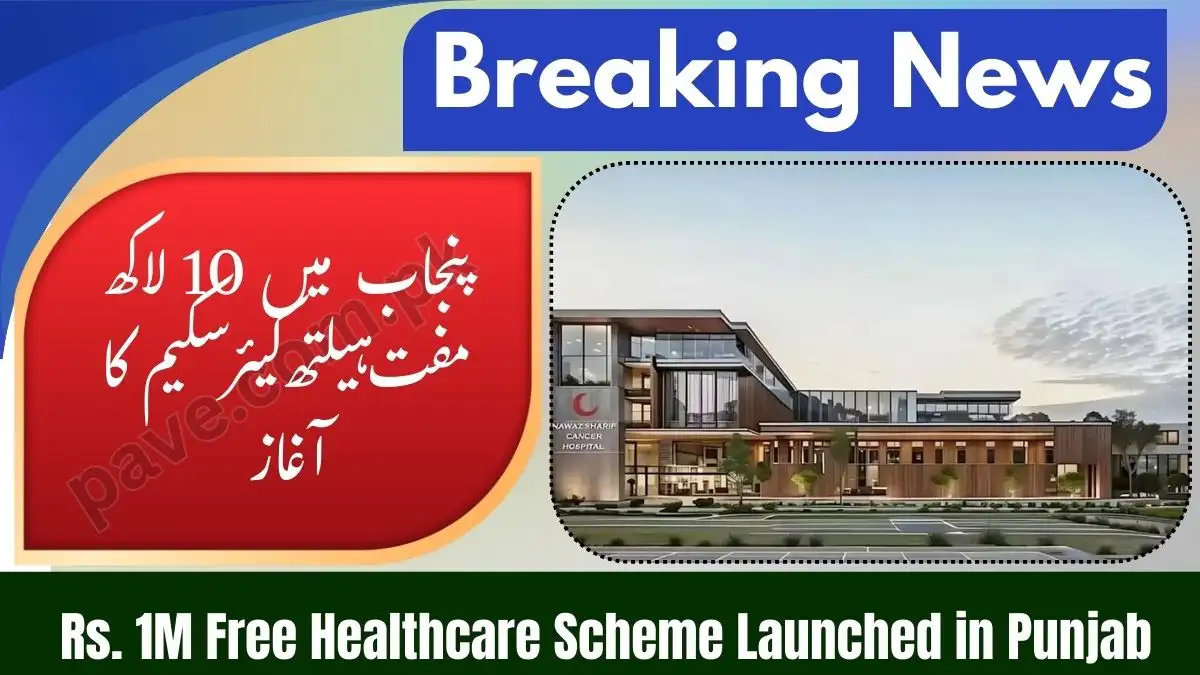
In a landmark healthcare decision with nationwide implications, the Punjab government has approved free, high-cost treatment worth up to Rs. 1 million per patient for chronic and life-threatening diseases. The decision was finalized during the 105th meeting of the Punjab Health Initiative Management Company (PHIMC) on January 16, 2026, chaired by Khawaja Salman Rafique, Provincial Health Minister.
This initiative is being rolled out under the direct supervision of Maryam Nawaz, who has positioned the program as a humanitarian, not insurance-based, healthcare intervention—aimed squarely at patients facing financially unbearable medical costs.
What Is the “Chief Minister’s Special Initiative” Card?
To operationalize this unprecedented relief, the Punjab government is introducing the Chief Minister’s Special Initiative Card, a dedicated healthcare access card separate from standard health insurance schemes.
Key Features of the Card
- Coverage Limit: Up to Rs. 1 million per patient
- Initial Beneficiaries: 45,000 patients across Punjab (Phase One)
- Disease Focus: Cancer, heart disease, stroke, and critical pediatric cardiac conditions
- Universal Access: Treatment available to patients from all provinces, including KPK, Sindh, and Balochistan, at designated public-sector institutes
This makes Punjab the first province to formally open its specialized public hospitals to all Pakistanis without discrimination, purely on medical need.

Massive Budget Allocations: Where the Money Is Going
To ensure continuity and quality, the provincial cabinet has approved multi-billion-rupee annual allocations for each disease category.
Breakdown of Approved Relief Packages
| Program | Annual Budget | Services Covered |
|---|---|---|
| Cancer Care | Rs. 13 Billion | Free diagnosis, chemotherapy, radiotherapy, surgery, medical therapy |
| Adult Cardiac Surgery | Rs. 3 Billion | Free heart surgeries, valve replacements, post-operative care |
| Stroke Management | Rs. 1.2 Billion | Free TNK injections (~Rs. 300,000 each) + emergency recovery |
| Children’s Heart Surgery | Ongoing | 9,648 free surgeries already completed nationwide |
These allocations reflect a shift from basic healthcare to advanced, tertiary-level medical support within the public sector.

Hospital Readiness: Major Deadlines Set for Early 2026
To manage the expected patient influx, Punjab has placed several flagship institutes on emergency operational timelines.
Key Institutions Going Live
Nawaz Sharif Cancer Institute – Lahore
- OPD Opening: January 17, 2026
- Significance: Pakistan’s first fully government-run, comprehensive cancer hospital
- Will serve as the backbone of Punjab’s cancer care program
Nawaz Sharif Institute of Cardiology – Sargodha
- Deadline: January 31, 2026
- All departments—including Emergency, IPD, Diagnostics, and Pathology—must be fully operational
Jinnah Institute of Cardiology – Lahore
- Opening Date: February 15, 2026
- Designed to reduce pressure on existing cardiac centers in Lahore and central Punjab
These timelines are being enforced on what officials described as a “war footing”.

14 Dedicated Stroke Management Centers: Fighting Paralysis in the Golden Hour
One of the most life-saving elements of the initiative is the establishment of 14 specialized Stroke Management Centers across Punjab.
Why This Matters
- Stroke treatment is time-critical
- TNK (Tenecteplase) injections can reverse paralysis if given within the “golden hour”
- Each injection costs around Rs. 300,000, now provided free of cost
Key Locations Include
- Mayo Hospital, Lahore
- Nishtar Hospital, Multan
- DHQs in Rawalpindi, Sialkot, Gujranwala, and other major districts
This network dramatically improves survival and recovery outcomes for stroke patients.

A Policy Shift: From Insurance to State Responsibility
Unlike insurance-based models, this initiative reflects a direct assumption of responsibility by the state for catastrophic healthcare costs.
What Makes This Different?
- No premium payments
- No income discrimination at treatment stage
- Focus on medical urgency, not enrollment history
- Centralized monitoring through PHIMC
It marks a philosophical shift: healthcare as a right, not a privilege.
Instructions Issued to Hospitals: Patient First
The Punjab government has issued strict directives to all empaneled hospitals:
- Resolve patient complaints on priority
- Ensure zero denial for eligible cases
- Maintain transparent reporting and referral mechanisms
Important Advisory for Citizens
If you or a family member needs treatment:
- Visit the nearest government teaching hospital
- Ask about CM Special Initiative Card registration
- Carry basic medical records and CNIC
Hospital facilitation desks have been instructed to guide patients through the process.
Bigger Picture: Why This Matters for Pakistan
This initiative:
- Sets a national benchmark for public healthcare
- Reduces catastrophic out-of-pocket spending
- Strengthens trust in government hospitals
- Opens Punjab’s medical infrastructure to all Pakistanis
If sustained, it could redefine how chronic disease care is delivered in the country.
Final Outlook
The Chief Minister’s Special Initiative Card represents one of the most ambitious public healthcare interventions in Pakistan’s history. With Rs. 1 million per patient, multi-billion-rupee annual budgets, and rapidly operationalizing hospitals, Punjab is signaling a clear message: no citizen should be denied life-saving treatment due to cost.