
Punjab Launches Urban Development Projects Across 51 Cities
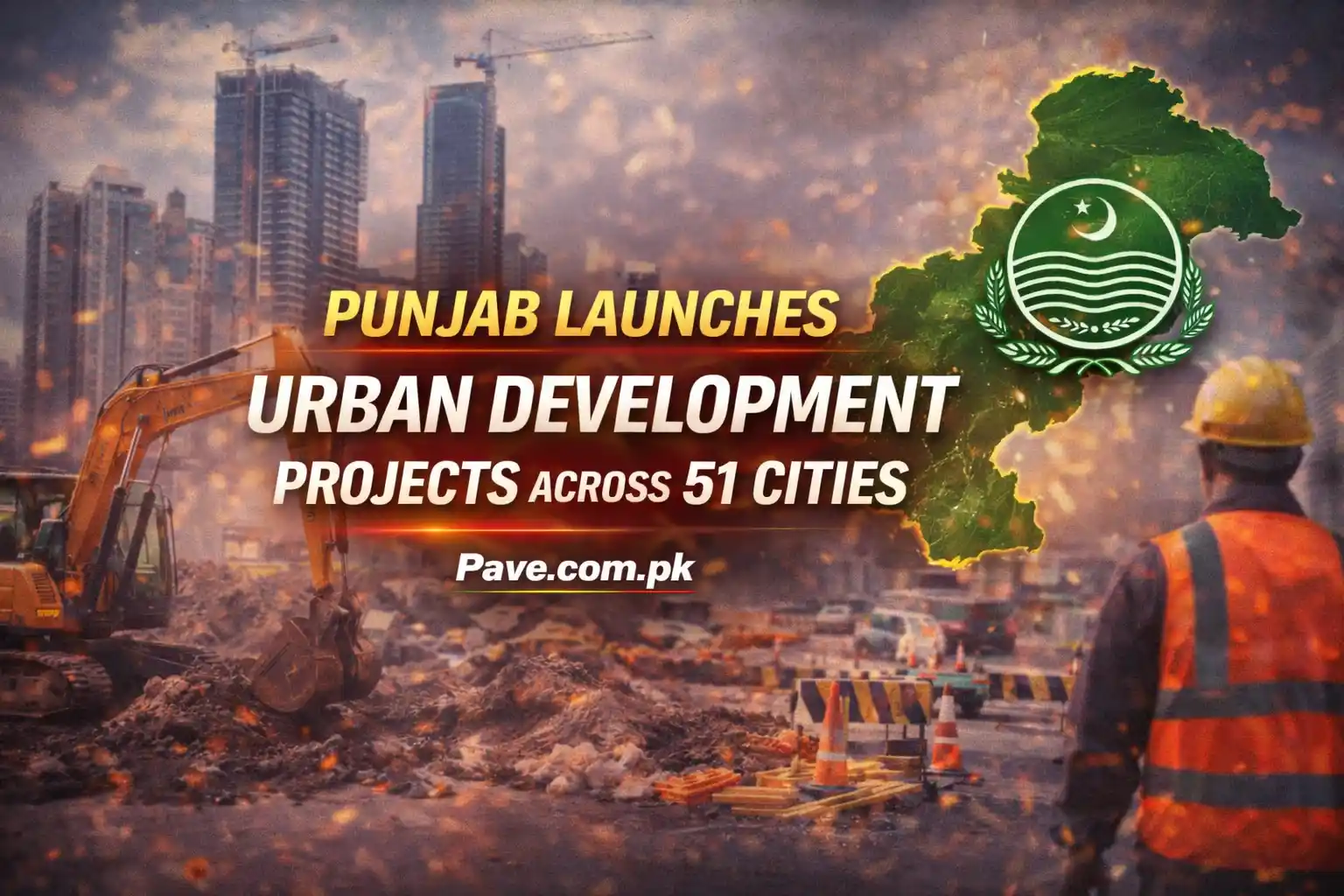
Punjab has rolled out a province-wide urban renewal initiative aimed at fixing long-standing sewerage, drainage, and internal road issues—neighborhood by neighborhood, not just along main arteries. The program is phase-based, with a hard deadline for Phase-1 in June 2026, and is backed by modern materials, real-time monitoring, and cabinet-level oversight.
1) Scope & Scale of the Project (Phase-1)
Total Reach: 51 cities across Punjab
Phase-1 Deadline: June 2026
Core Deliverables
- Sewerage: 5,887 km of new/rehabilitated sewer lines
- Drainage: 181 km of drainage channels
- Safety & Access: 33,000+ new manhole covers
- Local Mobility: 100 km of internal roads and streets
Technology Upgrade
- HDPE (High-Density Polyethylene) pipes across the network
- 100-year durability guarantee, superior leak resistance, and flexibility against soil movement
This is a structural fix to reduce chronic leaks, collapses, and repeat digging.

2) Major City-Specific Allocations (High-Impact Focus)
The Chief Minister has directed that every locality must see tangible improvement, not just showcase corridors.
| City | Key Highlights & Projects | Budget / Scale |
|---|---|---|
| Gujranwala | Largest-ever package: 131 km sewer lines, wastewater treatment plant, 16 machinery units | Rs. 42.62 bn |
| Multan | 232 km sewer lines, 81 pumps, 51 generators, 64 km urban roads; Bosan & Nishtar Roads beautification | Extensive |
| D.G. Khan | Manika Canal conversion to agricultural channel; 140 km sewer rehab | Rs. 12.25 bn |
| Vehari | Citywide beautification and sewerage restoration | Rs. 6.7 bn |
| Bhakkar | 42-inch trunk sewer, solar-powered disposal stations, parks, public washrooms | High Priority |
| Sheikhupura | 95 km new sewerage; accelerated beautification | In Progress |

3) Monitoring, Transparency & Public Safety (What’s New)
To avoid delays and quality lapses, the project introduces continuous, visible oversight:
24/7 Control Rooms
- Provincial and district-level command centers
- Live progress tracking and contractor accountability
Live Digital Dashboard
- Real-time KPIs on execution, delays, and outputs
- Daily review by the Chief Minister
Public Safety Policy Shift
- Sewer lines moved to green belts, not under main roads
- Cuts repeated excavations, traffic disruption, and premature road damage

4) Why This Matters (Beyond Clean Streets)
This program tackles root causes of:
- Urban flooding and backflow
- Recurrent road failures
- Utility conflicts (water/gas line damage during repairs)
- Public health risks and service complaints
The result is longer-lasting roads, safer utilities, and fewer emergency digs.

5) Concurrent Welfare & Mobility Initiatives (2026)
Alongside urban works, the cabinet approved complementary programs:
- Apna Khet, Apna Rozgar: Government land for 50,000 landless individuals (farming/self-employment)
- Green Bus Service: 1,000 electric buses, tehsil-level coverage, cashless fares
- Apni Chhat, Apna Ghar: Second installment released; 65,000 homes targeted for completion
Final Takeaway
This is not cosmetic development. It’s a time-bound, tech-led urban reset across 51 cities, focused on neighborhood delivery, durable materials, and live accountability. If Phase-1 stays on track to June 2026, Punjab should see a permanent reduction in sewer failures, flooding incidents, and road rework—with visible gains in daily life.