
Punjab Leads Clean Energy Transition as Biogas & Waste-to-Energy Projects Take Off
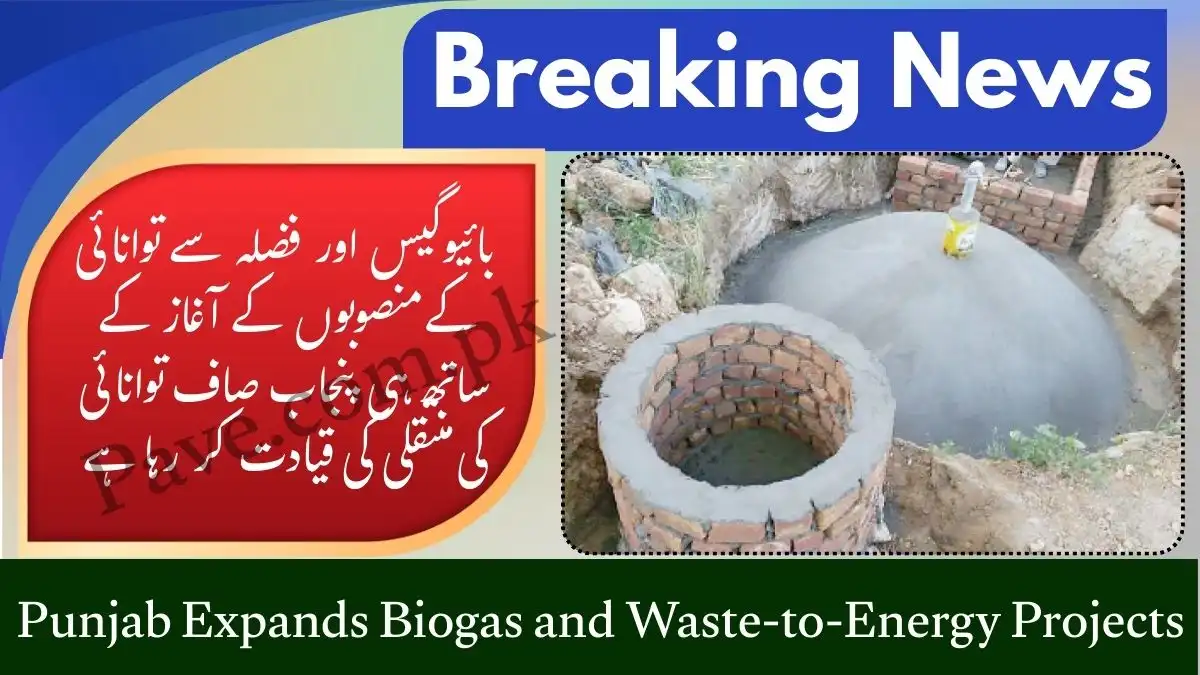
Punjab has emerged as a front-runner in Pakistan’s clean energy transition, laying the groundwork for a greener, self-reliant energy economy through the launch of biogas and waste-to-energy projects across the province. The initiative is being positioned as a practical response to climate change, rising energy costs, and Pakistan’s dependence on imported fuels.
At the heart of this transformation is Maryam Nawaz Sharif, who has formally approved a series of flagship projects aimed at converting agricultural waste, organic refuse, and municipal garbage into affordable, environment-friendly energy.
Six Biogas Plants Approved Across Punjab
Under the first phase of implementation, six modern biogas plants have been approved:
- Lahore: 4 biogas plants
- Faisalabad: 2 biogas plants
These facilities will convert organic waste into clean cooking gas for households and bio-fertiliser for agricultural use. Officials describe the move as the practical beginning of renewable energy production at scale in Punjab, with benefits extending well beyond electricity generation.
Key Benefits of Biogas Plants
- Reduced reliance on imported LNG and fossil fuels
- Savings in foreign exchange
- Affordable gas supply for domestic use
- Production of nutrient-rich bio-fertiliser for crops
- Lower greenhouse gas emissions
For rural communities in particular, the projects are expected to bring energy access, cost relief, and agricultural productivity together in one integrated solution.

Waste-to-Energy Project Launched in Lahore
Alongside biogas, Punjab has approved a major waste-to-energy project in Lahore, designed to convert municipal solid waste into electricity. The project is expected to address two major urban challenges simultaneously:
- Mounting waste disposal problems
- Rising demand for affordable electricity
According to officials, the electricity generated from waste will be supplied at low cost to:
- Electric buses
- Metro Bus systems
- Other public transport and municipal services
Chief Minister Maryam Nawaz Sharif has directed that the waste-to-energy project be completed on a fast-track basis, emphasizing its importance for clean urban mobility and sustainable city planning.

Clean Energy Review Meeting: Key Decisions
During a high-level meeting chaired by the chief minister, Punjab’s long-term clean energy roadmap was reviewed in detail. The session resulted in several strategic approvals:
- Seeking viable proposals for small-scale biogas plants suitable for villages
- Approval of a feasibility study for a multi-fuel bio-refinery
- Inclusion of three pilot biogas projects under the Model Village Programme
- Formal launch framework for Lahore’s waste-to-energy initiative
These decisions signal a shift from isolated projects to a province-wide clean energy ecosystem.

Model Village Programme: Clean Energy at the Grassroots
One of the most impactful elements of the plan is the integration of biogas projects into Punjab’s Model Village Programme. Under this initiative:
- Villages will receive locally produced biogas for cooking and heating
- Farmers will gain access to organic fertiliser, reducing chemical input costs
- Waste recycling will become part of everyday rural life
Officials say this approach directly links climate action with poverty reduction, making green energy relevant at the household level.

Economic, Environmental & Climate Impact
Experts view Punjab’s clean energy push as a triple-win strategy:
Economic
- Reduced fuel imports
- Lower energy costs
- New green jobs and technical skills
Environmental
- Lower carbon emissions
- Cleaner cities and villages
- Sustainable waste management
Climate Resilience
- Reduced methane release from waste
- Alignment with global climate commitments
- Long-term energy security
A Defining Moment for Punjab’s Energy Future
With biogas plants, waste-to-energy systems, and bio-refinery planning underway, Punjab is positioning itself as Pakistan’s clean energy leader. Officials describe the initiative as the province’s most serious move yet toward a green economy, modern infrastructure, and climate-smart development.
As implementation accelerates, Punjab’s model could serve as a blueprint for other provinces, proving that renewable energy, environmental protection, and economic growth can move forward together.