Punjab Plans Academic Calendar Overhaul, Recommends Shorter Summer Vacations
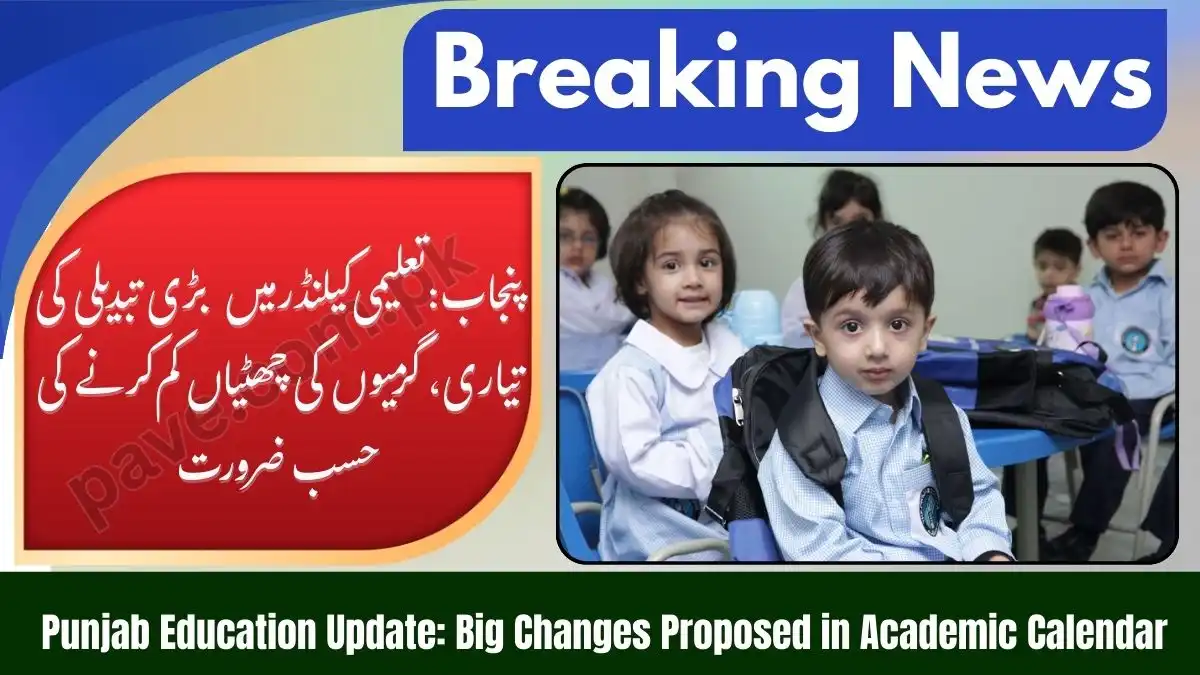
Punjab is on the verge of a major structural overhaul of its academic calendar, as a high-level committee—constituted under the directives of the Lahore High Court (Rawalpindi Bench)—has recommended sweeping reforms aimed at improving learning outcomes and restoring academic discipline.
As of January 23, 2026, the proposal has moved into an advanced stage, with implementation potentially beginning from the next academic session in April 2026.
1. Proposed Reduction in Summer Vacations
One of the most consequential recommendations is a sharp cut in summer holidays, which have long been blamed for disrupting academic continuity.
Current Practice vs New Proposal
- Current system:
Summer vacations last around 2.5 months (approximately 75 days). - Proposed change:
Summer vacations to be reduced to just 6 weeks (around 42 days).
The committee argues that prolonged summer breaks, combined with unscheduled closures during smog, heatwaves, and cold spells, have significantly reduced actual classroom learning time.

2. Mandatory Teaching Days: A Fixed Academic Structure
To ensure syllabi are completed on time—especially for board classes—the committee has proposed a non-negotiable minimum teaching requirement.
Key Structural Targets
- Minimum Teaching Days:
All schools and colleges must complete at least 190 instructional days per year. - Annual Holidays Cap:
Total holidays (including Sundays and gazetted holidays) to be capped at 175 days annually.
This marks a decisive shift from the current, often ad-hoc holiday system, toward a predictable, rule-based academic calendar.

3. Why the Change Is Being Pushed
The recommendations stem from repeated judicial and academic concerns raised before the Lahore High Court.
📚 Incomplete Syllabi
- Frequent closures due to:
- Heatwaves
- Smog emergencies
- Severe winter conditions
- Result: Classes 9th to 12th often fail to complete coursework, forcing rushed exam preparation.
⏸️ Loss of Academic Rhythm
- Long and irregular breaks disrupt:
- Learning continuity
- Student discipline
- Teacher planning
The court noted that learning loss accumulates silently, especially in public-sector institutions.
🌍 Lack of International Alignment
Unlike international education systems with:
- Fixed terms
- Clearly defined instructional days
Punjab currently operates without a stable, long-term academic framework, making yearly planning unpredictable for schools, parents, and students alike.
4. Endorsement from Private School Associations
In a notable development, private school associations across Punjab have publicly supported the proposal.
Their Key Argument
- Due to repeated, unplanned holiday extensions, many schools are left with as few as 135 effective teaching days per year.
- This is well below curriculum requirements, particularly for science and senior classes.
Private institutions argue that a uniform academic calendar will:
- Improve syllabus coverage
- Standardize assessments
- Reduce last-minute academic pressure

5. Timeline and Next Steps Toward Implementation
The proposal has now entered the execution-planning phase.
Official Directives Issued
The Special Secretary of the School Education Department, Muhammad Iqbal, has instructed:
- The Punjab Education Curriculum and Testing Authority (PECTA)
- The Director Public Instruction (DPI)
to:
- Formulate a uniform academic calendar
- Base it strictly on the 190 teaching days framework
- Submit recommendations within three days
Expected Rollout
- If approved by the provincial government and court:
- Implementation from April 2026
- Applicable to both public and private institutions
Quick Comparison: Current vs Proposed Academic Calendar
| Feature | Current Practice | New Recommendation |
|---|---|---|
| Summer Vacations | ~10 weeks (2.5 months) | 6 weeks |
| Teaching Days | Variable (often <150) | 190 days (minimum) |
| Annual Holidays | Unstructured | 175 days (fixed cap) |
| Academic Planning | Ad-hoc | Uniform & predictable |
Final Analysis: A Turning Point for Punjab’s Education System
If implemented, these reforms would represent one of the most significant academic restructurings in Punjab’s history.
By:
- Reducing excessive breaks
- Fixing teaching days
- Introducing calendar discipline
the government aims to prioritize learning time over administrative convenience.